

 eng
 English
 Español
 русский
 عربى
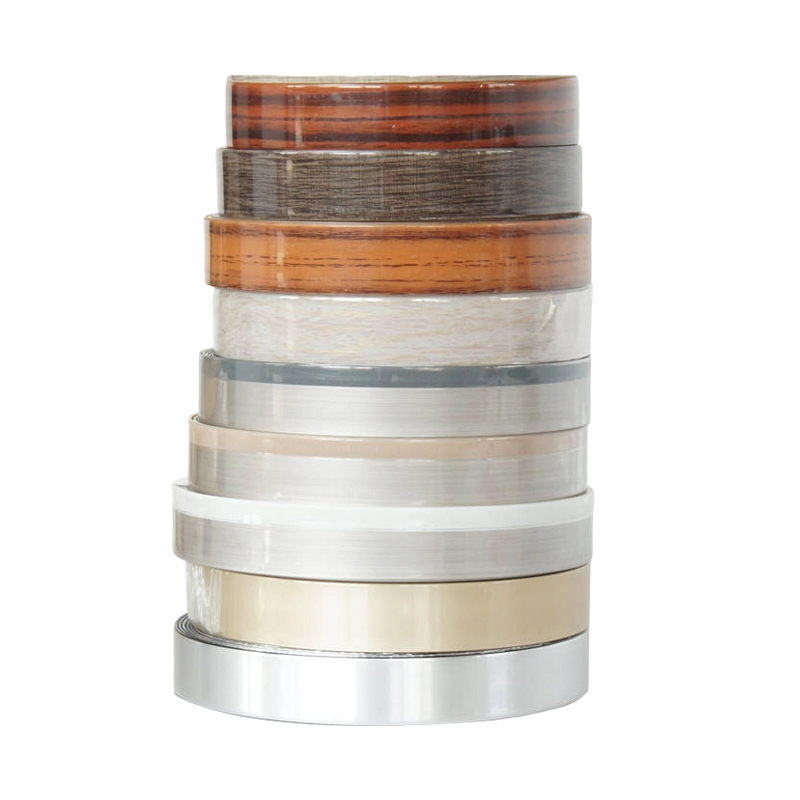
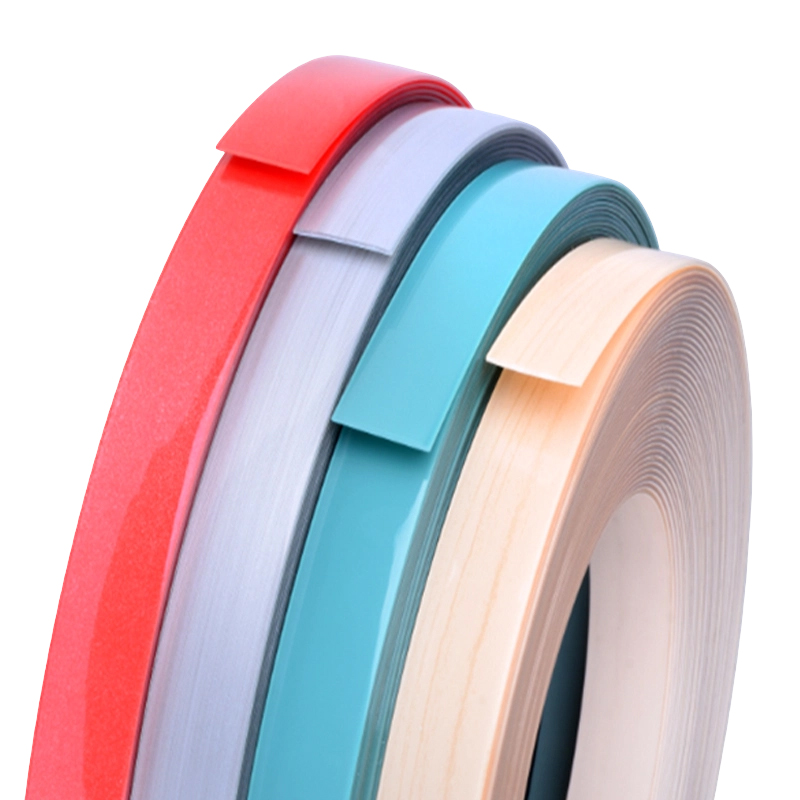
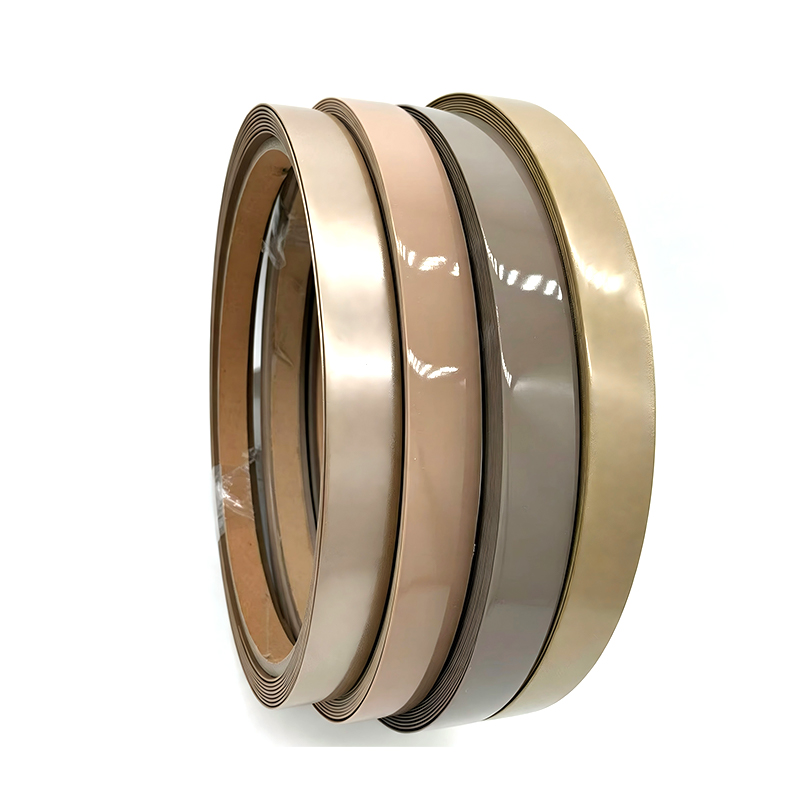



Solid-Color Acrylic Edges, Made by a Focused China Manufacturer
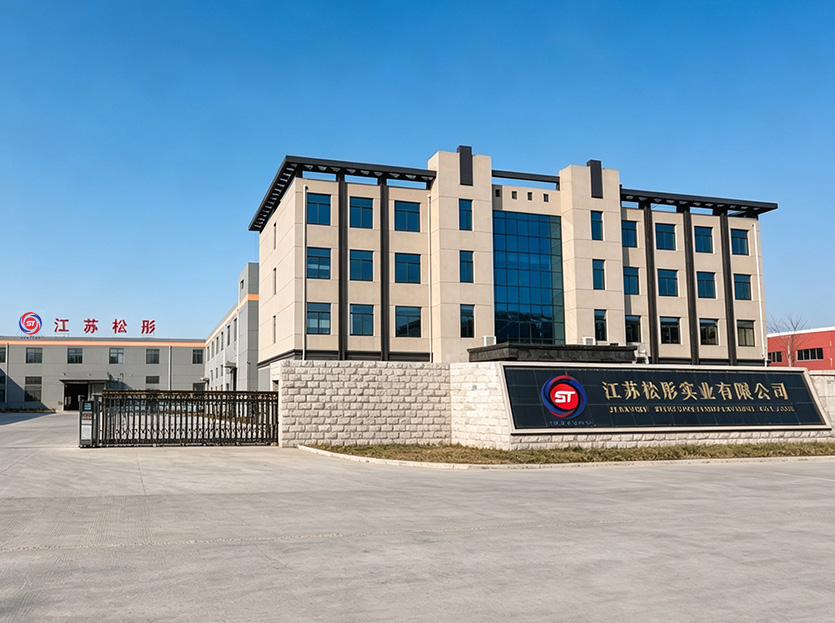
Suntung operates as a China-based Unicolor 3D Acrylic Edge Banding manufacturer, co-extruding solid-color acrylic bands at a 21,500 m² production base in Taizhou, Jiangsu. The range is built for furniture where the edge is a design feature rather than a seam to be hidden: high-end kitchen cabinetry, wardrobes, office furniture and custom residential interiors. Rolls ship to furniture plants, panel processors and distributors in more than 90 countries.
The band sits inside the wider 3D Acrylic Edge Banding family, which also covers wooden-color and bicolor constructions. Unicolor is the flat single-tone option: no printed decor, no grain repeat, no register to hold. Depth, saturation and gloss carry the visual, which is why it pairs so cleanly with plain-faced panels.
How the Unicolor Construction Produces Its Depth
A transparent PMMA acrylic layer is co-extruded over a solid color core. Light entering the clear layer is refracted and returned through the pigment, so the color reads deeper and brighter than a straight-through pigmented band of the same tone. On a finished cabinet the effect is a glass-like edge that stays crisp under directional lighting instead of flattening out.
- Gloss retention — the acrylic surface resists the gradual dulling that shows up on softer edge materials after handling and cleaning.
- UV resistance — color stability matters on light tones and pale greys that are most vulnerable to yellowing.
- Scratch resistance — a harder surface for edges that take knocks in transit, installation and daily use.
- Dimensional stability — consistent thickness and flatness along the roll, which matters for glue-line consistency at line speed.
Co-extrusion rather than lamination keeps the clear layer and core bonded as one continuous section, so trimming exposes acrylic, not a delamination line.
The Range and Its Adjacent Options
Unicolor 3D Acrylic is one position in a broad edge banding portfolio. The table below shows where it sits against the neighbouring lines we produce, so a project can be specified across several finishes in one container.
| Product line | Material and optical character | Typical application | Processing note |
|---|---|---|---|
| Unicolor 3D Acrylic | Solid color behind a clear PMMA layer; deep, glass-like tone | Premium kitchens, wardrobes, office and bespoke residential | Harder band; edge radius and profile confirmed at enquiry |
| Wooden Color 3D Acrylic | Acrylic depth carrying a wood decor | Wood-tone premium collections | Grain direction and repeat held to the approved sample |
| Bicolor 3D Acrylic | Two-tone acrylic build-up for contrast | Layered and contrast-fronted designs | Layer position and thickness agreed against drawings |
| High Glossy PVC Edge Banding | PVC with a high-gloss lacquer or film finish | Gloss matching on volume programs | Softer band; broader radius capability |
| Solid Color ABS Edge Banding | ABS substrate, matte to gloss solid colors | Projects specifying ABS for heat or impact behaviour | Different glue and trimming windows than acrylic |
Application Fit: Panels, Gloss and Lighting
Unicolor 3D Acrylic earns its place on uninterrupted flat fronts — handleless kitchen runs, wardrobe doors, reception counters, meeting tables. It bonds to MDF, particleboard and plywood cores faced with melamine, laminate, acrylic or PET, and it is most convincing when the face and the edge are matched at the same gloss level.
The material is harder and less forgiving than PVC. Where a design calls for a tight radius, a shaped panel or a post-formed curve, we flag it at enquiry and steer the specification toward a softer band rather than let the acrylic crack in the plant. Sharing the profile drawing is the fastest way to settle that question.
Critical Specifications We Confirm Before a Production Run
- Thickness and width — nominal band section, quoted per order and controlled at the calendering and slitting stages.
- Color target — a physical sample, a panel brand code or a color-system reference, matched to a master swatch before the run; our color matching similarity target is ≥95%.
- Gloss level and surface — high clarity for the acrylic line, with finish agreed against the panel supplier's surface rather than against a screen image.
- Primer and adhesion system — applied on automated glue application equipment so the coating is uniform across the full band width before it reaches your line.
- Hardness and flexibility — balanced against trimming behaviour so the edge cuts clean without whitening.
- Roll format — length, core diameter, winding direction and labelling, matched to your edge bander and your warehouse scanning.
Capacity, Accuracy and Repeatability
Twenty-three automatic lines run at the Taizhou base, giving a monthly output of 25 million meters and space for roughly 30 × 20GP containers a month. Popular colors and specifications are held in stock, and shipments move through the Port of Shanghai. For a program that spans several finishes, that volume is what makes a mixed container practical rather than a special arrangement.
Repeatability is engineered at three points: mixing controls the pigment formula so batch-to-batch tone holds; calendering sets thickness and flatness under monitored roller pressure and temperature; and precision slitting fixes the width and its tolerance. Every one of those steps is what decides whether roll 400 matches the sample you approved at roll 1.
Quality Assurance and Acceptance Testing
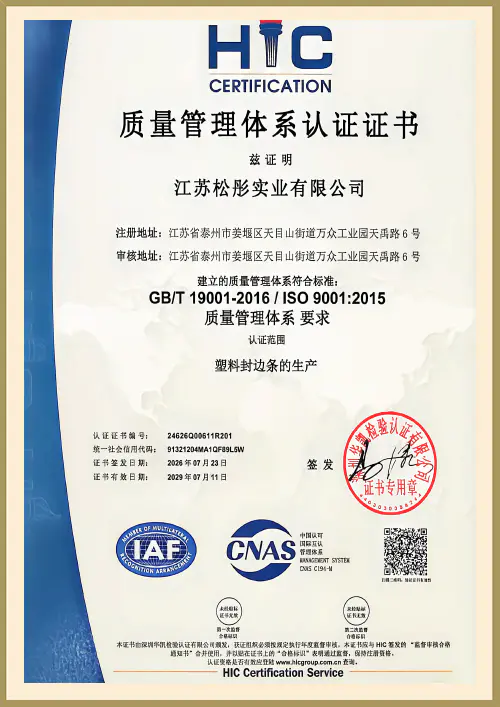
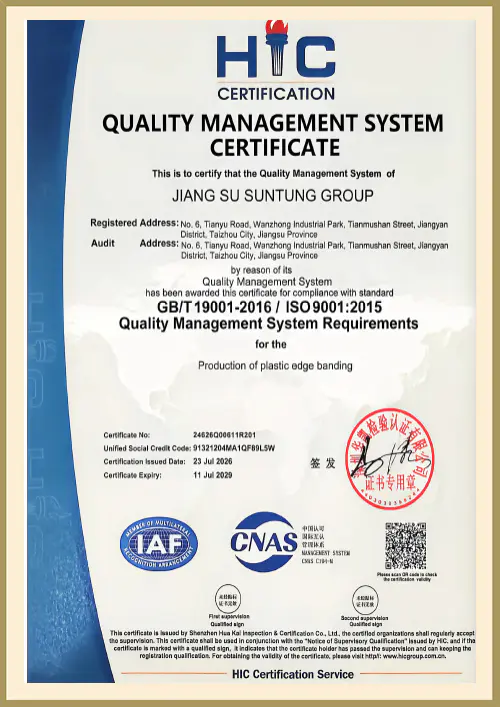
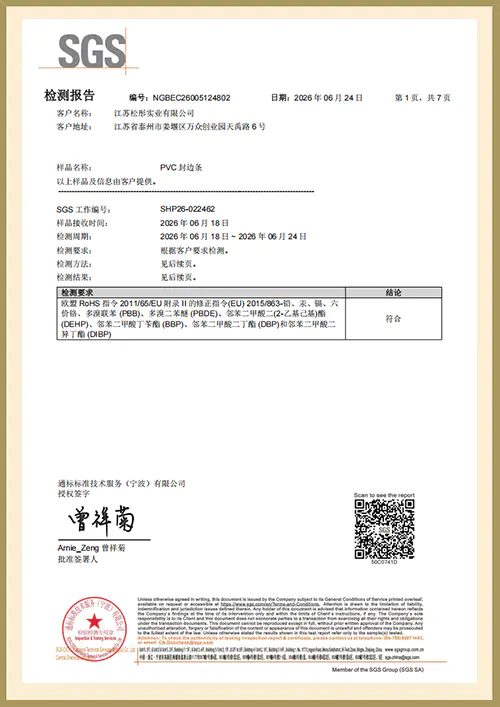
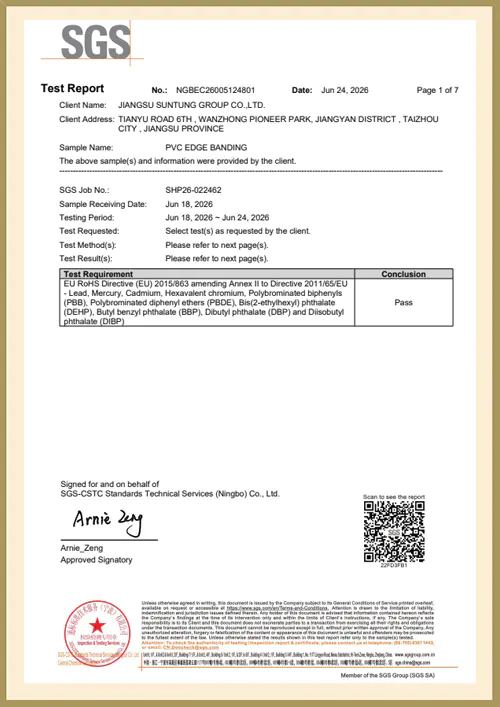
The plant is certified to ISO9001:2015, products are EU RoHS compliant and CE documentation is available; SGS test reports and compliance documents are issued on request. Inspection runs across the whole route, not only at the end.
- Incoming raw material checks on resin, ink and primer.
- Color matching against the approved master sample, including texture and gloss.
- Primer uniformity and adhesion control.
- Surface effect inspection for clarity, flatness and decorative consistency.
- Durability checks covering UV adhesion, scratch and wear resistance.
- Flexibility and trimming tests to catch cracking and edge whitening.
- Final inspection of appearance, dimensions, labelling, packaging and order compliance before dispatch.
Customization, Packaging and Documentation
Color, surface texture, size, gloss level and hardness can all be customized, and our R&D and engineering team develops against drawings and samples for OEM and ODM programs. A new tone starts as a matched swatch for your approval, then moves to a pilot roll for line trial before volume production.
- Packaging — cartons and pallets configured to the export route, with roll labels carrying the color code, size and batch reference.
- Documentation — packing list, certificate of compliance and test reports matched to the shipment.
- Consolidation — edge banding, PVC profiles, hot melt adhesive and screw caps supplied together so a container is filled from one source.
Information We Use to Configure Your Solution
A quotation is only as good as the inputs behind it. These are the details that let us return a workable specification instead of a generic price:
- Panel substrate, face material and face gloss level, plus the panel thickness.
- Color reference — a physical sample, a panel code or a color-system number.
- Required band thickness and width, and the edge profile or radius on the drawing.
- Edge bander type and adhesive system, so adhesion and processing behaviour can be checked.
- Roll length, core diameter and any labelling or barcode requirement.
- Estimated volume, release schedule and destination port.
- Compliance documents the project file needs.
Frequently Asked Questions
Which panels does Unicolor 3D Acrylic bond to?
MDF, particleboard and plywood cores are all suitable, faced with melamine, laminate, acrylic or PET. Because the acrylic band is optically clear at the surface, the face and edge should be matched at the same gloss level; send the panel or its code and we match against it.
How close is the color match?
Our color matching similarity target is ≥95% against the approved master sample, checked on tone, texture and gloss. Approval on a physical swatch happens before the production run, so the reference is objective rather than a description.
Can it be used on curved or shaped panels?
Acrylic is a harder material than PVC and has less tolerance for tight radii. Small-radius profiles and post-formed curves are usually better served by a soft PVC or ABS band, and we will say so rather than supply a band that cracks in your plant. Share the profile drawing and we confirm suitability.
What thickness and width options are produced?
Band thickness and width are quoted to the order and controlled at calendering and precision slitting, so the section matches your panel thickness and trimming setup. Roll length, core diameter and winding direction are set to your edge bander.
What evidence comes with a shipment?
The plant holds ISO9001:2015 certification, products are EU RoHS compliant and CE documentation is available. SGS test reports and relevant compliance documents are issued on request, alongside the packing list and batch references on every roll label.
Can a new solid color be developed for an OEM program?
Yes. Our R&D and engineering team develops against drawings and samples, covering color, surface texture, size, gloss and hardness. The route runs from matched swatch to pilot roll to volume production, with the approved sample held as the reference for every subsequent batch.


