

 eng
 English
 Español
 русский
 عربى
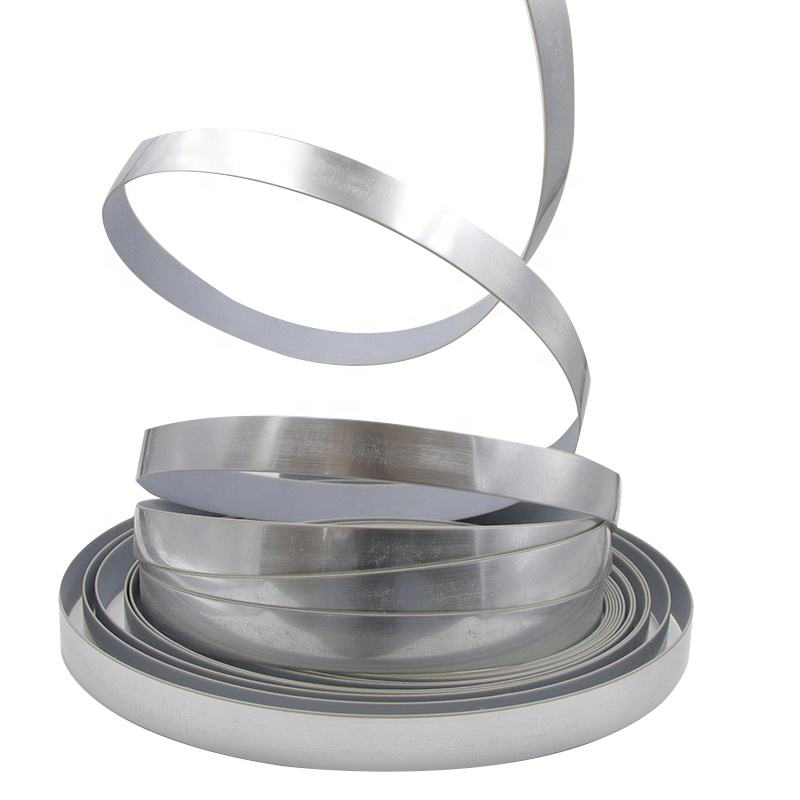
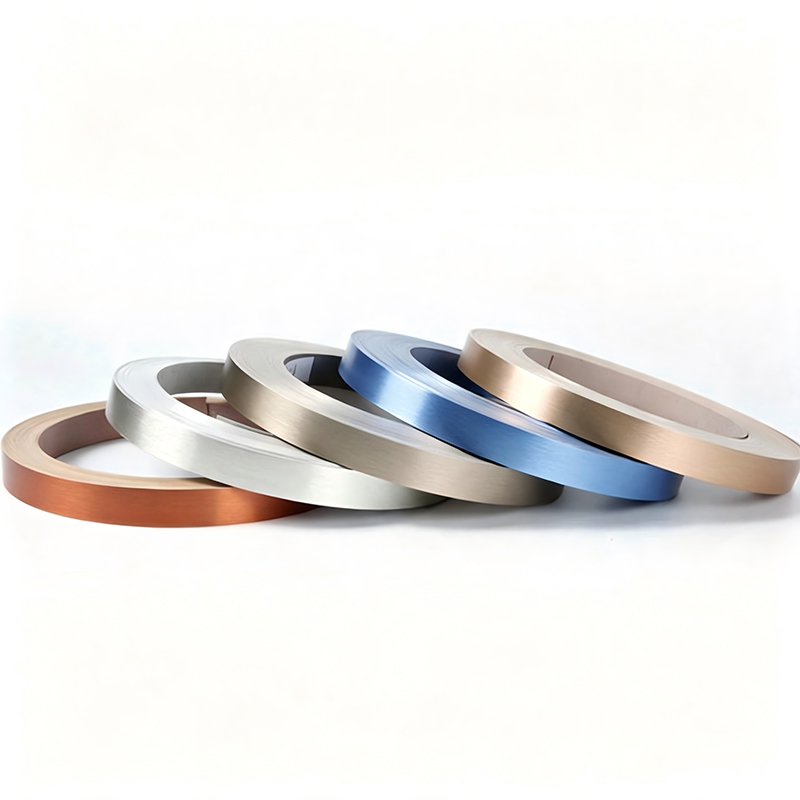
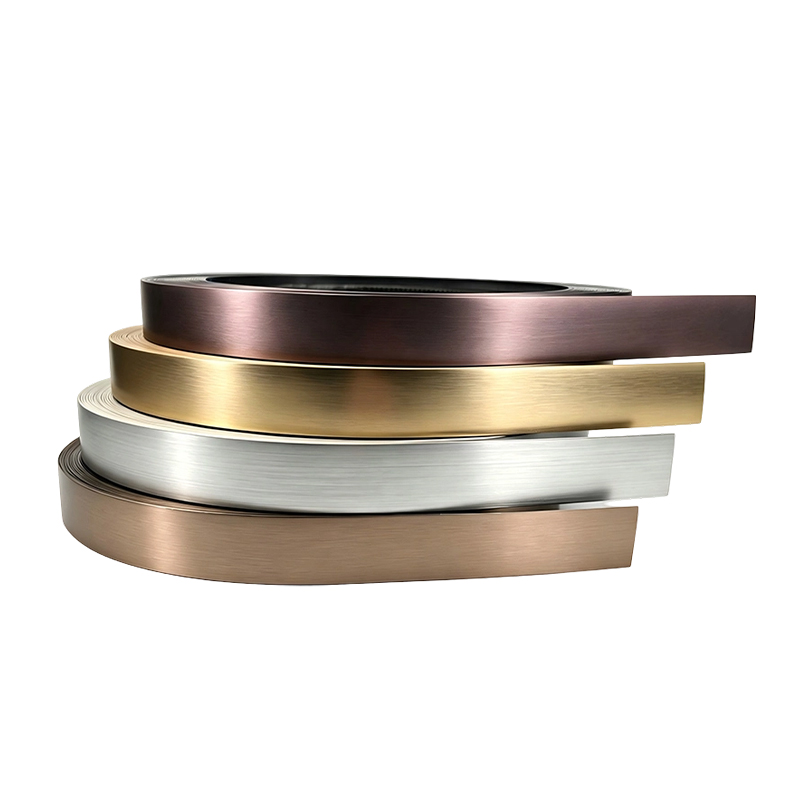
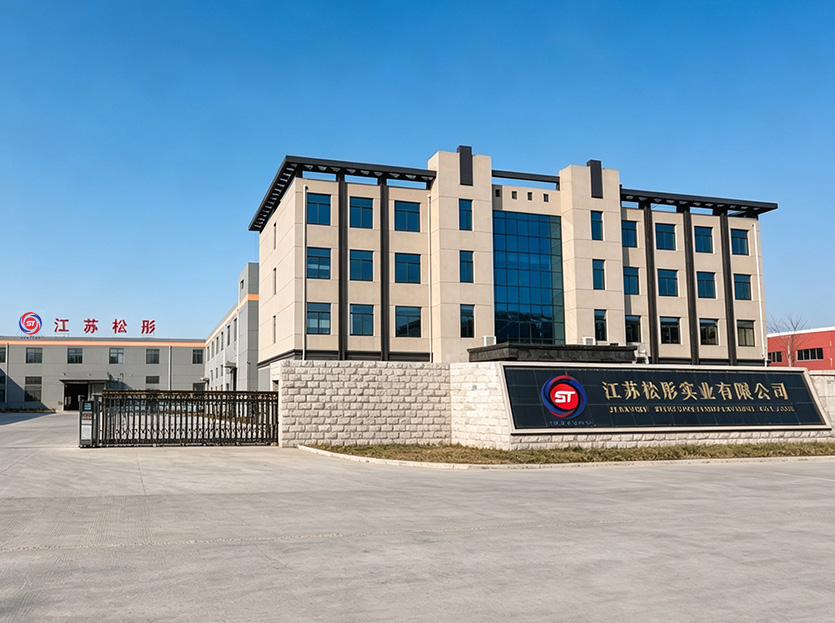



Shanghai Suntung Industry Co., Ltd. is a China-based Brushed Effect Edge Banding with PET Film manufacturer, supplying metal-look edging to cabinet plants, panel processors, furniture factories and distributors. Each strip pairs a polymer substrate and a brushed-metal decorative layer with a PET film face, so a brushed aluminium or stainless-steel edge is produced on existing edge banding equipment instead of through metal cutting, folding and finishing.
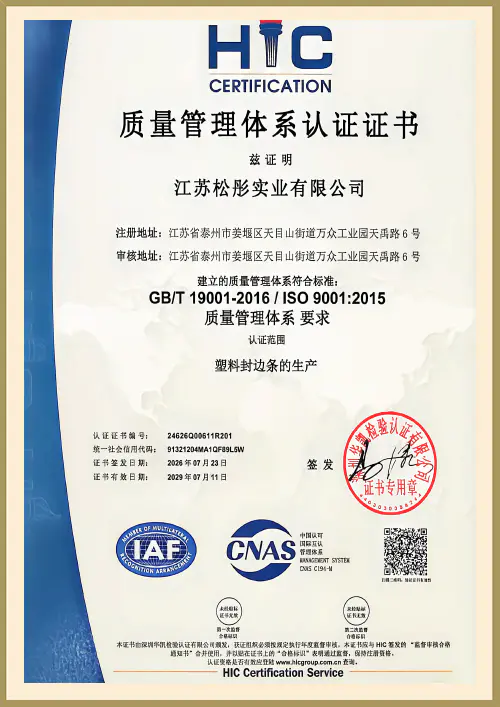
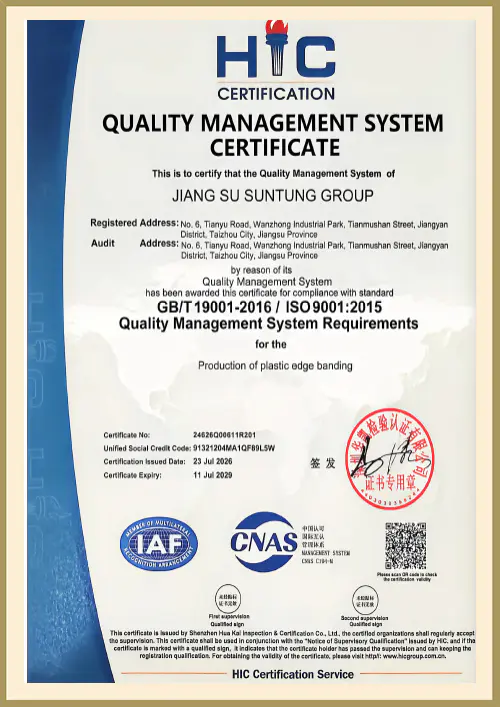
Edge banding has been our single product discipline since 2005, when the predecessor of Suntung Industrial began R&D and production in Qingdao. Manufacturing now runs from a 21,500 m² base in Taizhou, Jiangsu under ISO 9001:2015, at 25 million meters a month across 23 automatic lines, with material shipped to more than 90 countries. The brushed effect covers low-glare satin metal surfaces; Mirror Effect Edge Banding with PET Film covers polished surfaces, and both sit inside the wider Metallic Edge Banding with PET Film range.
How the Brushed Surface Is Built
A brushed finish is a directional texture rather than a flat color. Fine parallel grain lines scatter light across the surface, so the edge reads as metal in ambient light without the hard reflection band a mirror foil throws under cabinet downlights. On tall wardrobe sides and handleless kitchen fronts, that difference decides whether an edge looks deliberate or distracting.
The PET film face carries the texture through trimming, packing, transport and daily contact. It lifts resistance to scratching, abrasion and fingerprint marking, so the grain stays legible on drawer pulls, door returns and other high-touch edges. The polymer substrate beneath provides the dimensional stability and bond strength that automatic banding lines need.
- Directional grain — orientation is held along the roll so adjacent lengths read consistently on long runs.
- Satin gloss band — set against the panel face at sample approval, not chosen in isolation.
- Film protection — reduces scuffing and fingerprinting where hands meet the edge.
- Trim stability — cuts cleanly with no whitening along the trimmed line.
- Tone references — bright silver, champagne, warm grey, graphite and blackened steel developed from customer samples.
Where Brushed Metallic Edging Fits
This strip belongs in programs where metal is a design accent rather than a structural element — the cases where a genuine aluminium edge would add weight, cost and a second supply chain.
- Kitchen and vanity cabinetry — door and drawer edges, open shelving, plinths and handleless gables tying into brushed hardware and tapware.
- Wardrobes and closet systems — tall side panels, sliding door frames and internal shelving where the edge runs long distances.
- Office and contract furniture — desking, storage walls, meeting tables and reception units pairing metal-look edges with laminate tops.
- Retail display and shopfitting — shelf systems, counters and feature walls where brushed aluminium is part of the brand palette.
- Hospitality and residential fit-out — bathroom vanities, media units and joinery packages needing metal continuity without metal fabrication.
Panel and Substrate Matching
The strip has to work with the panel it surrounds. Face decor, core density, edge machining quality and thickness tolerance all shape how the finished edge reads, so the pairing is agreed before production rather than left to the line.
| Panel or component | Brushed strip pairing | Processing note |
|---|---|---|
| Melamine-faced particleboard | Silver or champagne tone matched to the decor print | Hold panel thickness tolerance; sharp trimming protects the film face |
| MDF with UV, PET or lacquered face | Tone and gloss drawn from the face sample | Gloss step between face and edge is fixed at sample approval |
| High-pressure laminate and compact board | Near-match or deliberate darker contrast tones | Laminate-grade tooling; check edge squareness before banding |
| Plywood and veneered cores | Warm grey and champagne references | Clean machining matters; tear-out and dust show at the bond line |
| Curved doors and shaped parts | Thinner gauges, grain agreed for the bend direction | Bend radius reviewed against substrate and film before release |
Specifications We Confirm Before Production
Gauge, width, film and finish are written into the order specification before any roll runs.
- Thickness and width — derived from panel thickness, trimming allowance and the scraper setup on your machine.
- PET film face — grade and protection level selected for the handling the finished furniture will see.
- Gloss level — satin band measured against the approved master under agreed lighting.
- Color and grain density — matched to the panel face, a hardware reference or a metal sample.
- Adhesion system — primer and strip configured for EVA hot melt or PUR on your line.
- Roll format — length, core diameter, wind direction and splice policy agreed to your machine.
Processing on Automatic Edge Banding Lines
The strip runs on standard automatic edge banders with EVA hot melt or PUR. Glue temperature, open time and feed rate are set for the film face, and pressure rollers must sit evenly so the brushed texture is not crushed at the bond line.
Trimming decides the final result. Sharp carbide cutters, correct radius scrapers and a clean shear keep the PET face free of chatter marks and whitening, while grain direction is carried part to part so edges meet consistently at corners and joints.
- Even glue coverage with no squeeze-out onto the film face.
- Flat roller contact across the full strip width.
- Tooling changed before cut quality drops.
- Mild cleaning agents only; solvent-heavy wipes dull the brushed texture.
- Parts stacked with protection once the glue line has set.
Color, Gloss and Custom Development
Color is the most visible failure point in any edge banding order. Against an approved master we verify tone, surface texture, decorative finish and gloss level through the run, working to a color matching similarity of 95% or better. Inks and embossing parameters are controlled batch to batch so a repeat order lands where the first one did.
Custom development is handled in-house from drawings and physical samples. Color, grain density, gloss, strip dimensions and surface feel can be tuned to a panel decor, a metal hardware reference or a brand standard, with the same film platform used for polished mirror-effect work when the design calls for it.
Capacity, Packaging and Delivery
Monthly output of 25 million meters across 23 automatic lines supports both repeat furniture programs and new launches. Mainstream specifications are held in stock, full-container capacity runs to roughly 30 × 20GP per month, and shipments leave from Shanghai with an on-time delivery rate above 95%.
Finished strip is wound, sealed and labeled to the agreed roll format, then palletized for export. Because we also produce profiles, hot melt adhesive and screw caps, a container can be consolidated across our product range instead of split between suppliers.
Quality Assurance and Compliance Evidence
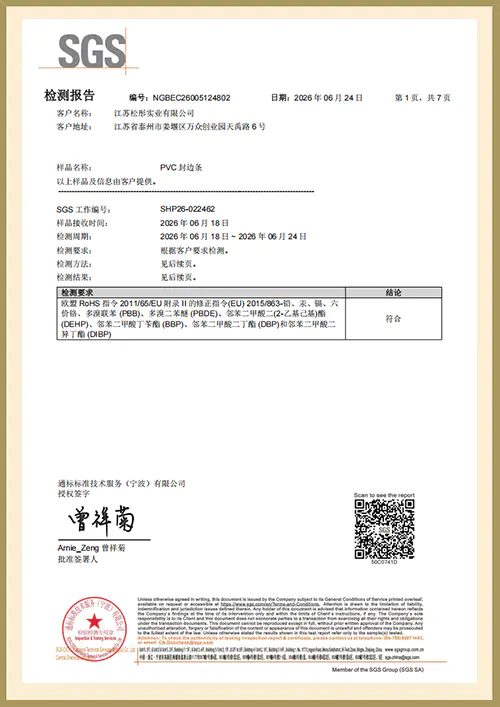
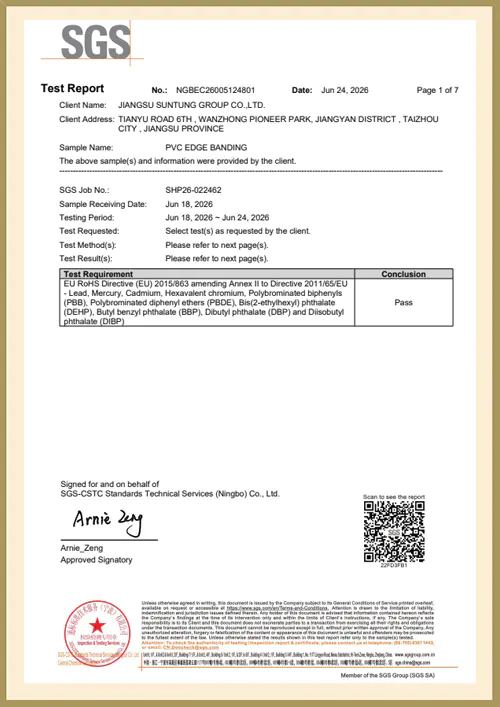
ISO 9001:2015 governs the process from incoming PVC, film, ink and primer through mixing, extrusion, calendering, printing, priming, inspection and packing. Products are EU RoHS compliant, and SGS test reports are issued on request.
| Acceptance check | What we verify | Record |
|---|---|---|
| Master sample approval | Tone, gloss and grain density under agreed lighting | Signed approval sheet held for the order |
| Dimensional check | Width, thickness, winding and roll length | Batch inspection record |
| Surface inspection | Grain uniformity, streaks, film defects | Final inspection report |
| Sealing trial | Primer lay, bond and trim behavior on a banding machine | Machine trial result before shipment |
| Compliance | System, material and restricted-substance status | ISO 9001:2015, EU RoHS, SGS reports |
Information We Use to Configure Your Solution
A usable quotation comes from production data rather than a color name. These are the inputs we work from:
- Panel reference — decor code and supplier, plus a physical offcut where available.
- Target appearance — tone, gloss band, grain density and the surrounding hardware or frame.
- Strip dimensions — gauge, width and trimming allowance on your line.
- Line data — machine model, glue type, feed rate, trimming and scraping setup.
- Geometry — radius work, mitred corners and grain direction at joints.
- Volume and scheduling — annual meters, call-off pattern and container loading preference.
- Packing and documents — roll length, core diameter, label format, pallet type, required certificates, destination port.
Questions We Answer Before Production
Which strip thickness and width will fit our panel?
Gauge and width are set from your panel thickness, the trimming allowance on your machine and the scraper setup. With a panel offcut and machine details, the specification is confirmed in writing before the order is released.
Will the brushed face show fingerprints on dark tones?
The PET film face is specified for fingerprint and abrasion resistance and wipes clean with a mild agent. Dark graphite and blackened steel references get extra attention at sample approval because they reveal handling marks first.
Can you match a panel decor or a metal hardware sample?
Yes. Color, gloss and grain density are matched against an approved master at a similarity of 95% or better, and physical samples are preferred over screen references. Custom tones are developed in-house from drawings and samples.
Does it run on a standard automatic edge bander?
It runs with EVA hot melt or PUR on standard automatic lines. Primer lay and adhesion are verified through machine trials before shipment, and sharp trimming tooling keeps the film face clean.
What compliance documents accompany an order?
ISO 9001:2015 certification, EU RoHS conformity and SGS test reports on request, issued with the shipment documentation.
How is the strip packed and shipped?
Rolls are wound, sealed and labeled to the agreed format, then palletized for export from Shanghai. Mixed containers with other edge banding, profiles, adhesive and screw caps are arranged when a project calls for it.


