

 eng
 English
 Español
 русский
 عربى
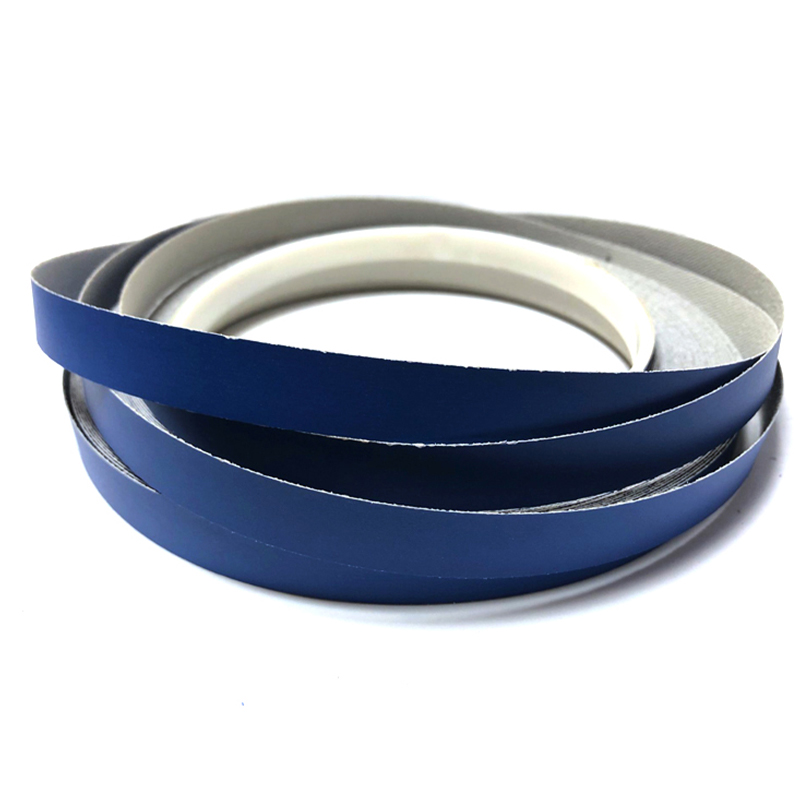
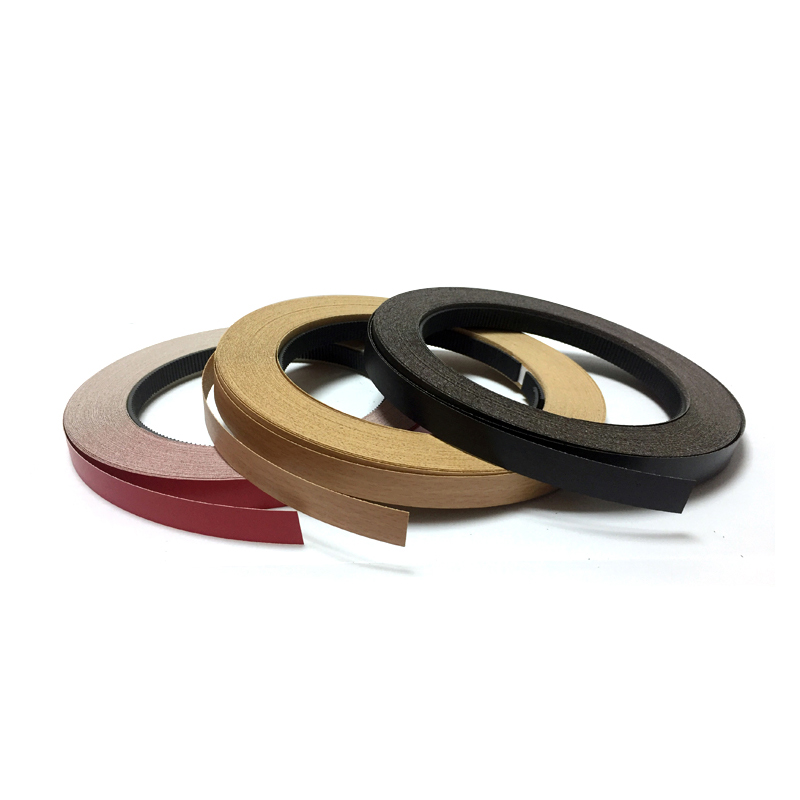
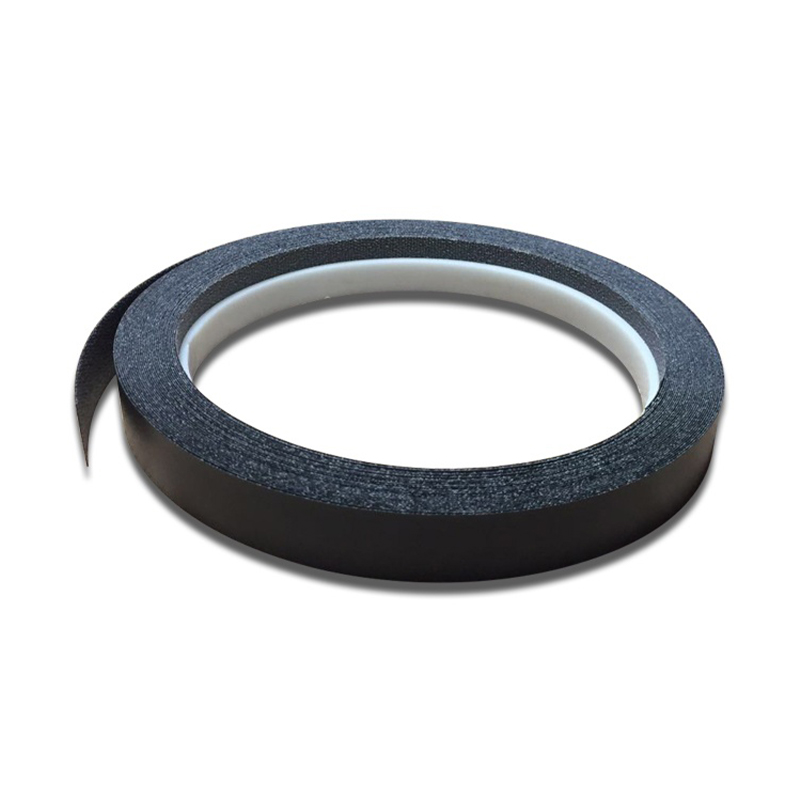
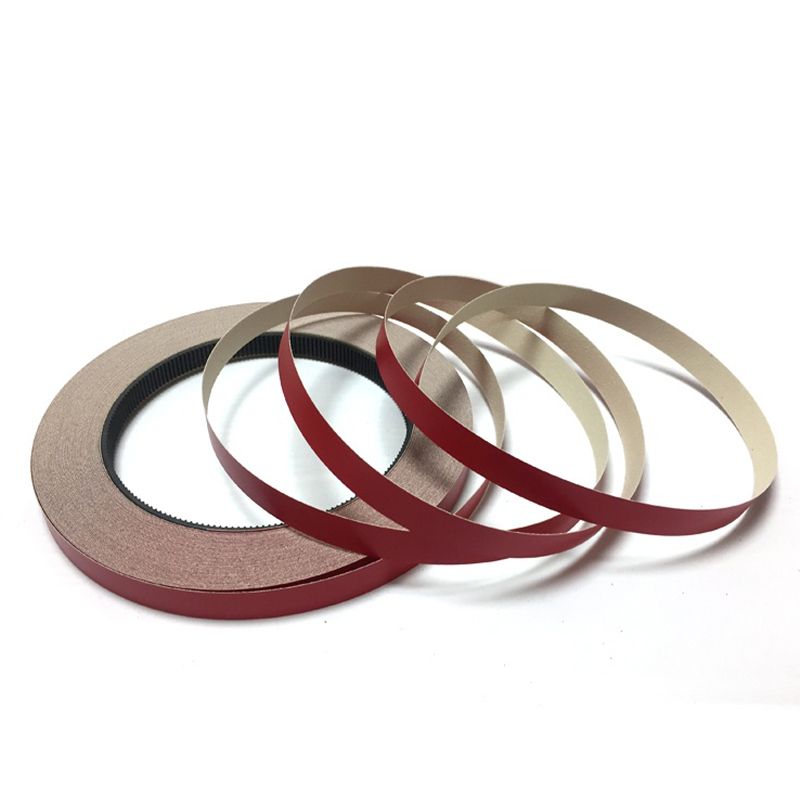




Suntung Industrial has manufactured edge banding since 2005 and produces non-glued melamine edge banding at a 21,500 m² base in Taizhou, Jiangsu. The product is a decorative paper-based edge banding supplied without a pre-applied adhesive layer, so the bond is created in the customer's edge bander glue pot using the hot melt chosen for that production line.
As a Non-glued Melamine Edge Banding manufacturer, we supply furniture factories, cabinet makers and distributors with rolls matched to melamine-faced panels for wardrobes, kitchen cabinets, office furniture, bookshelves and commercial fit-outs. Widths, thicknesses and decorative patterns are produced to drawing or approved sample.
- Automatic edge banding lines running EVA or PUR hot melt
- Panel furniture programs where edge color must follow the face decor
- Thin, low-profile edges on cabinet doors, carcasses and shelving
- Volume orders requiring repeatable color from batch to batch
A Paper-Based Edge with the Adhesive Choice Left Open
Because no glue layer is applied at our factory, the bonding system stays under the furniture maker's control. The same roll can be run on different lines and with different hot melts, which suits plants that standardize on one adhesive across a panel range or switch between EVA and PUR by product family.
- EVA hot melt: the common choice for interior furniture, with simple glue pot settings and fast line speeds.
- PUR hot melt: specified where the finished edge sees moisture, heat or heavier cleaning, including kitchen and bathroom furniture.
- Primer coat: an even primer layer on the paper surface supports wet-out and consistent adhesion during the glue cycle.
Settings that matter at the machine include glue temperature, glue quantity, feed rate, pressure roller force and the condition of the trimming cutters. Our technical team reviews the line data supplied with each enquiry so the roll specification and primer are aligned with the bond system in use.
Range and Decorative Matching
The product sits within our Melamine Edge Banding range alongside the pre-glued variant, where an adhesive layer is already applied for lines without a glue pot. Non-glued rolls are the practical option for plants that want adhesive control in-house and a lower cost per meter on high-volume panel programs.
- Solid colors: white, greys, beiges and custom shades matched to the panel face.
- Wood grains: printed oak, walnut, maple and other decor reproductions with grain direction controlled across the roll.
- Embossed textures: surface patterns aligned with the panel's tactile finish.
- Custom patterns: decorative designs developed from artwork, panel samples or decor codes.
Color tone, texture and gloss level are checked against the approved master sample through production. Our color matching target is a similarity of 95% or above, which keeps the edge from reading as a separate element once the panel is trimmed and assembled.
Panel, Material and Process Fit
Non-glued melamine edge banding is most often run on melamine-faced particleboard and MDF, where the edge should continue the face decor without a visible color break. Board quality and edge preparation influence the result as much as the roll itself.
- Clean, square edges: dust and chipping on the board edge interrupt the glue line and show through after trimming.
- Stable board moisture: excessive moisture in the core can lift a paper edge after cooling.
- Sharp trimming cutters: dull tooling tears the paper surface and creates a pale line along the radius.
- Application environment: for wet or high-wear areas, we point to PVC Edge Banding or a PUR bond with the melamine edge.
For projects with mixed panel types, we can build the specification around one edge family and one adhesive system so the line does not need separate settings for each cabinet component.
Critical Specifications We Set With You
Each order is defined by the parameters below rather than by a single stock item. The table shows how the main configuration choices connect to application and processing.
| Configuration Area | Options We Produce | Application Fit | Processing Effect |
|---|---|---|---|
| Thickness | 0.4 mm and other gauges set to the panel edge and trimming unit | Thin cabinet, wardrobe and shelving edges | Thicker gauges resist trimming stress; thin gauges need sharp tooling and light pressure |
| Width | Cut to board thickness plus trim allowance from drawing or sample | Standard cabinet boards through thicker commercial panels | Controls trim balance on the top and bottom radius |
| Surface and decor | Solid colors, wood grains, embossed textures, custom printed patterns | Melamine-faced panels, kitchen fronts, office furniture | Texture depth and gloss change how the trimmed edge reads |
| Color matching | Match to panel sample or decor code, target similarity 95% or above | Repeat programs and multi-container orders | Limits visible edge-to-panel contrast after trimming |
| Paper and primer | Decorative paper grade and primer coat selected for the bond system | EVA lines and PUR lines | Primer uniformity governs wet-out and bond consistency |
| Roll format | Roll length, core size and packing set to line and container plan | High-feed automatic lines and distributor stock | Fewer roll changes; better container utilization |
| Adhesive system | No pre-applied glue; compatible with EVA and PUR hot melts | Interior furniture through moisture-exposed cabinet work | Glue temperature, open time, pressure and line speed set at the machine |
Production Capacity and Repeatability
Our Taizhou plant runs 23 automatic lines with a monthly output of 25 million meters and capacity for 30 x 20GP containers per month. That scale supports long panel furniture programs where the same decor must arrive repeatedly to the same color target.
Production is organized by department: mixing and color blending, extrusion and calendering of the paper-based substrate, slitting and width control, surface printing, primer application, quality control and packing. Width tolerances and cutting accuracy are controlled at the slitting stage, while printing parameters are held stable to keep grain and shade consistent across batches.
- Incoming inspection of decorative paper, inks, primers and auxiliary materials
- Color and texture verification against the approved master sample
- Automated primer application for an even bonding surface
- Machine tests that simulate production bonding, sealing and trimming
Quality Assurance and Acceptance Evidence
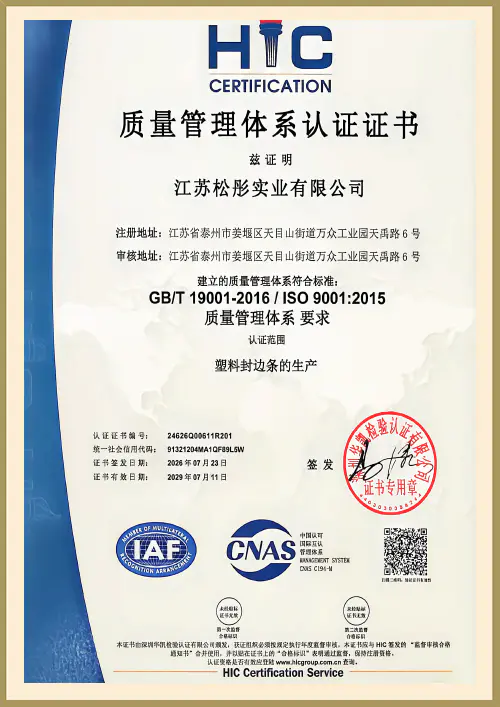
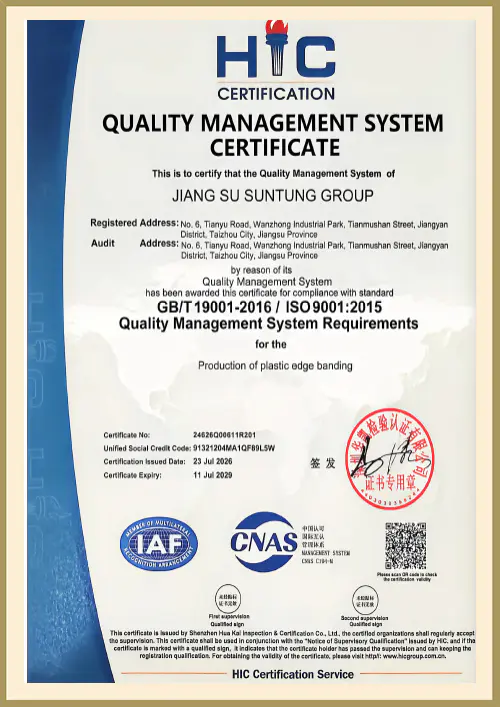
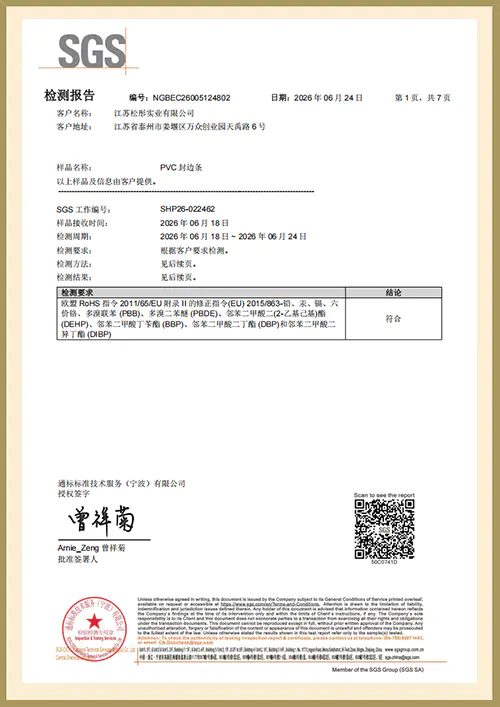
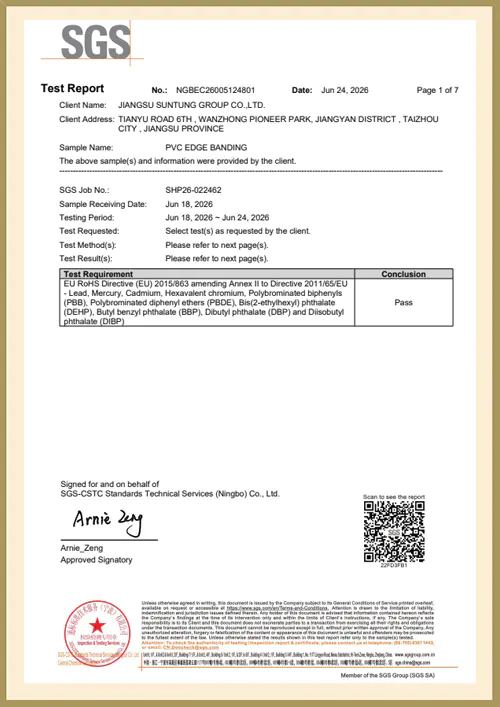
Suntung operates under ISO 9001:2015 and supplies EU RoHS compliant edge banding. Before shipment, each order is inspected for appearance, color accuracy, dimensional tolerances, surface condition, labeling, packaging integrity and full order compliance.
For project acceptance, we can supply batch inspection records, approved master samples and compliance documents, with SGS test reports available on request. Flexibility and trimming performance are also checked so the roll feeds, bends and cuts cleanly on automatic equipment without cracking or pale trimmed edges.
Customization, Documentation and Delivery
Our R&D and engineering team develops non-glued melamine edge banding from drawings, panel samples and decor references. Custom color, texture, width, thickness, surface effect and roll packing are all defined at quotation stage so the delivered roll matches the line it will run on.
- Custom color development and panel decor matching from physical samples
- Private-label printing and roll packaging for distributor programs
- Mixed container loading with other edge banding types and adhesives
- Shipment from the Port of Shanghai with an on-time delivery rate above 98%
Documentation follows the order: packing list, inspection records, certificate copies and material compliance statements are issued with the shipment, and product data is supplied for line trials before volume production.
Information We Use to Configure Your Solution
A precise quotation depends on a short set of project inputs. The more of these we receive at enquiry stage, the more closely the roll is specified before the first meter is produced.
- Panel decor reference, sample or decor code for color matching
- Board construction and thickness, plus finished edge thickness required
- Edge bander make and model, feed rate and trimming configuration
- Adhesive type (EVA or PUR), glue pot settings and current processing issues
- Roll length, core size and packaging preference
- Estimated annual and per-release volume, and container loading plan
- Finished application (kitchen, wardrobe, office, retail) and service environment
- Destination market and any compliance documents required for import
Send the decor reference, board construction, edge bander model and glue type together with your target volume. We return a specification sheet, sample plan and quotation built on that data.
Frequently Asked Questions
What does non-glued mean for melamine edge banding?
The roll carries no pre-applied adhesive. The edge bander applies EVA or PUR hot melt from its own glue pot, which lets the furniture maker control glue quantity, open time and bond strength for each panel type.
Can the same roll run with both EVA and PUR adhesives?
Yes. The primer and paper surface are specified for the adhesive system named on the order. Where a plant uses both, we confirm the roll specification against the line settings for each product family before production.
How is the edge color matched to the panel?
We match against your physical panel sample or decor code, verifying tone, texture and gloss level through production against an approved master sample. Our target is a color similarity of 95% or above, and approved samples are retained for repeat orders.
Which thickness and width should be specified?
Thickness and width follow the board, the finished edge profile and the trimming allowance on your line. 0.4 mm is a common gauge for panel furniture, while heavier trimming setups and thicker panels call for a different specification. We confirm both from your drawing or sample.
How do you keep color consistent across repeat orders?
Inks, decorative paper and primer are inspected on arrival, and each batch is checked against the retained master sample for tone, texture and surface effect. Production parameters in printing and primer application are held to the approved setting for that decor.
What documentation is supplied with a shipment?
Shipments include the packing list, batch inspection records, ISO 9001:2015 and RoHS documentation, and material compliance statements. SGS test reports are available on request for project acceptance files.
Related Products and Categories
Our portfolio also includes Products for applications with different operating ranges, interfaces or integration requirements.


