

 eng
 English
 Español
 русский
 عربى
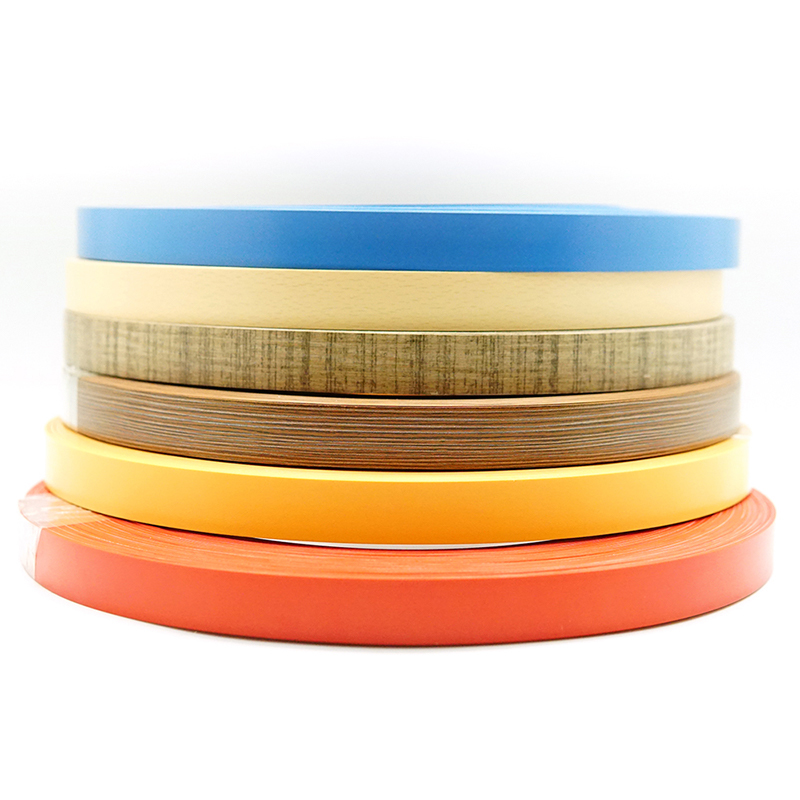
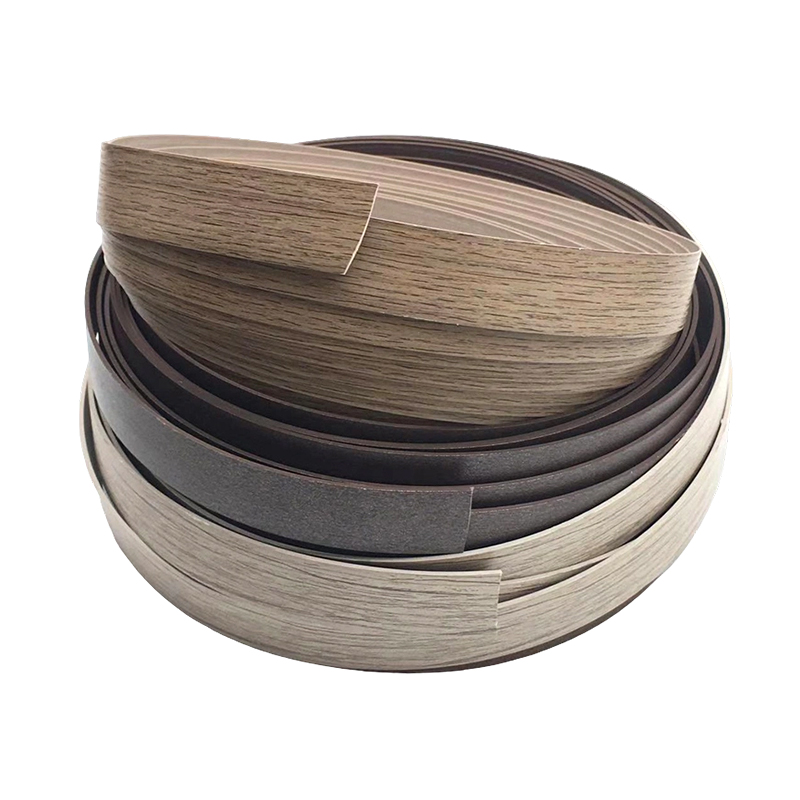
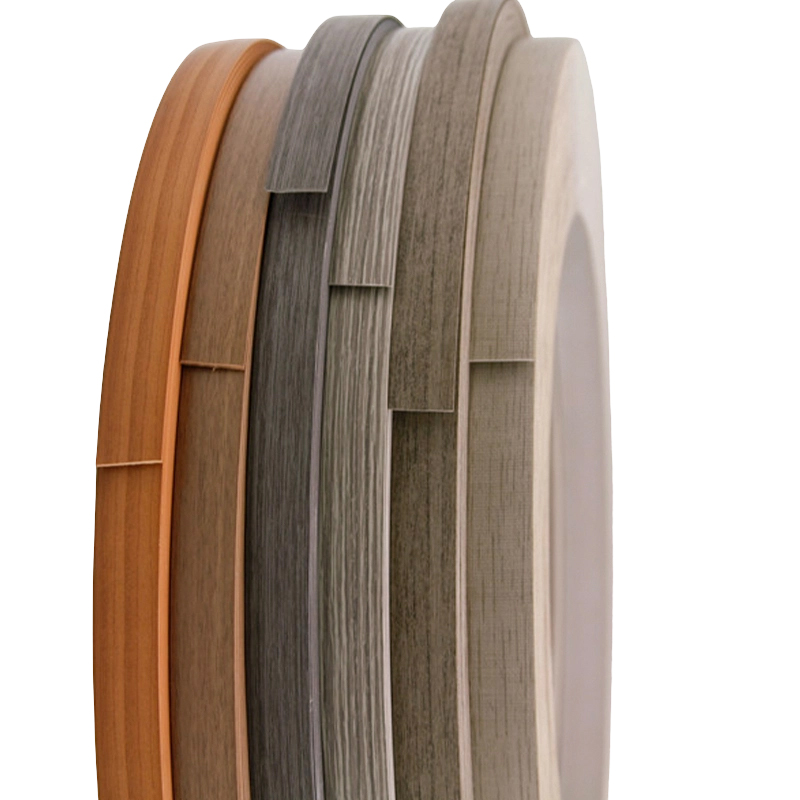



Wood Grain ABS Edge Banding from Our Own Production Base
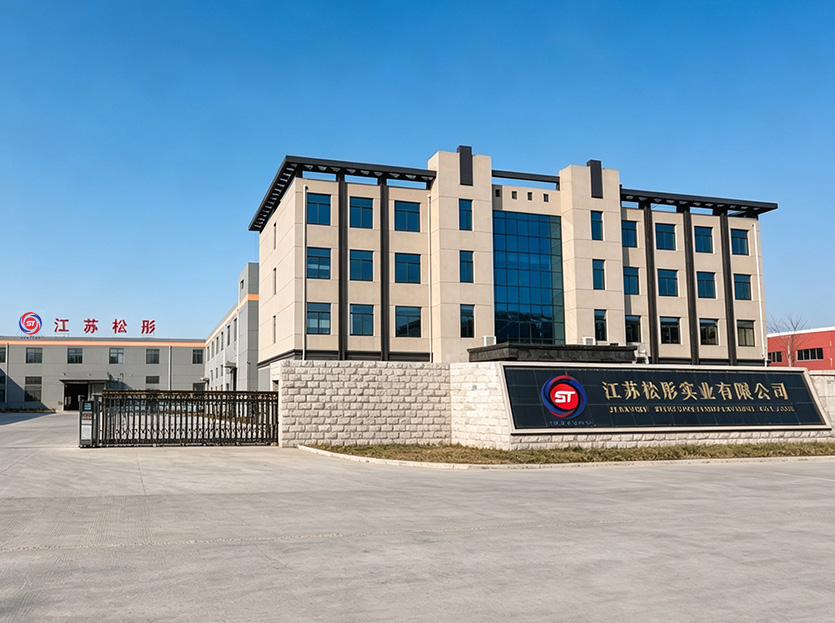
Shanghai Suntung Industry Co., Ltd. has built edge banding since 2005, when our predecessor plant began production in Qingdao. Extrusion, calendering, printing, slitting and packing now run under one roof at a 21,500 m² base in Taizhou, Jiangsu, where wood grain ABS sits alongside our ABS Edge Banding range in solid colour, high gloss and soft touch finishes.
As a Wood Grain ABS Edge Banding manufacturer, we supply furniture factories, panel processors, importers and distributors with a printed and embossed ABS strip that is primed for consistent machine gluing and built to hold its decor through trimming, transport and years of daily use.
- Monthly output: 25 million meters across 23 automatic lines.
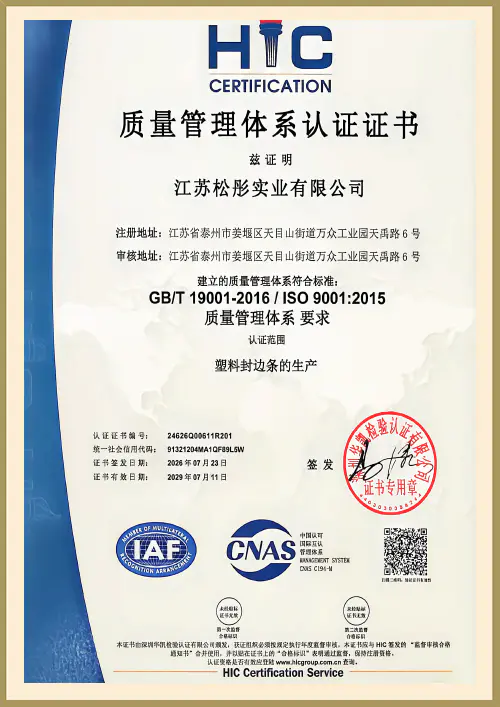
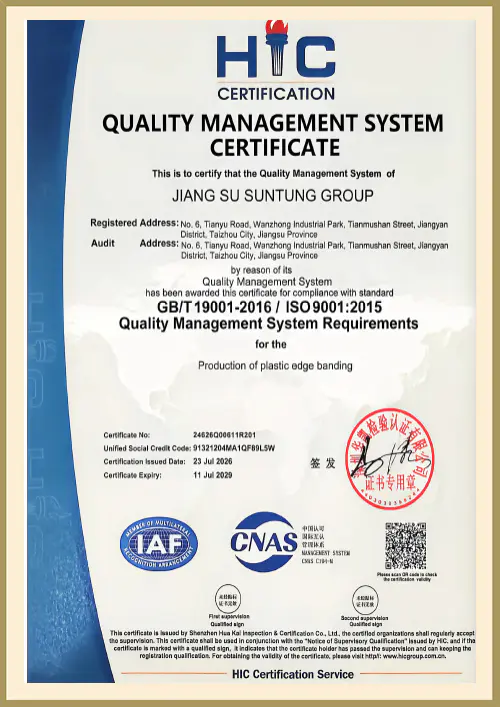
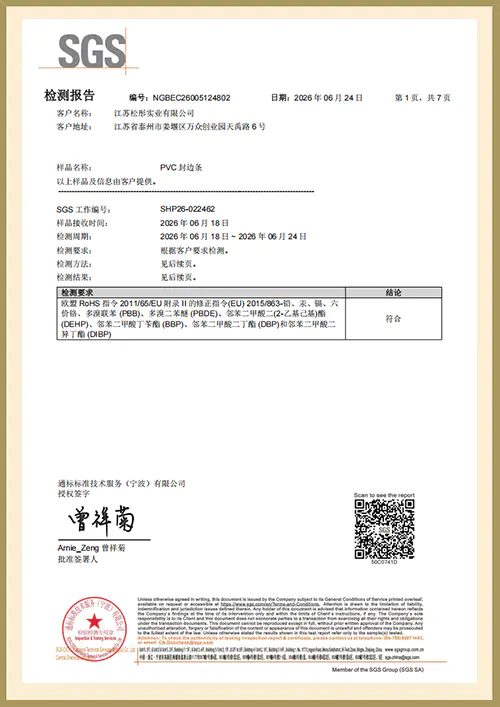
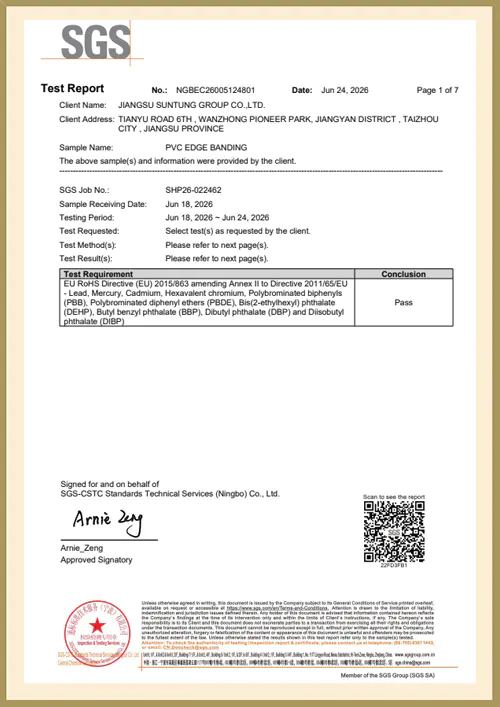
- Quality system: ISO 9001:2015, with SGS test reports and RoHS documentation issued per order.
- Supply record: shipped to more than 90 countries, with long-standing volume supply to Haier and Mengtian Group.
- Colour work: 95% or better similarity against the approved master sample.
Where Wood Grain ABS Fits in a Furniture Programme
Wood grain ABS is the specification for edges that are read as timber at close range but must survive heat, impact and handling without the upkeep of a real veneer. It is used on luxury wardrobes, executive office furniture, premium kitchen cabinets, hotel casegoods and residential interior fit-outs.
The strip is a styrene-butadiene-acrylonitrile terpolymer, so its formulation carries no chlorine and it delivers higher impact strength and better heat stability than PVC of comparable thickness. That matters on doors and drawer fronts where the edge meets an appliance, a hinge or a service trolley.
- Impact: ABS absorbs knocks on corners and radii where thinner, harder strip can chip or craze.
- Heat: ABS holds its shape closer to heat sources, keeping edges tight in kitchen and appliance runs.
- Machining: ABS cuts and trims cleanly on standard edge banding equipment with the right tooling, glue and temperature settings.
- Economics: PVC remains the lower-cost route for long runs where ABS is not specified, so we keep both material families in production.
The Decorative ABS Range We Supply
Wood grain is the largest decorative ABS line we run, and it is quoted on decor complexity, thickness, width, packing and volume rather than as a single commodity. The adjacent ABS finishes share the same substrate and process route, so a mixed project stays consistent in colour family and in the way it behaves on the line.
| ABS variant | Surface character | Typical application fit |
|---|---|---|
| Wood Grain ABS | Printed wood decor with registered embossing; matte, satin or gloss-synchronised | Wardrobes, hotel casegoods, kitchen carcasses, office storage, feature fronts |
| Solid Color ABS Edge Banding | Opaque uniform colour, smooth or finely textured | Colour-block kitchens, contract furniture, panels matched to a defined colour target |
| High Glossy ABS | High-reflectance finish with a lacquer-like sheen | Gloss slab doors, retail display, contemporary handleless fronts |
| Soft Touch ABS | Low-sheen, fine-touch texture with a warm hand feel | Bedroom sets, hospitality furniture, matte and super-matte panel programmes |
Where a project is cost-driven and the specification permits PVC, Wood Grain PVC Edge Banding covers a comparable decor range on a PVC substrate, which lets a programme stay within one colour story across price tiers.
Surface Engineering: Print, Emboss and Gloss
A wood grain edge reads correctly only when print, emboss and gloss are resolved together. Our printing department reproduces wood décors with high colour fidelity, and hundreds of embossed patterns in our portfolio are available to match a panel texture rather than approximate it.
- Print clarity: grain lines, pore detail and cathedral figure held consistent along the roll and between batches.
- Emboss registration: texture depth aligned to the printed decor so the pattern does not drift against the grain direction.
- Gloss synchronisation: super-matte, matte, satin, gloss and high gloss levels matched to the panel so the edge does not flash under directional light.
Matching is carried out against the customer's approved master sample, with reference decors from mainstream panel producers such as EGGER, KRONOSPAN, FINSA and DURATEX held in our matching library. Custom wood grain designs, new embossing textures and OEM-exclusive decors are developed from samples or artwork supplied with the enquiry.
Specifications We Fix Before Production
Each order is defined by the strip and the line it will run on, not by the decor alone. These parameters are confirmed before extrusion and printing begin, and they form the basis of the quotation.
- Substrate and grade: ABS compound selected for the required flexibility, impact and heat profile.
- Thickness: set against panel thickness and edge detail so the strip sits flush after trimming.
- Width and roll length: matched to the machine, coil handling and container plan.
- Texture code and gloss level: locked to the approved panel sample.
- Primer system: specified for your hot-melt, PUR or EVA adhesive and your line speed.
- Colour target: master sample or decor code retained on file for batch comparison.
- Packing format: roll, carton and pallet configuration with labelling for the destination market.
Process Fit on High-Speed Edge Banding Lines
Our wood grain ABS is produced for continuous machine gluing: stable thickness, flat calendered surfaces and an even primer layer applied automatically across the full width. That combination keeps glue spread uniform and limits the feed faults that appear as gaps, bubbles or lifted ends.
Before a new decor or specification ships, we run it on edge banding equipment that simulates production conditions to verify bond strength, sealing integrity and processing stability. The same trial checks trimming behaviour, because a strip that whitens at the trim line becomes a visible defect on the finished cabinet.
- Flexibility: resists cracking when bent, so it holds on curved and shaped panels as well as straight runs.
- Trim quality: a clean, bright cut edge once tooling, feed and temperature are set for the material.
- Adhesion: primer and surface treatment tuned for MDF, particleboard, plywood and HDF cores.
- Handling: chlorine-free formulation simplifies offcut handling and end-of-life routing where the specification requires it.
Capacity, Repeatability and Packing
Capacity reaches 25 million meters a month from 23 automatic lines, and mainstream colours and specifications are held in stock so repeat orders move quickly. Volume is only useful with repeatability, so every batch is compared against the retained master sample at each production stage.
- Mixing: raw material proportioning, colour blending and formula control before extrusion.
- Calendering and cutting: roller pressure, temperature, slitting and sizing controlled for flat surfaces, even thickness and accurate width.
- Inspection: dimensions, colour fastness, surface quality and physical performance verified in process and before shipment.
- Packing: sorting, winding and sealing to the agreed export format, with order labelling and checks on appearance, tolerance and packaging integrity.
Quality Assurance and Acceptance Evidence
Our quality system is certified to ISO 9001:2015, and SGS test reports with RoHS documentation are supplied with the order. Acceptance follows this sequence, and the approved master sample is the reference at every comparison.
- Incoming material inspection — colour accuracy, flexibility, surface finish and machinability of ABS compound, inks and primer.
- Colour matching inspection — tone, texture, decor and gloss checked against the master sample throughout the run.
- Primer and adhesion control — uniform automated coating, then machine testing of bond strength and sealing.
- Surface and print evaluation — emboss clarity, depth uniformity, flatness, plus UV adhesion, scratch and stain resistance.
- Flexibility and trimming test — bending performance and trim quality assessed to limit cracking and edge whitening.
- Final pre-shipment inspection — appearance, colour accuracy, dimensional tolerance, labelling, packaging and full order compliance.
Information We Use to Configure Your Solution
A quotation is only as precise as the inputs behind it. With the points below, we return a defined configuration, a sample plan and a container calculation instead of a generic price per meter.
| Project input | What it determines |
|---|---|
| Panel decor sample or reference code | Print file, ink set and colour matching target |
| Panel thickness and edge detail | Strip thickness and width |
| Panel texture and gloss level | Emboss code and surface sheen |
| Machine, adhesive type and line speed | Primer system and flexibility grade |
| Coil length, roll diameter and labelling | Packing format and handling on site |
| First order and annual volume, delivery schedule | Production slot, stock reservation and container plan |
| Destination market and documentation needs | Compliance file: SGS reports, RoHS, CE, label language |
| Sample quantity and approval route | Development sequence and pre-production trial |
Documentation travels with the goods: batch and colour codes on every label, a packing list per pallet and the compliance file agreed for the destination. Our R&D and engineering team also works from drawings and samples for custom development, and reviews trimming or adhesion issues against the production parameters recorded for the batch.
Frequently Asked Questions
Which thicknesses and widths can you produce?
Thickness and width are set against your panel and your machine during quotation, then cut on our slitting line to the agreed width. Mainstream specifications are held in stock for repeat orders, and custom sizes are produced to the confirmed drawing.
How close can the wood grain match be to our panel?
We work to 95% or better similarity against the approved master sample, with print, emboss and gloss resolved together. Reference decors from major panel producers are kept in our matching library, and we develop new grain and texture files from your sample or artwork.
Will wood grain ABS run on our existing edge banding machine?
Yes. The strip is calendered flat and primed by an automated glue application system for even bonding with hot-melt, PUR or EVA adhesives. We verify each new specification on edge banding equipment before shipment, and share the adhesive and temperature settings recorded during that trial.
When is ABS the right choice over PVC for a high-end range?
ABS brings higher impact strength, better heat stability and a chlorine-free formulation, which suits wardrobes, hotel casegoods and premium kitchen fronts. PVC stays the economic option for long runs where those properties are not specified, and we produce both so a programme can be tiered.
What do you need to start a wood grain ABS order?
A panel sample or decor code, panel thickness, required strip dimensions, machine and adhesive details, target volume and destination market. From those we issue a configuration, a matching sample for approval and a packing plan, then release production once the sample is signed off.


