

 eng
 English
 Español
 русский
 عربى
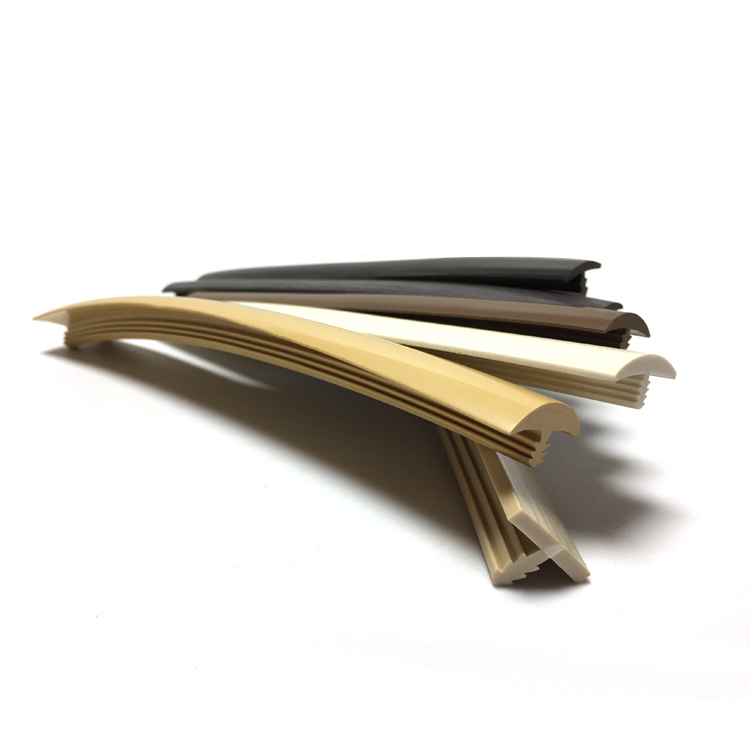





Shanghai Suntung Industry Co., Ltd. extrudes furniture PVC profiles for cabinet carcasses, door fronts, worktops, shelving and interior fit-out — the capping, jointing, insert and trim components that finish a panel where a thin edge band cannot do the job. We work from a 21,500 m² production base in Taizhou, Jiangsu, with export coordination from Shanghai, and each section is built to a dimensioned drawing or an approved physical sample. Edge banding has been our core business since 2005; as a Furniture PVC Profiles manufacturer we apply the same compounding, colour-matching and inspection disciplines to extruded sections.
Profiles are specified at the joint. A sliding door needs a channel that holds a panel without fasteners, a handleless drawer needs an integrated grip, a worktop needs a cap that protects the board core and takes impact. We confirm the cross-section, the panel it meets, the colour reference and the assembly method before a die is cut.
Profile Families and Where They Fit on the Cabinet
The family follows from the joint type and the substrate, not from the decor alone. The table sets out the families covered by our furniture profile programme, the problem each one solves and the information that fixes its cross-section.
| Profile family | Function in the assembly | Typical furniture use | Decisive configuration data |
|---|---|---|---|
| Capping and top trim | Seals an exposed panel top and protects the core from moisture and impact | Worktops, desktops, shelf tops, counters | Leg length, wall thickness, internal gap to panel, colour and gloss |
| U-channel and insert | Holds a panel, glass or inlay without visible fasteners | Sliding wardrobe doors, display inlays, decorative inserts | Insert thickness, groove depth, retention, PVC hardness |
| Corner and joint | Covers a butt or external corner and absorbs minor panel variation | Carcass corners, plinth corners, wall junctions | Radius, both leg lengths, mitre behaviour, colour |
| Handle and grip | Provides an integrated pull, removing separate drilled hardware | Handleless kitchen, wardrobe and drawer fronts | Grip geometry, hardness, fixing method, run length |
| Frame and door | Builds a decorative frame around a panel or glazed insert | Cabinet doors, wardrobe fronts, display units | Section shape, glazing groove, corner joining method |
| Skirting and plinth | Closes the floor junction and protects the cabinet base | Base cabinets, kitchen plinths, vanity units | Height, depth, floor clearance, fixing detail |
| Decorative contour | Adds a matched trim line in gloss, woodgrain or soft-touch finish | Feature panels, furniture edges, interior trim | Surface effect, texture depth, gloss unit, colour reference |
Material, Substrate and Finish Fit
Furniture profiles are extruded in PVC because the material takes a sharp section, holds colour through the full wall thickness and can be formulated from rigid through to soft-touch hardness. Wall thickness and hardness are chosen together: a thin leg needs a stiffer compound to hold shape, while a grip or bumper section needs flexibility so it does not crack when pressed onto a panel.
- Substrate: 16–18 mm particleboard, MDF and plywood are the usual partners; HPL, CPL and melamine-faced boards set the colour and texture target rather than the section.
- Grooved components: insert and frame profiles need groove width, depth and position confirmed on the panel drawing before the mating profile is dimensioned.
- Glass and thin inserts: channel sections carry a defined internal gap so the panel seats without stress points.
- Service environment: kitchens, bathrooms and contract interiors call for colour-fast pigments and a surface that resists cleaning agents and daily abrasion.
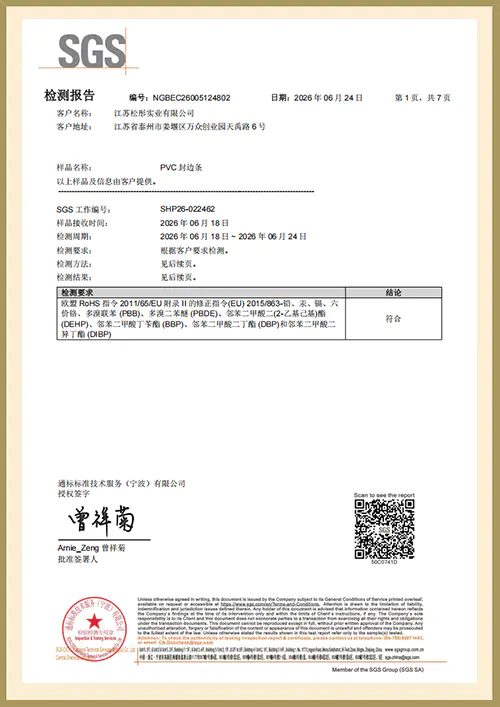
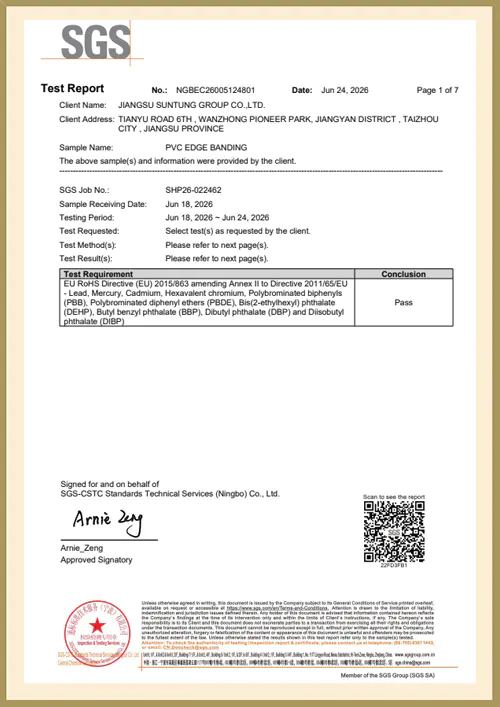
- Compliance: our compounds are formulated to meet EU RoHS requirements, and material documentation is issued with the order.
Specifications We Lock Before Extrusion
A profile drawing is only manufacturable when the tolerance stack is agreed. We settle these points before tooling starts, and they become the inspection plan for the batch.
- Cross-section: dimensioned drawing with leg lengths, wall thickness, internal gaps and radius, plus a tolerance band on each critical dimension.
- Colour: approved master sample or panel reference, read on the finished surface rather than on the compound.
- Gloss and texture: matte, super-matte, satin, gloss or high gloss, with emboss depth where woodgrain or soft-touch feel is required.
- Hardness: Shore A or Shore D target for grip, bumper and sealing sections.
- Length and packing: straight lengths or coiled, cut tolerance, bundle quantity and label content.
- Performance: corner impact behaviour, colour fastness and resistance to the cleaning agents used in the destination market.
Extrusion, Tooling and Repeatability
A new section begins with the die. We build the extrusion tool around the approved drawing, run a trial, measure the first article against the tolerance plan and adjust the calibrator until the section is stable, before production quantity is released. Colour is set at the mixing stage and verified again on the finished profile against the retained master.
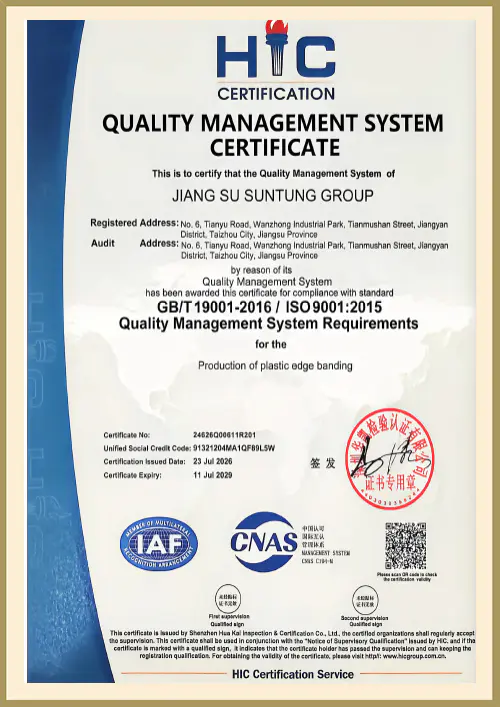
The Taizhou base carries in-house mixing, extrusion, calendering, cutting, printing and a dedicated quality department under an ISO 9001:2015 system. Edge banding output there reaches 25 million metres a month across 23 automatic lines, and the profiles share the same colour laboratory, incoming-material checks and batch traceability.
Integration with Panel Processing and Assembly
Profiles are cut and fitted on the same shop floor as the panels, so the section has to suit the machines already installed.
- Mitre and straight cuts on chop saws and CNC centres, with blade and feed rate that leave a clean face.
- Grooving for insert and frame profiles cut on the panel line, positioned from the same datum as the machining.
- Fixing by friction fit, adhesive, staples or screws depending on the section; we confirm which method the profile was dimensioned for.
- Storage and handling: coiled sections kept relaxed, straight lengths supported so the profile does not take a set before assembly.
Quality Assurance and Acceptance Evidence
Inspection follows the agreed specification list rather than a generic visual check. Each batch is verified for dimensions, colour against the retained master, surface and texture, hardness where specified, and packing integrity before release.
- Colour matching against an approved panel sample, held at or above 95% similarity on our colour-managed references.
- Trimming and milling behaviour checked so cut faces keep their colour and do not whiten.
- ISO 9001:2015 certified quality management, RoHS compliance documentation, and SGS test reports on request.
- Pre-shipment inspection covering appearance, dimension, labelling, packaging and order completeness.
Customization, Documentation and Delivery Scope
Most furniture profiles we produce are project-specific: a section drawn for one cabinet series, a colour reproduced from a panel supplier decor, or a grip geometry matched to an existing handle design. Our engineering team develops from drawings and samples, including colour, texture, size, surface and hardness.
- Colour development against leading panel decors, coordinated with Wood Grain PVC Edge Banding from the same range.
- Gloss coordination with High Glossy PVC Edge Banding where a door front and its trim must read as one surface.
- Packaging to the export route: coil or straight length, inner and outer carton, pallet or crate, labels carrying panel colour and batch.
- Container consolidation with PVC Edge Banding, hot melt adhesive and screw caps, so one shipment covers the cabinet programme.
- Documents issued with the order: packing list, inspection records and the compliance certificates relevant to the destination market.
Information We Use to Configure Your Solution
A quotation is only accurate when the joint is defined. This is what our engineering and export teams need in order to return a dimensioned offer rather than a price range.
- Dimensioned cross-section drawing, or a physical sample together with the mating panel.
- Panel type and thickness, plus the groove or insert dimension where the profile seats.
- Colour reference: panel brand and decor code, Pantone or RAL equivalent, or an approved sample.
- Surface target: gloss level, emboss or soft-touch feel, and which faces remain visible.
- Annual and per-release quantities, run lengths and preferred packing format.
- Assembly method and any machine constraint at the point of fitment.
- Destination port and the compliance documents required on arrival.
Project Questions We Answer at Quotation Stage
Can you extrude a furniture PVC profile to our own drawing?
Yes. Our R&D and engineering team develops customized profiles from dimensioned drawings and physical samples, covering section shape, colour, texture, size, surface and hardness.
How closely can a profile colour match our panel decor?
We match against an approved master sample, holding colour similarity at or above 95% on our colour-managed references. Gloss and texture are checked at the same time, because a correct colour at the wrong gloss still reads as a mismatch on the finished cabinet.
Which panels and inserts do the profiles work with?
Particleboard, MDF and plywood carcasses in the usual 16–18 mm build, HPL, CPL and melamine-faced boards for the decor target, and glass or thin panels in channel sections once insert thickness and groove are defined.
What certification supports the profile supply?
ISO 9001:2015 certified quality management, EU RoHS compliant compounds, and SGS test reports provided on request for the specific batch.
Can profiles ship together with edge banding and adhesive?
Yes. We consolidate profiles, PVC edge banding, hot melt adhesive and screw caps in one container from Shanghai, which keeps a cabinet programme on a single shipment schedule and one set of documents.
What do you need before tooling can start?
A dimensioned drawing or physical sample, the mating panel thickness, the colour reference and the target quantity. We review the drawing, confirm the tolerance plan and return the trial arrangement with the quotation.


