

 eng
 English
 Español
 русский
 عربى
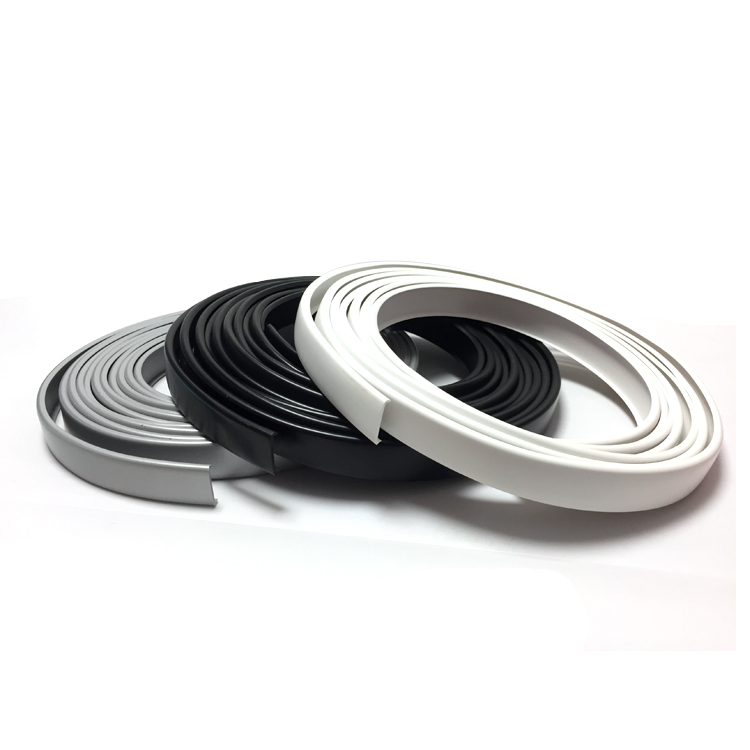



Flexible PVC Profiles cover the parts of a furniture build where a rigid edge cannot follow the geometry: bowed doors, rounded counter returns, shaped headboards, column casings, plinth transitions and trim that has to bend around a radius and stay seated. We extrude these sections to drawing or sample in coil, straight length or cut-to-length form, in compounds and finishes chosen to sit alongside the panel décor on the same project.
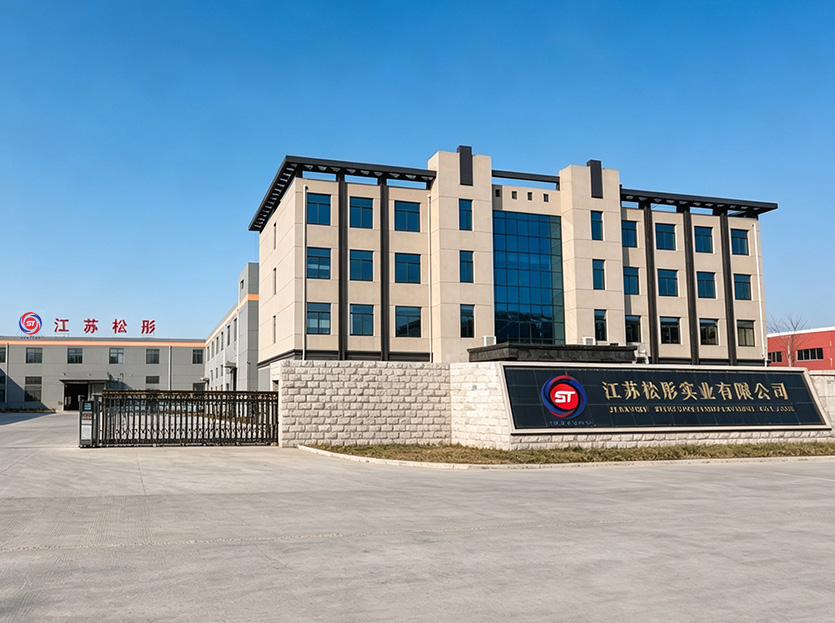
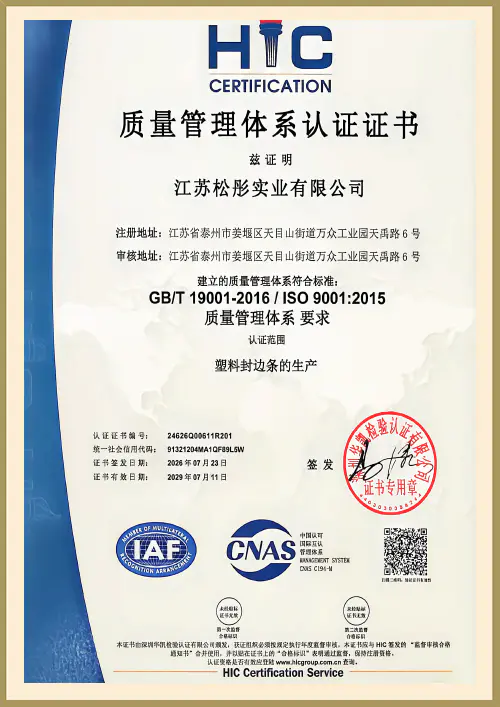
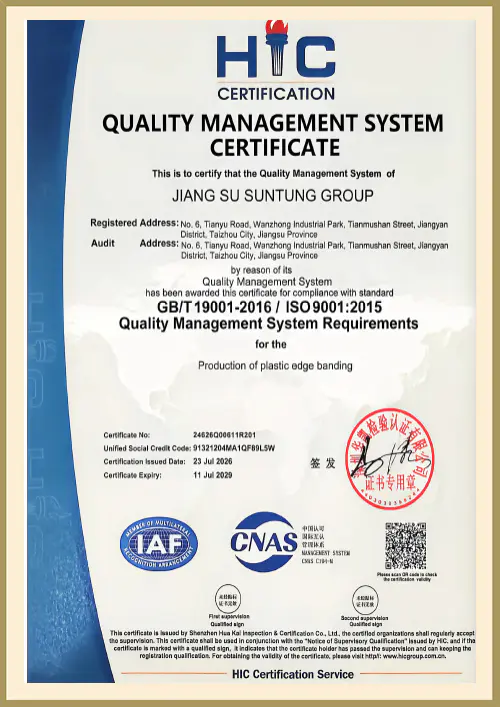
Our position in this category is a custom extrusion supplier rather than a stock catalogue. Most profile projects begin with a section sketch, a panel sample or a cut section taken from an existing part; we convert it into a production drawing, agree compound hardness, colour and surface, then run extrusion and finishing in-house. Suntung Industrial has manufactured edge banding and PVC profiles since 2005 from a 21,500 m² base in Taizhou, Jiangsu, with mixing, extrusion, calendering, printing and quality control under one roof and an ISO 9001:2015 certified quality system.
- Section development from drawing, physical sample or an existing profile
- Hardness, colour, gloss and embossing agreed against an approved master
- Colour matching similarity of 95% or better against the reference sample
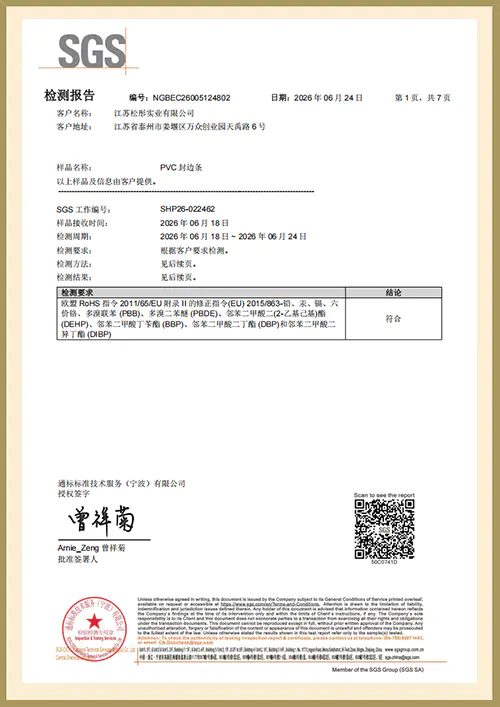
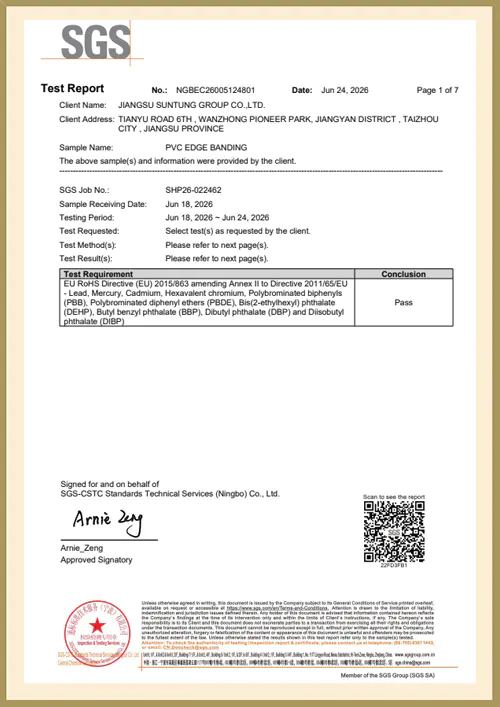
- ISO 9001:2015 system; EU RoHS-compliant PVC compounds; eco-friendly formulation
- Coil, straight length or cut-to-length supply, kitted with edge banding and adhesive
Where a Flexible Section Is the Right Choice
A flexible profile earns its place where the substrate curves, where two surfaces move against each other, or where a rigid section would need heat forming before it could be fitted at all. On tight radii a rigid PVC edge either kinks or lifts at the ends; a flexible section takes the curve cold and holds it with adhesive or a groove. We work the working radius out against the actual hardness of the compound rather than a nominal figure, because the same section behaves differently at Shore A 65 and at Shore A 85.
Applications the range is built around:
- Curved and radiused cabinet doors, drawer fronts and side panels
- Shaped reception counters, bar fronts and contract furniture
- Rounded shelving, display fixtures and exhibition builds
- Column casings, plinth transitions and wall-panel trims
- Soft-lip seals on hinged doors, sliding systems and glass retention
- Colour and material transitions where two panels meet at an angle
Where the geometry is straight, a rigid PVC Edge Banding or an ABS section normally gives a cleaner machining result and a lower cost per metre. Projects that mix flat and curved components are quoted across both ranges so the colour, gloss and texture stay consistent from one part of the cabinet to the next.
The Profile Range We Develop
Sections are grouped by the job they do on the furniture rather than by catalogue name. The table shows the families we develop most often and the parameters that decide whether the part works on your line.
| Profile type | Typical application | Parameters we confirm |
|---|---|---|
| Curved edge trim | Rounded doors, shaped worktops, display and contract furniture | Bend radius, leg length, wall thickness, hardness |
| Capping and U-channel | Panel edges on shaped or thick sections, exposed board faces | Internal gap, board thickness, retention force |
| T-section and insert trim | Groove-mounted edges, decorative joints, panel dividers | Groove width and depth, barb geometry, insertion force |
| Corner and transition profile | Panel-to-panel joints, carcass and plinth transitions | Angle, overlap, colour and gloss level |
| Soft-lip seal section | Door and flap sealing, sliding systems, glass retention | Lip hardness, compression set, closing force |
| Decorative accent profile | Colour inlays, metallic-look trims, design lines | Colour reference, gloss level, surface texture |
As a Flexible PVC Profiles manufacturer in China, we handle both the compound and the section geometry. Furniture profiles, custom extrusion profiles, hot melt adhesive and PVC screw caps are supplied together, so a container can be built from one production and one colour standard instead of several unrelated suppliers.
Compound and Flexibility Engineering
Flexible PVC is a plasticised compound, and the plasticiser level sets the balance between bend, recovery and compression set. We select hardness against three inputs: the tightest radius on the part, the retention method, and the closing or sealing force the section has to carry. A sealing lip and a decorative edge trim on the same cabinet will rarely use the same compound, even when their colour is identical.
Three compound decisions affect the finished part more than the drawing does:
- Migration. Plasticiser can transfer into polystyrene, ABS and coated panels held in long contact, softening the surface or dulling the finish. Low-migration compounds are specified for profiles pressed against sensitive substrates for the life of the furniture.
- Temperature. Handling, transport and cold-climate installation all test flexibility. Compounds are chosen so the section still bends without cracking at the lowest temperature the part will realistically meet.
- Light and colour stability. Pale greys and whites show yellowing first. Stabiliser and pigment systems are selected for the service life of the part, with UV exposure considered where the profile sees daylight.
Specifications Agreed Before the First Run
A flexible section that works on the drawing bench and fails in the workshop usually fails on one of eight points. These are settled in writing before the die is cut and again before the first production batch.
- Section drawing with nominal dimensions, wall thickness and tolerances for every functional feature
- Hardness in Shore A, plus the deflection or compression target the part must meet
- Colour reference — panel sample, RAL or NCS code, or approved master chip — and the required gloss level
- Surface finish: smooth, matte, embossed, woodgrain or high gloss, with texture depth agreed on a master
- Length mode: coil inner diameter and metreage, straight lengths, or cut-to-length with end finish
- Retention method and any groove, barb or adhesive face the profile must engage
- Packaging, labelling and pallet configuration for the destination
- Order quantity, delivery window and the inspection documents required at shipment
Capacity, Tooling and Delivery
The Taizhou base covers 21,500 m² and runs 23 automatic lines, with a monthly output of 25 million metres across the edge banding range. Profile runs are scheduled alongside that output, which matters when a project needs several colours and a fixed shipping date. Our mixing department controls compound proportioning and colour blending in-house, so a flexible profile and the edge banding on the same panel can draw on a single colour standard.
A new section starts with tooling. Dies are cut to the approved drawing, a first-article sample is submitted for bending, fit and colour review, and volume production follows only after that sample is signed off. Tolerances on width, wall thickness and straightness are checked at the line and again at final inspection, and tooling lead time is stated in the quotation rather than assumed.
Coils are wound, sealed and carton-packed; straight lengths are bundled and end-protected; pallets are labelled for the destination. Shipments leave through the Port of Shanghai, with an on-time delivery rate above 95% across our export business.
Colour, Gloss and Surface Matching
A profile that follows a curve is still judged against the flat panel next to it. Our colour matching runs to a similarity of 95% or better against the approved reference, using printing inks from established suppliers and a controlled primer layer so the finish holds after trimming and cleaning. Solid colours are matched against Solid Color PVC Edge Banding from the same project, and décor patterns against Wood Grain PVC Edge Banding, so edges, profiles and panels read as one surface.
Gloss is treated as a separate specification from colour. Super-matte, matte, gloss and high-gloss finishes are available, and embossing depth is matched to a physical master rather than described in words. Before shipment we verify tone, texture and gloss against that master under controlled lighting.
Installation and Line Integration
Flexible profiles are usually the last component fitted, so the installation detail decides whether the finished joint looks intentional. We confirm how the part will be fixed before the section is finalised.
- Adhesive bonding. EVA hot melt adhesive from our own range, or a pressure-sensitive tape face, with the bonding face and primer specified for the profile compound and the panel finish.
- Groove retention. Barb geometry, groove width and insertion force are agreed so the profile seats by hand or with a soft mallet without distortion.
- Expansion allowance. Long runs and warm installation conditions need an end clearance; the figure is set with the section rather than on site.
- Cutting and storage. Coils are stored flat, away from direct heat, and cut with a sharp blade or saw to avoid tearing the lip or edge leg.
- Machine interface. Where profiles are applied on an automatic line, we confirm the feed direction, roller pressure and adhesive open time that the section needs.
Quality Assurance and Acceptance
Incoming PVC compound, pigment and primer are inspected for colour, flexibility, surface and machinability before a batch is released to extrusion. In-process sampling then checks dimensions, hardness, colour and surface condition at intervals through the run, and every batch is compared back to the approved master sample.
Before shipment, products pass a final inspection covering appearance, colour accuracy, dimensional tolerances, surface condition, labelling and packaging. Where a customer will run the profile on an automated line, a machine trial reproduces their production conditions to verify fit, adhesion and sealing behaviour. Our system is certified to ISO 9001:2015, materials are EU RoHS compliant, and SGS test reports and compliance documents are issued on request.
Information We Use to Configure Your Solution
A quotation that holds up in production comes from a short, specific brief. These are the inputs that let us price and schedule a flexible profile accurately:
- Section drawing, sketch, sample or existing part, with the critical dimensions marked
- Panel material, thickness and finish the profile will sit against
- Tightest radius, curved run length and whether the profile is straight or pre-shaped on delivery
- Retention method, and any hardness or compression target the part must meet
- Colour, gloss and texture reference, plus the quantity per size and per colour
- Packing format, destination port and required shipping date
- Compliance documents, labels or inspection records needed with the shipment
Frequently Asked Questions
Can you produce a flexible profile from our own drawing or sample?
Yes. We work from drawings, physical samples and cut sections taken from existing parts, and return a production drawing for approval before tooling. The first-article sample is then checked for fit, bend, colour and surface against your reference, and volume production follows that sign-off.
How do you decide the right hardness for a curved application?
Hardness follows the geometry and the retention method, not a fixed default. A tight radius with adhesive fixing needs a softer compound than a wide sweep held in a groove. We agree a Shore A figure and a deflection or compression target with the drawing, then verify it on the sample part.
Can the profile colour match our panel décor and edge banding?
Colour matching runs to a similarity of 95% or better against the approved master, with gloss level and embossing depth specified separately. Because edge banding, profiles and adhesive are produced within the same group, the profile and the edge band on a given panel are held to one colour standard.
Do you supply the adhesive and other components for the same order?
We do. EVA hot melt adhesive, edge banding, furniture profiles and PVC screw caps can be combined in one shipment, which simplifies container planning and keeps the colour and surface language consistent across the finished cabinet.
What documentation is issued with a profile shipment?
Each batch carries inspection records covering appearance, colour, dimensions and surface condition, together with the packing list and labelling agreed for the destination. ISO 9001:2015 certification, EU RoHS documentation and SGS test reports are provided on request.


