

 eng
 English
 Español
 русский
 عربى
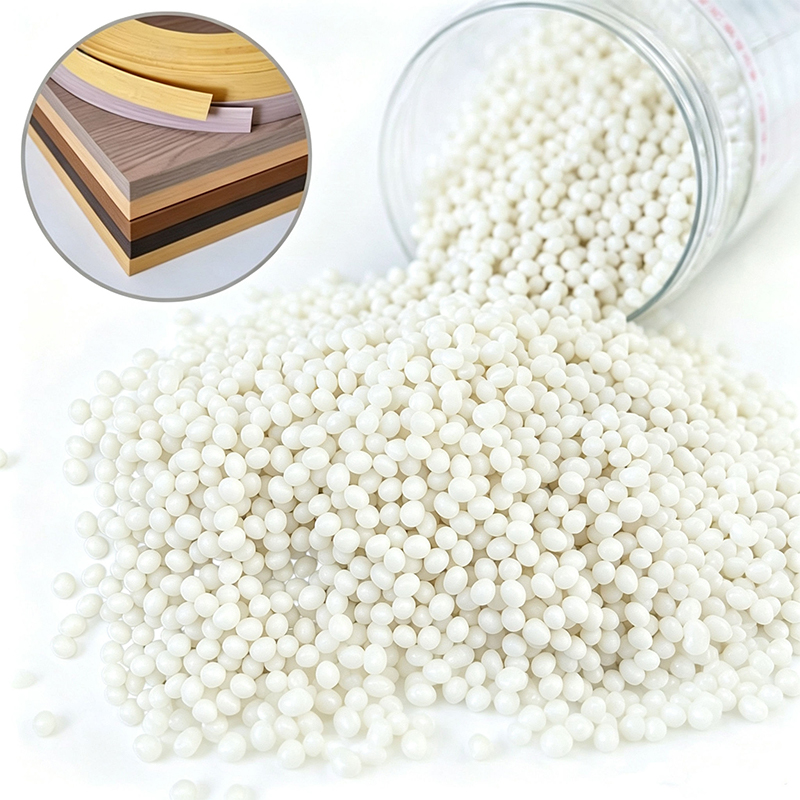
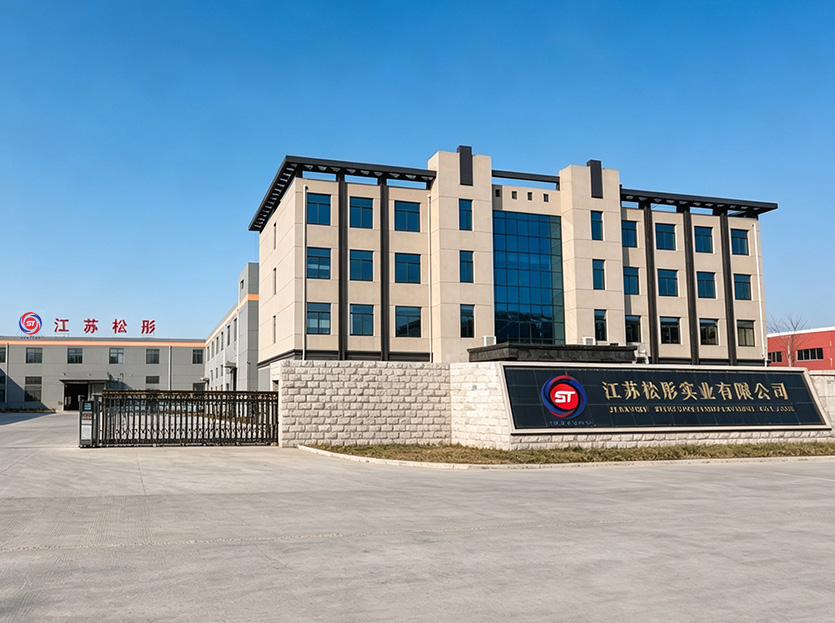


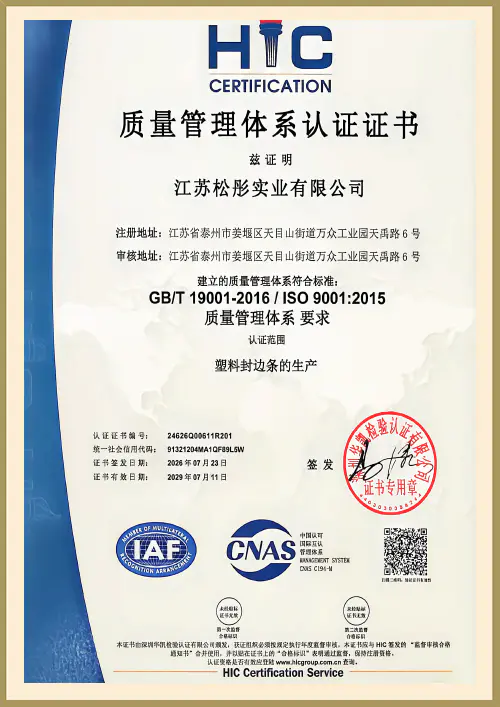
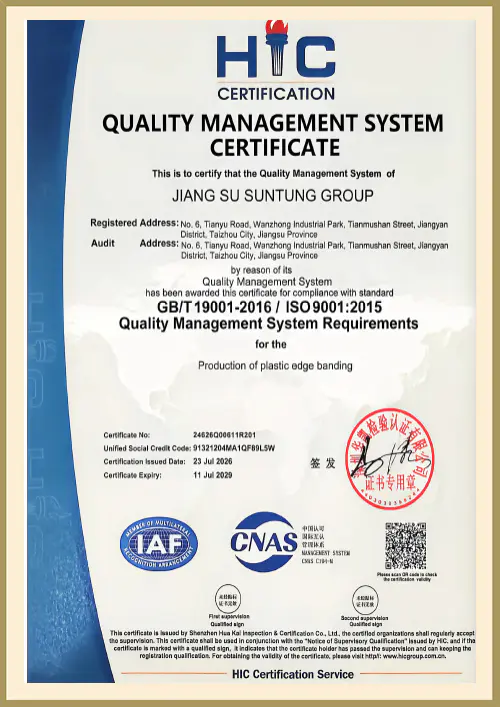

Shanghai Suntung Industry Co., Ltd. has manufactured edge banding since 2005 and supplies EVA Hot Melt Adhesive as part of a complete edge finishing package for furniture production. The adhesive is developed for bonding PVC, ABS and comparable edge materials to particleboard, MDF and plywood on automatic edge banding machines. An ISO9001:2015 quality system, a 21,500 m² production base in Taizhou, Jiangsu and more than 90 export markets support cabinet, door and panel furniture producers who prefer banding, profiles and adhesive from one qualified source.
Why an Edge Banding Producer Supplies the Adhesive
An edge banding adhesive is judged on the line, not in a catalogue. Bond strength, open time and trimming behaviour come from the interaction between the adhesive, the primer and back surface of the banding, the panel core and the machine settings. As an EVA Hot Melt Adhesive manufacturer working from the banding side of the same process, we specify grades around that interaction instead of offering a single universal product.
The practice matters at the point where defects appear: a whitened trimmed edge, a lifted end, adhesive stringing at the pressure roller or carbonised deposits on the pot. Each of these points back to a specific variable — melt viscosity, set speed, pot temperature or surface absorption — and each is addressed before the first bulk shipment rather than after it.
Product Range and Application Fit
Adhesive is supplied alongside the banding it is intended to bond, so a single order can cover a full furniture edge specification. The table below shows how the range lines up with production situations.
| Product family | Form and role | Application fit |
|---|---|---|
| EVA Hot Melt Adhesive | Granule adhesive for glue-pot application | PVC and ABS edge banding on automatic single-sided and double-sided lines; solid colour, wood grain, high gloss and soft touch surfaces |
| Edge banding hot melt adhesive family | Grade selection by chemistry and working point | Plants running several edge materials on the same line, or matching an existing pot and line speed |
| PVC Edge Banding | Rigid PVC strip, commonly 0.4–3 mm | Kitchen, office and contract furniture where colour stability and scratch resistance carry the specification |
| ABS Edge Banding | ABS strip in matte, gloss and soft touch finishes | Tight-radius and shaped panels, and projects specifying a lower-density edge material |
| Pre-glued PVC edge banding | Adhesive pre-applied to the banding back | Smaller shops and lines without a glue pot, where bulk granule adhesive is not the practical route |
| 3D acrylic, melamine and veneer banding | Decorative and paper or wood-based edges | Furniture fronts, low-volume runs and interior joinery where absorption and thickness tolerance change the bonding window |
Matching the Adhesive to the Edge Material and Panel
Grade selection starts with the banding, not with price per kilogram. Two lines running the same 1 mm banding can need different working points once panel core, line speed and plant climate are taken into account.
- PVC banding: high-plasticiser PVC can release plasticiser at pot temperature, so grade and set point are reviewed together to protect bond strength and avoid staining on light colours.
- ABS banding: thin ABS in the 0.4–0.8 mm range softens quickly; temperature and pressure-roller contact are balanced so the strip does not curl or deform along the edge.
- Melamine and paper-backed banding: porous backs draw adhesive away from the joint, so open time and applied weight need more headroom at the same line speed.
- Veneer banding: thickness variation and grain direction change feed behaviour; a slightly slower set is often easier to trim cleanly.
- Panel core: our trials run on your production board, because particleboard dust on the edge, MDF density and board moisture all shift the bonding window compared with a laboratory sample.
- Plant climate: ambient temperature and humidity move open time through the day, which is why a grade proven in a heated hall is not automatically correct for a humid summer shift.
Process Parameters and Specification Variables
Most edge banding EVA grades run inside the 160–200 °C window of a standard glue pot, but the set point that holds a joint together is decided by the grade data and the line speed together. These are the variables we fix with you before production.
| Variable | What it controls on the line |
|---|---|
| Application temperature | Melt viscosity and wetting of the banding back; set from the grade data plus the fastest speed the line runs |
| Viscosity at application temperature | How much adhesive the roller or slot nozzle transfers per metre, and how evenly it spreads under pressure |
| Open time and set speed | Must fit the interval between glue application and the pressure roller at your feed rate |
| Softening point | Heat resistance of the finished joint and behaviour in warm warehouses or transport |
| Filler and ash content | Balance between cohesion, flexibility and pot cleanliness on long runs |
| Colour and granule form | Lighter granules make carbonised contamination visible; granule size affects melt rate and how often the operator tops up |
| Thermal stability and odour | Fewer char deposits on rollers and nozzles, and cleaner air around the pot over a full shift |
Line Integration, Commissioning and Operator Practice
Adhesive performance is partly a machine question. We confirm the pot type, thermostat behaviour and usable melt capacity before a grade is fixed, then set the working point against the way the line actually runs.
- Glue pot: a drift of a few degrees changes viscosity noticeably, so thermostat accuracy is checked against an independent reading during commissioning.
- Feed and pressure: banding feed speed and pressure-roller setting are adjusted as a pair; changing one alone usually moves the defect rather than removing it.
- Idle time: adhesive held at temperature for hours carbonises, so melt volume is matched to the shift and the pot is cleaned down at the end of it.
- Trimming and scraping: end trim, flush trim and radius scrapers expose bonding faults within seconds, and a clean, non-whitening trimmed edge forms part of the acceptance trial.
- Operator safety: pots run hot enough to burn; gloves, eye protection, fume extraction and a guarded pot area are standard, and spills are cleared while warm.
- Commissioning: a short run on each edge profile at production speed confirms bond, seal and trim before the first full shift starts.
Capacity, Consistency and Delivery Planning
Our edge banding operation runs 23 automatic lines with a monthly output of 25 million metres and container capacity of around 30 × 20GP per month, shipped from Shanghai with an on-time delivery rate above 95%. Adhesive orders are planned into the same shipment schedule, which allows banding, profiles and adhesive to leave in one consolidated container instead of three separate bookings.
For distributors stocking several product lines, that consolidation shortens the receiving process and keeps one set of documents against one shipment. For furniture plants, it means the adhesive and the banding it was trialled with arrive together and carry the same order reference.
Quality Assurance, Acceptance Testing and Documentation
Production is controlled under an ISO9001:2015 system that starts with incoming raw material checks and ends with a final inspection before dispatch. Colour tone, surface finish, dimensional tolerance, labelling and order compliance are verified against the approved master sample on every batch.
- Incoming raw material verification before a batch enters production
- Machine trial on your edge profiles to confirm sealing, bond strength and trimming behaviour
- Final inspection of appearance, dimensions, packaging integrity and order compliance
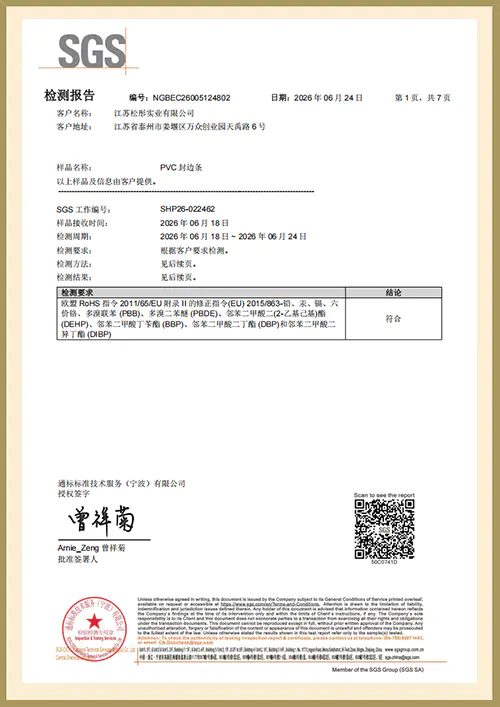
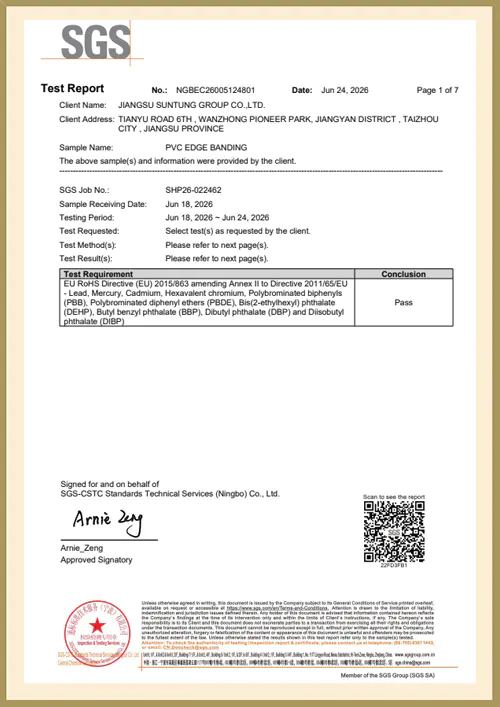
- SGS test reports and compliance documents, including RoHS evidence, available on request
- OEM and ODM development from drawings and samples, with custom grade, packaging and label requirements handled through the same engineering team
Storage, Handling and Serviceability
EVA granules keep their working point when they are stored sealed, dry and out of direct sun, and when stock is rotated first in, first out. Bags that have absorbed moisture foam at the pot and transfer poorly, which is a storage problem rather than an adhesive problem.
Serviceability on the adhesive side is mostly pot hygiene. Filters, hoses and nozzles clog first; a routine clean-down protects the pump and thermostat, and keeps the working point stable across the shift. Packaging format and labelling are agreed per order so the material arrives in a form the plant can handle without repacking.
Information We Use to Configure Your Solution
A quotation is prepared against the working point, the material pair and the production target. The following details let us confirm the grade, packaging and shipment plan without a second round of questions.
- Edge material and thickness — PVC, ABS, 3D acrylic, melamine paper or veneer, typically 0.4–3 mm
- Panel substrate — particleboard, MDF, HDF or plywood, with density and moisture content where known
- Machine details — make and model, pot type, thermostat range and pressure-roller arrangement
- Line speed and open time — the fastest speed the line runs and the interval available before the pressure roller
- Edge profile — straight, radius, curved or soft-forming, and whether the line runs zero-joint trimming
- Volume and order pattern — monthly and annual consumption, preferred bag or box size, pallet configuration
- Plant climate and storage — ambient temperature and humidity through the year, and warehouse conditions
- Documentation and destination — port of discharge, compliance documents required, private label or OEM labelling
- Trial samples — banding and board offcuts for a bonding and trimming trial before bulk production
Frequently Asked Questions
Which edge materials does Suntung EVA hot melt adhesive bond?
PVC and ABS edge banding are the main applications, covering solid colour, wood grain, high gloss and soft touch surfaces on automatic lines. Melamine paper and veneer banding are reviewed individually because their absorption and thickness tolerance place different demands on open time and applied weight.
Can adhesive ship in the same container as the edge banding?
Yes. Banding, profiles and adhesive are planned into one consolidated shipment from Shanghai, so a mixed order arrives under one set of documents and one order reference. This suits distributors stocking several lines and plants that want the trialled adhesive and banding delivered together.
What decides the grade you recommend?
The edge material, panel core, pot type and thermostat range, line speed, plant climate and order volume. We confirm these before production and set the application temperature and packaging against the machine the adhesive will actually run on.
Is EVA hot melt suitable for high-temperature service?
Standard EVA grades are built for interior furniture and normal indoor service conditions. Where a joint is exposed to sustained heat — close to cooking appliances, in vehicles or in unventilated storage — the requirement is reviewed at specification stage, because a higher-performance adhesive may be the better fit than a standard EVA grade.
How is a trial handled before a bulk order?
Trials start with your banding and board samples and run at production speed on your line. Bond strength, seal quality, trimming and pot behaviour are recorded, and those results become the acceptance reference for the bulk order and for repeat shipments.
Which documents accompany an adhesive order?
Orders are produced under our ISO9001:2015 system, and SGS test reports plus compliance documents such as RoHS evidence can be supplied on request. Packaging lists, batch identification and label content are agreed at order stage.


