

 eng
 English
 Español
 русский
 عربى
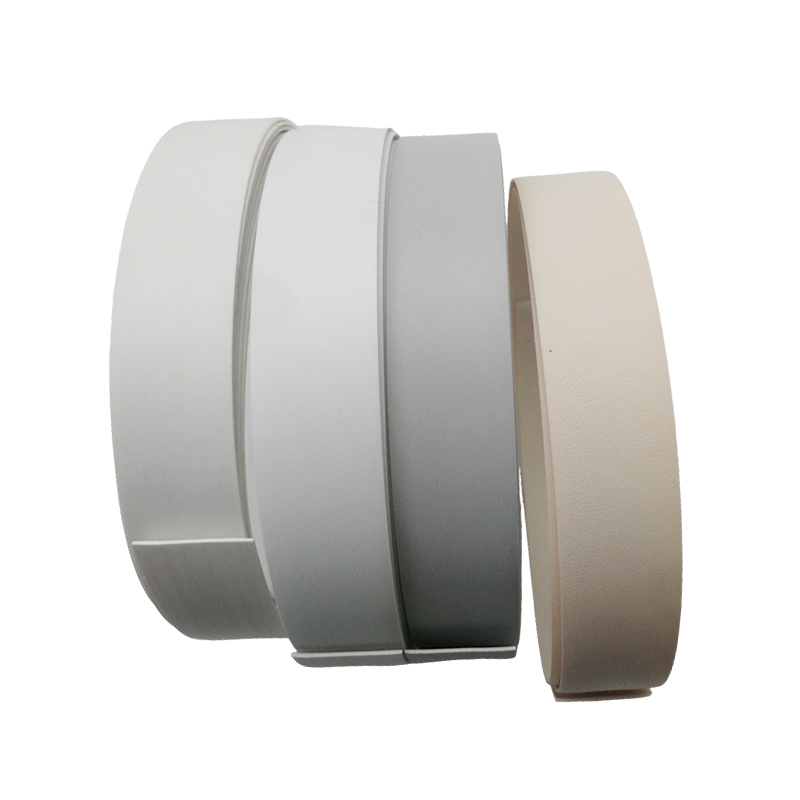
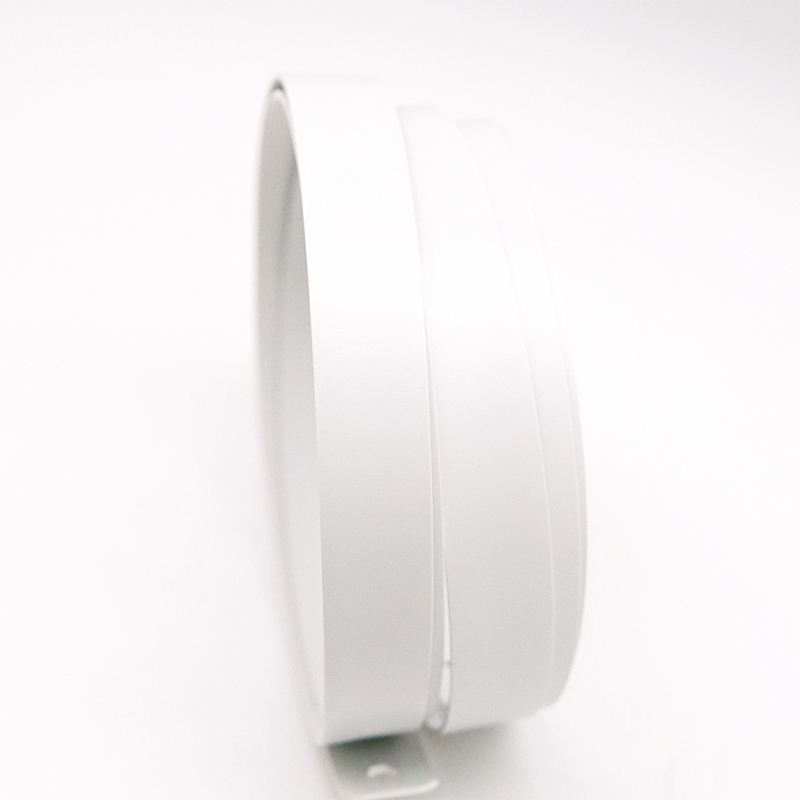
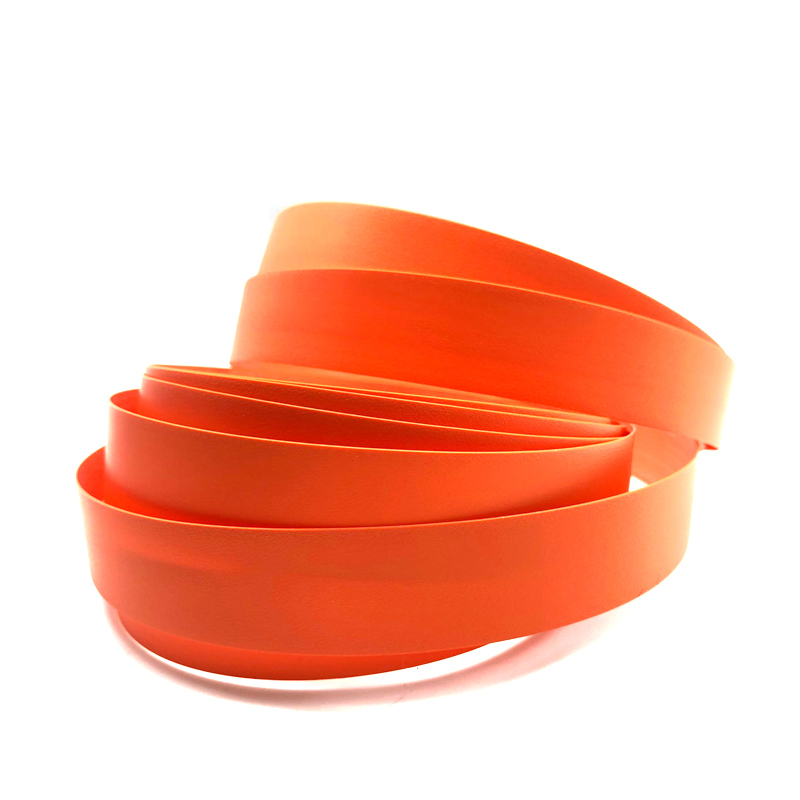
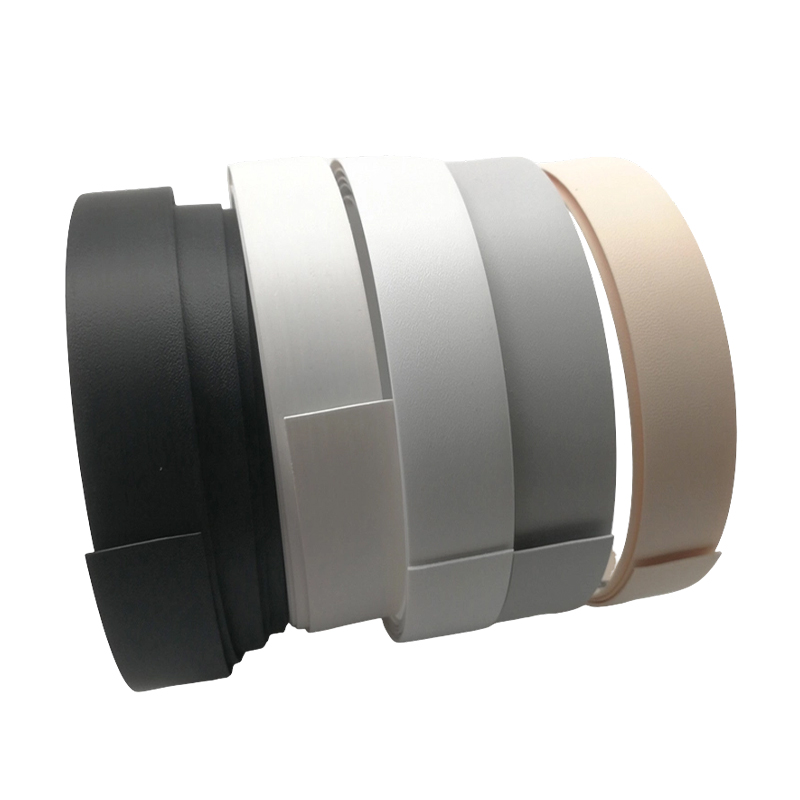
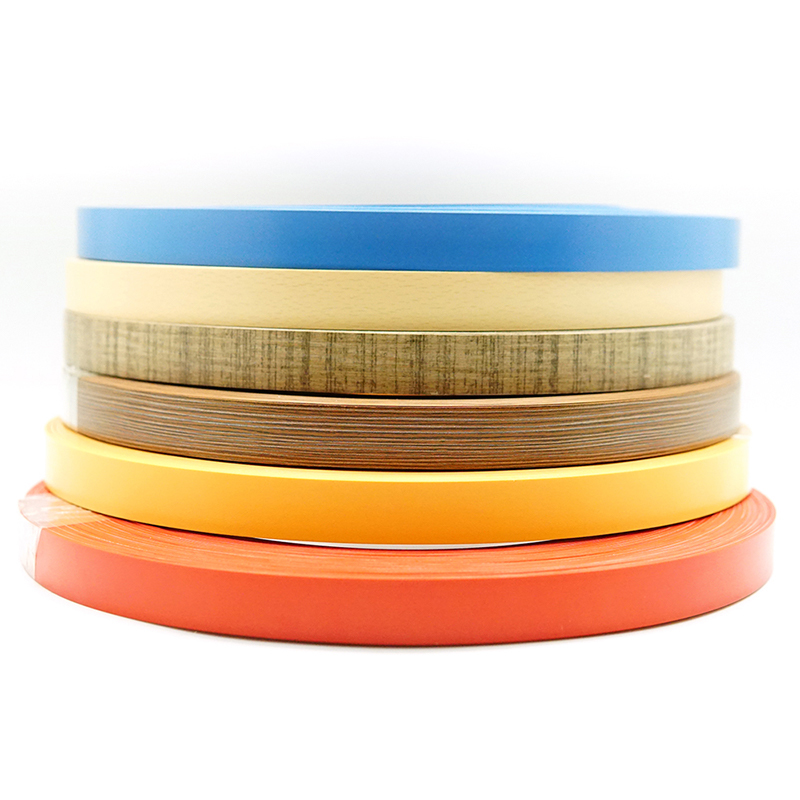
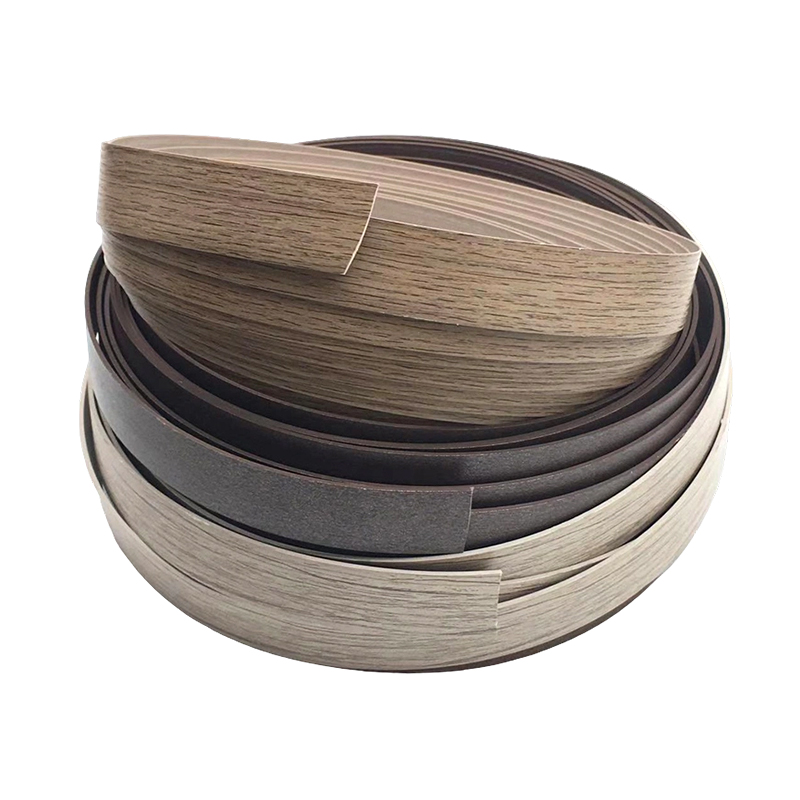
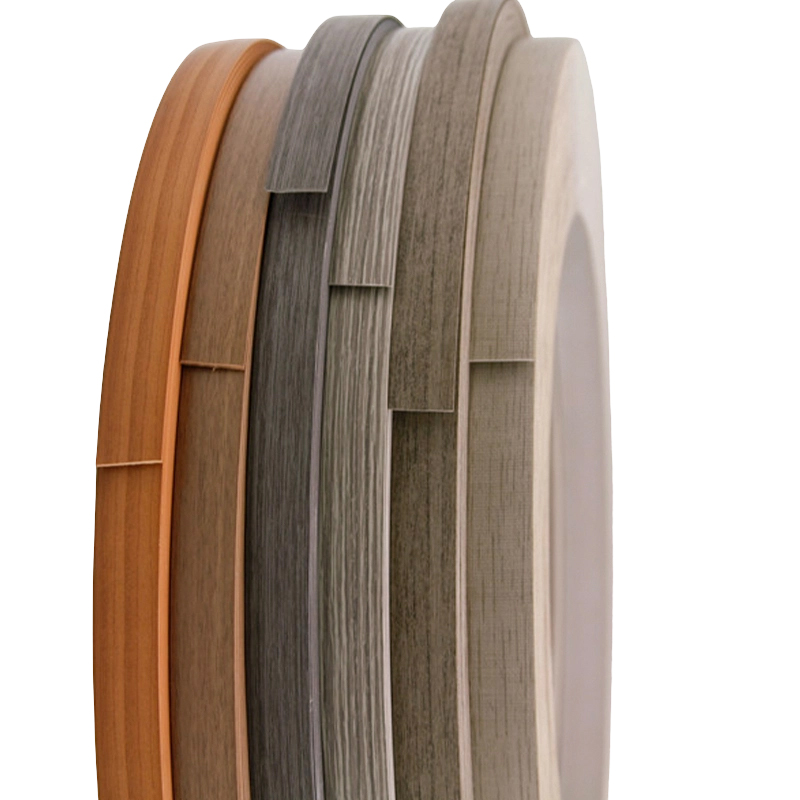
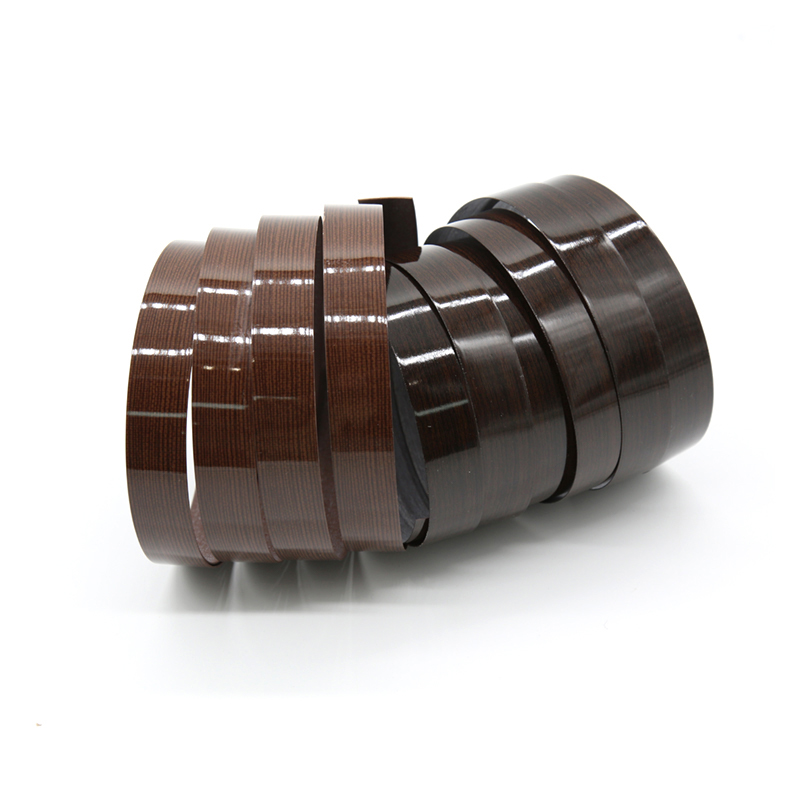
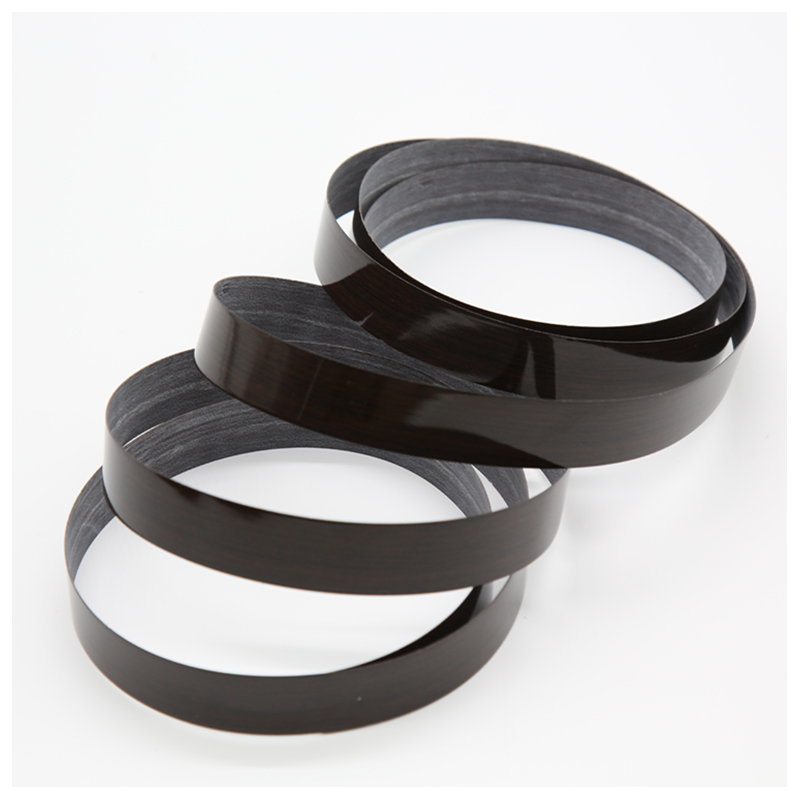
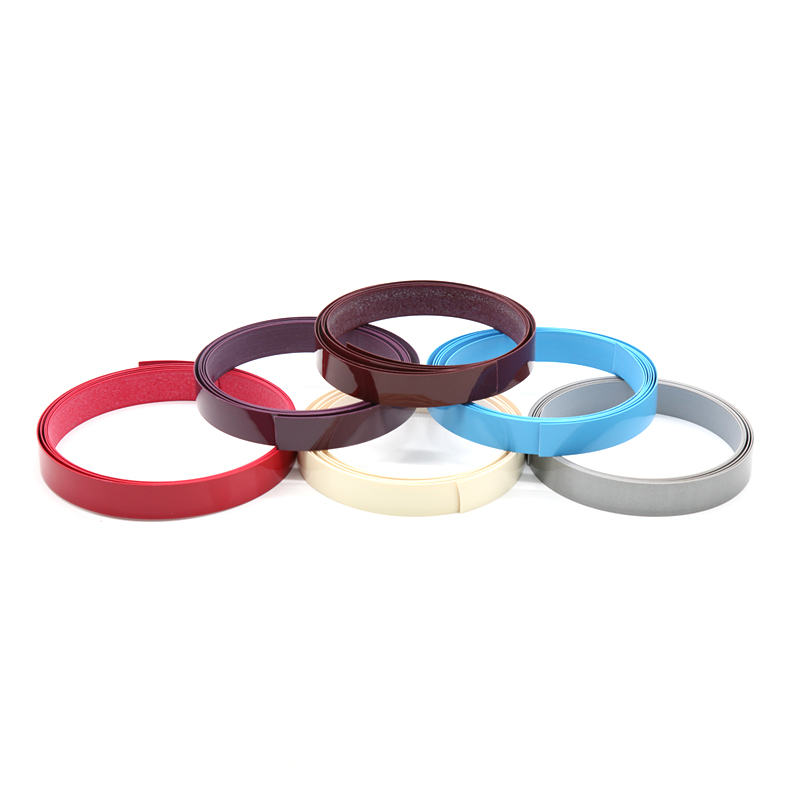
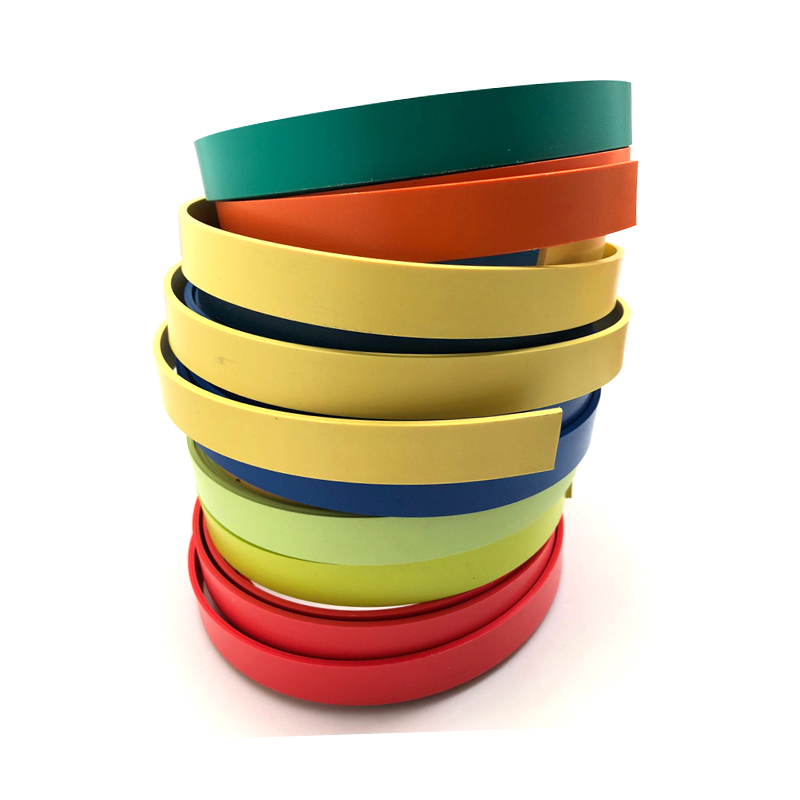
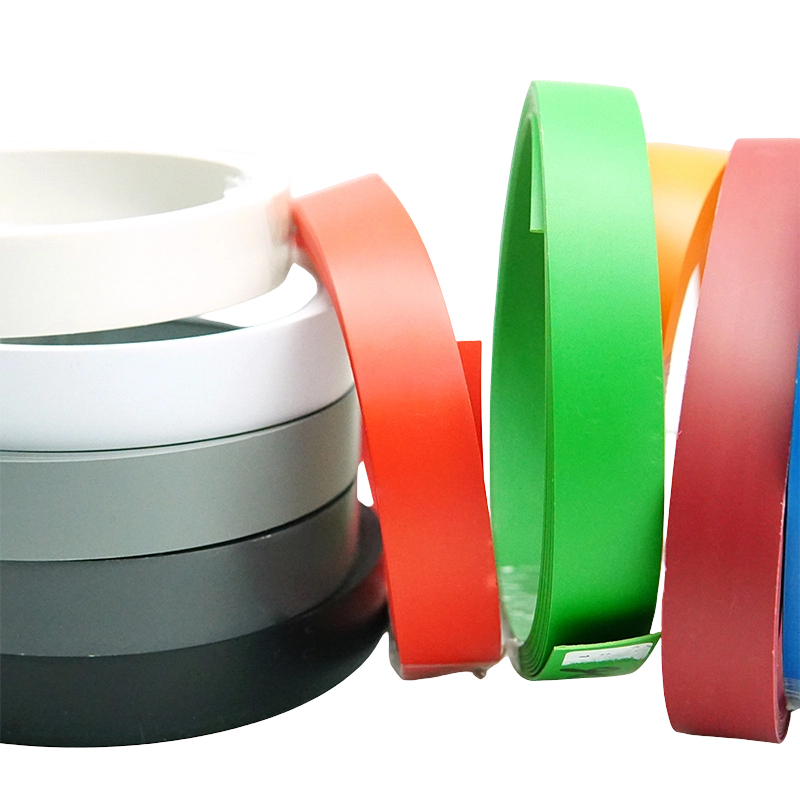
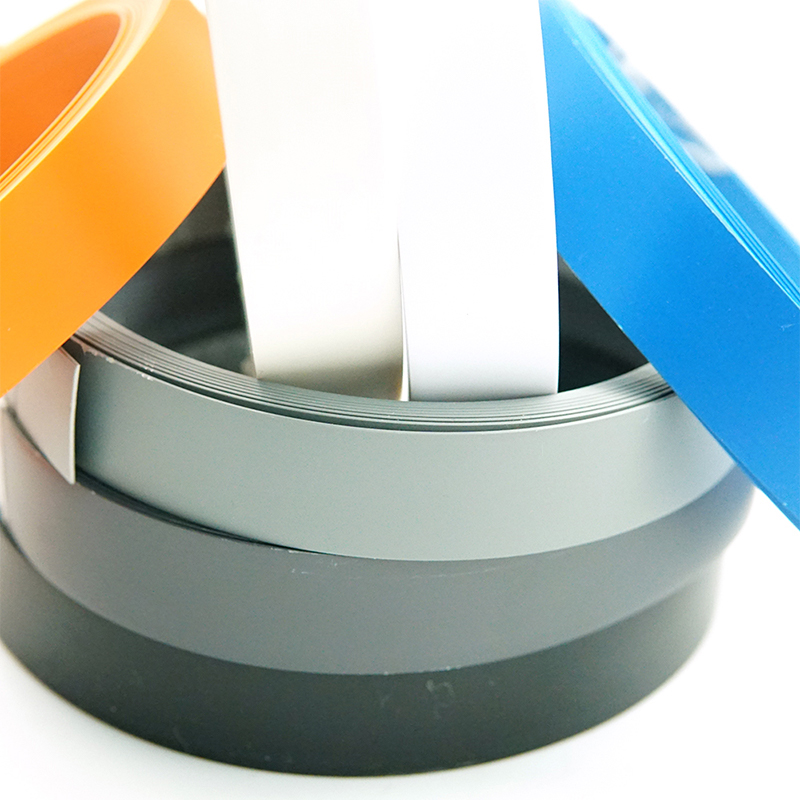



Suntung is an ABS Edge Banding manufacturer producing chlorine-free decorative edging for kitchen cabinets, wardrobes, office systems, healthcare, educational and contract furniture. The range covers four finish families — solid color, wood grain, high gloss and soft touch — supplied as matched decorative edges for panel lines running EVA or PUR hot melt adhesives.
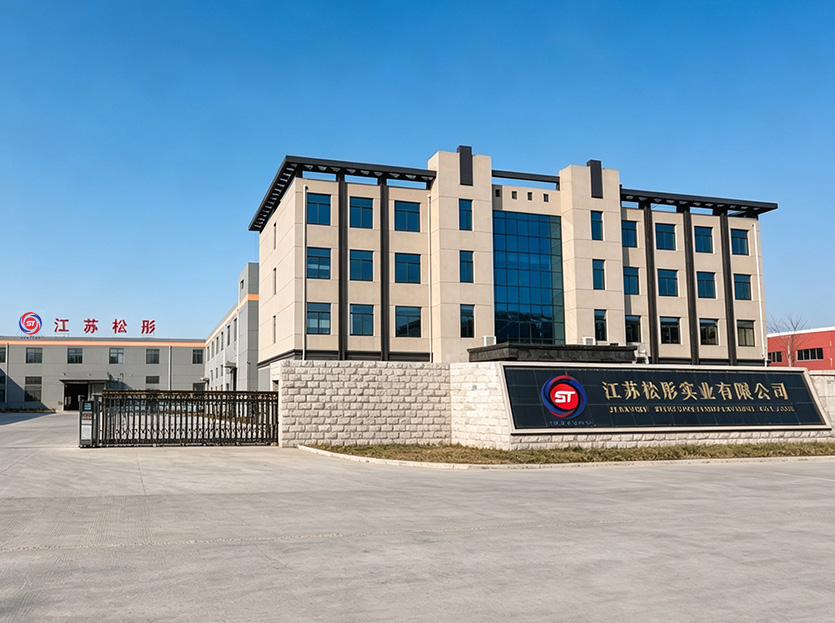
Edge banding has been our core business since 2005, when the predecessor of Suntung Industrial began R&D and extrusion in Qingdao. Production now runs from a 21,500 m² base in Taizhou, Jiangsu, with automated glue application, dedicated color inspection and machine testing before shipment, at a monthly capacity of 25 million meters.
ABS as a Material Choice for Furniture Edges
ABS (acrylonitrile butadiene styrene) is a chlorine-free thermoplastic. Unlike PVC, it carries no chlorine in its formulation, and the finished banding is recyclable — a practical advantage where projects are assessed on environmental criteria, indoor air considerations or end-of-life recovery. Impact strength and heat stability are high for a decorative edge material, so banding holds its shape on worktops, door edges and children's furniture that take repeated contact.
The material also behaves predictably on automatic lines: it feeds without stretching, bonds with standard hot melt systems, and trims and scrapes cleanly. Surfaces accept fine printing and embossing, which is why ABS carries credible wood grain and high-gloss decoration rather than reading as a flat plastic edge.
- Chlorine-free and recyclable — supports environmental documentation for export-oriented furniture programs.
- Impact and heat resistance — suited to heavy-use edges on doors, drawers, worktops and carcasses.
- Clean trimming — no cracking or surface damage through the trim, scrape and buff sequence.
- Adhesive compatibility — formulated for EVA and PUR hot melt with a uniform primer layer.
- Color fidelity — matching similarity held at 95% or better against the approved master sample.
The ABS Range We Supply
Each finish family is positioned by the surface it has to sit beside, not by color alone. The table below sets out how the four ABS ranges map to panels, furniture types and processing conditions.
| ABS Product Range | Surface Character | Typical Application Fit | Panel Pairing | Processing Notes |
|---|---|---|---|---|
| Solid Color ABS Edge Banding | Opaque, uniform tone in matte, satin or gloss | Office and educational furniture, healthcare, kitchen carcasses, retail fixtures | Solid-color melamine, lacquered-look and painted boards | Tone and gloss held to the master; stable through trimming |
| Wood Grain ABS Edge Banding | High-definition print with embossed grain texture | Wardrobes, hotel and executive furniture, living room and bedroom ranges | Woodgrain melamine, veneered and HPL-faced boards | Grain direction, print register and emboss depth fixed per decor |
| High Glossy ABS Edge Banding | Mirror-level gloss with clear depth on an ABS substrate | Luxury kitchens, bathroom vanities, designer and commercial fronts | High-gloss acrylic, UV-coated and PET boards | Gloss matched to panel; surface protection and winding controlled |
| Soft Touch ABS Edge Banding | Super-matte, low-glare texture with anti-fingerprint behavior | Handleless kitchen fronts, premium residential and contract interiors | Super-matte and soft-touch decorative panels | Texture depth and sheen controlled; surface durability verified |
The same extrusion and printing platform serves all four families, so a project that mixes matte carcass edges with glossy or grained fronts can be consolidated into one production and shipping program rather than sourced from separate suppliers.
Matching Panels, Gloss and Texture
Color harmony is decided at the joint between board and edge, so approval starts from the physical panel. During color development and production we verify tone, decorative finish, surface texture and gloss level against the approved master, which keeps the edge visually continuous with the face material on assembled furniture. Our matching similarity is held at 95% or better, and the approved master is retained as the reference for repeat orders.
Gloss coordination matters as much as color on matte and high-gloss work. A super-matte edge next to a satin panel reads as a different product under showroom lighting even when the color is correct, so finish level is confirmed at the sample stage:
- A physical panel offcut, or a decor code with the panel producer's brand and collection.
- Required finish: matte, super-matte, satin, gloss or high gloss.
- Whether the grain must run with the panel and whether texture must register with the printed pattern.
- The lighting condition used for approval, so tone is judged under the same reference as the customer's own inspection.
Specification Variables We Fix Before Production
A banding order is a set of locked variables. We confirm each one against the panel, the machine and the finished part, and record it on the order specification so repeat shipments carry identical material.
- Thickness — set by the panel and the wear expected: thin gauges for stable, low-traffic casework; heavier gauges for radius edges and impact zones.
- Width — normally ordered slightly over panel thickness to allow flush trimming without under-cutting the edge.
- Tolerance — thickness and width tolerances agreed so trimming units and scrapers behave consistently from roll to roll.
- Roll format — length, core diameter, winding direction and splice policy, matched to the machine's coil capacity and feed direction.
- Primer and adhesion — automated primer application with machine testing before delivery to verify bonding and sealing behavior.
- Surface specification — emboss pattern, texture depth, grain direction and gloss level referenced to the approved sample.
Processing on Automatic Edge Banding Machines
ABS runs on the same equipment as PVC, but the working point has to suit the material. Glue type and glue weight, feed rate, pressure on the pressure roller, and the sequence of trim, radius, scrape and buff are all relevant to edge quality. We confirm the processing window from the line data of the machine the material will run on, and where required we test on equivalent equipment before shipment to verify adhesive strength, sealing integrity and trimming cleanliness.
Most edge defects on ABS trace back to a small number of causes, and each is addressed at the material or settings stage rather than in rework:
- Chipping on cross-grain cuts — cutter condition and feed rate, plus a banding grade that holds stiffness at thin gauges.
- Whitening or hazing after scraping — primer uniformity and scraper pressure, with color stability preserved through trimming.
- Glue line show-through on high gloss — glue weight control and cooling before trimming.
- Opening at radius or shaped edges — flexibility matched to the bend radius, and pre-heating on tight radii.
Capacity, Repeatability and Quality Control
Our Taizhou plant runs 23 automatic lines with a monthly output of 25 million meters, equivalent to roughly 30 × 20GP containers per month. Mainstream colors and specifications are held in stock so repeat releases do not restart from a cold line, and shipments leave from Shanghai, with on-time delivery above 95%.
Quality control follows the product through every stage rather than sitting at final inspection only:
- Incoming raw material checks for ABS resin, inks, primers and auxiliary materials, including color accuracy, flexibility and machinability.
- In-process sampling at extrusion, calendering, printing and slitting, with thickness, width and surface condition verified.
- Color and gloss comparison against the approved master during production, not only at the start of the run.
- Adhesion and sealing tests on machine equipment, plus UV adhesion, scratch and wear resistance evaluation on printed and textured surfaces.
- Final inspection covering appearance, dimensions, labeling and packaging integrity before the container is released.
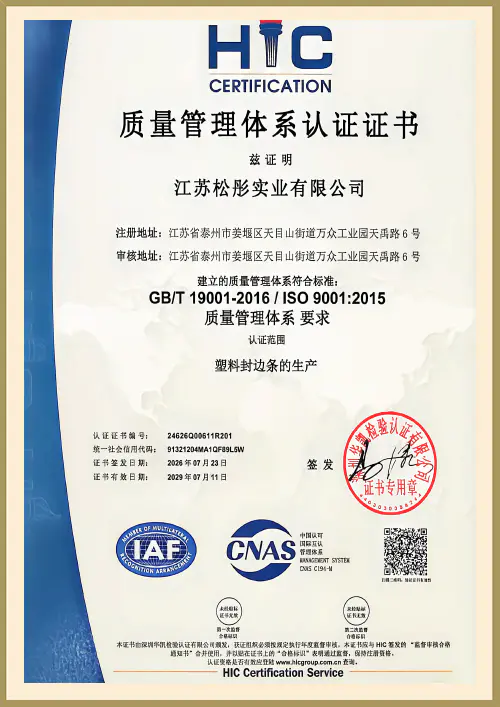
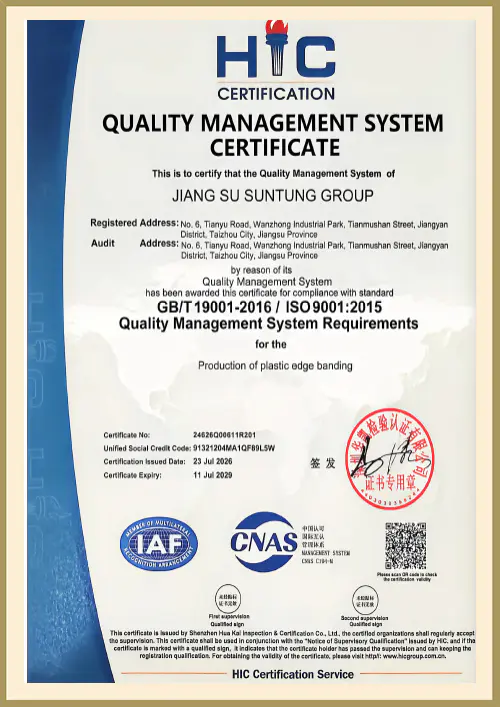
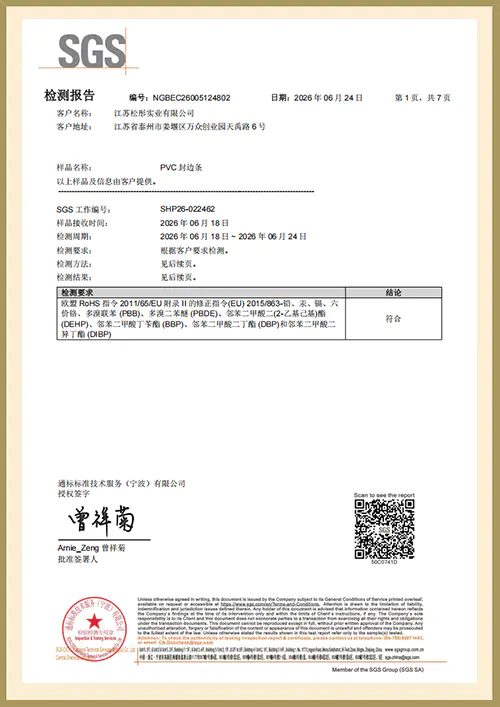
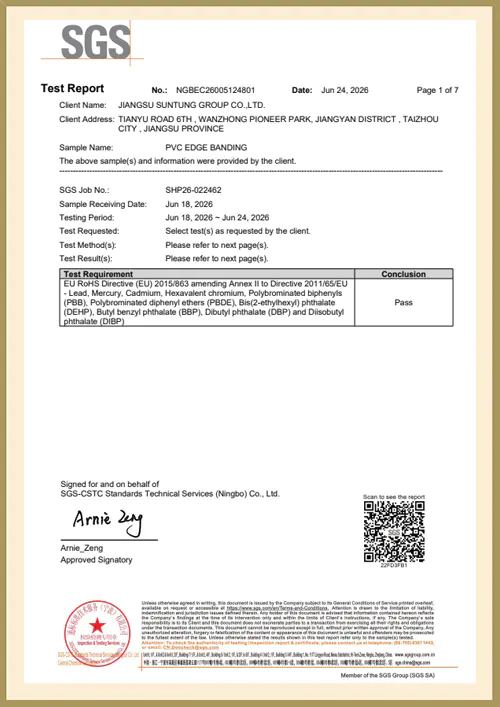
The plant is certified to ISO9001:2015, products are RoHS compliant, and SGS test reports and related compliance documents are issued on request to support incoming inspection and project handover.
Customization, Packaging and Delivery Scope
Our engineering team develops ABS edges from drawings and physical samples, covering color, texture, size, surface and hardness requirements. Custom emboss patterns, decor development and OEM labeling are handled within the same production flow, and a China-based factory with in-house mixing, extrusion, printing, slitting and packing keeps development cycles short.
Packaging is specified with the order: roll length and winding, protective interleaving on high-gloss and soft-touch surfaces, carton marking and pallet configuration for container loading. Because we also supply profiles, EVA hot melt adhesive and screw caps, a mixed container can be consolidated around the banding program to reduce landed cost and simplify receiving.
Information We Use to Configure Your Solution
A quotation becomes useful when it reflects the real working point. These are the inputs that let us propose the correct ABS Edge Banding specification, price it accurately and avoid a second sample round:
- Panel type, decor reference and a physical board offcut for color approval.
- Edge thickness and width, or panel thickness if the width allowance is to be set by us.
- Finish family and gloss level, plus grain direction and whether texture must register with the print.
- Estimated annual volume and per-release quantity, split by color.
- Machine make and model, glue type (EVA or PUR), feed rate and trimming/scraping configuration.
- Any post-processing: radius or soft-forming, CNC nesting, grooving or curve work.
- Packaging format, roll length, core size, label data and carton marking.
- Compliance documents required for the destination market or customer audit.
- Destination port and container loading preference, including mixed articles.
Frequently Asked Questions
Can ABS edge banding replace PVC directly on our existing line?
In most cases yes. ABS runs with EVA and PUR hot melt adhesives and processes through standard trim, radius, scrape and buff stations. The differences are in the working point — glue weight, feed rate and scraper pressure — and we confirm those against your machine data before the first shipment so the changeover does not create a trial-and-error period on the line.
How close can you match a decor from a major panel producer?
We develop against the physical panel or the producer's decor reference, checking tone, texture, decorative finish and gloss level at each approval stage. Matching similarity is held at 95% or better against the approved master, which is retained for repeat orders so a second release does not drift from the first.
Which thicknesses and widths do you produce for ABS?
Thickness follows the panel and the wear the finished edge will see — thin decorative gauges for stable casework, heavier gauges for radius and impact zones. Width is set from panel thickness with a trimming allowance, and roll length, core and winding are agreed per machine. All three are fixed on the order specification rather than assumed from a catalogue.
Is ABS edge banding suitable for children's furniture and healthcare projects?
The material is chlorine-free and recyclable, which fits projects with environmental or end-of-life criteria, and its impact and heat resistance suits furniture exposed to intensive daily use. We issue RoHS documentation and SGS test reports on request so the material can be entered into a project's compliance file.
What does a first order include?
Approved master samples, the written order specification covering thickness, width, roll format, surface and packaging, compliance documents where required, and pre-shipment test results for adhesion and processing stability. Shipments are consolidated from Shanghai, and mainstream colors can be supported from stock for faster repeat releases.
Can you supply ABS together with adhesive, profiles and accessories?
Yes. Profiles, EVA hot melt adhesive and screw caps sit alongside the banding range, so a container can be built around a single cabinetry program. Mixed-article loading is planned at quotation stage, which keeps the banding, adhesive and matching accessories on the same delivery schedule.


