

 eng
 English
 Español
 русский
 عربى
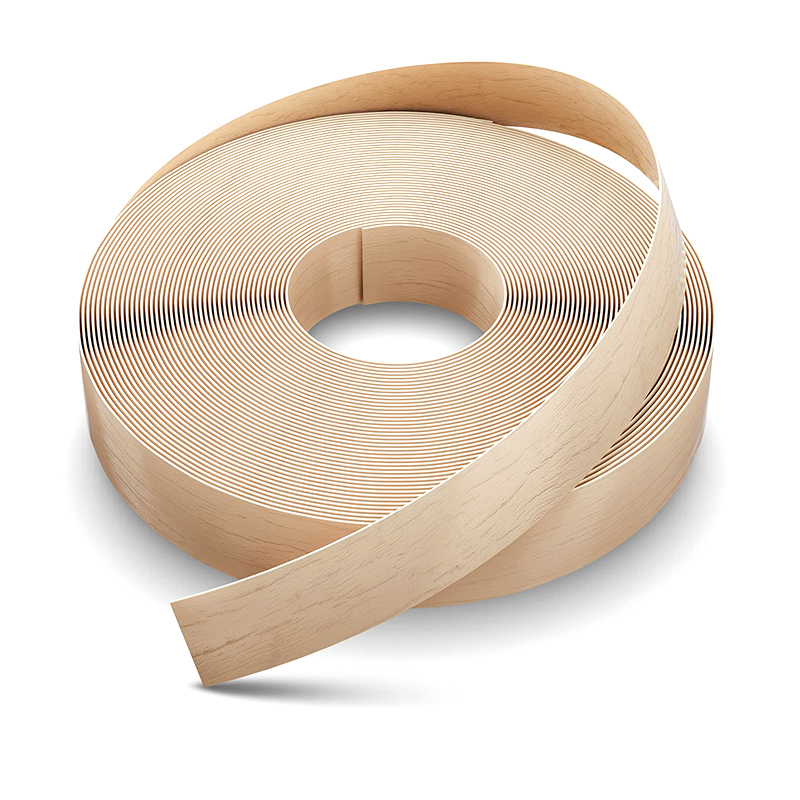
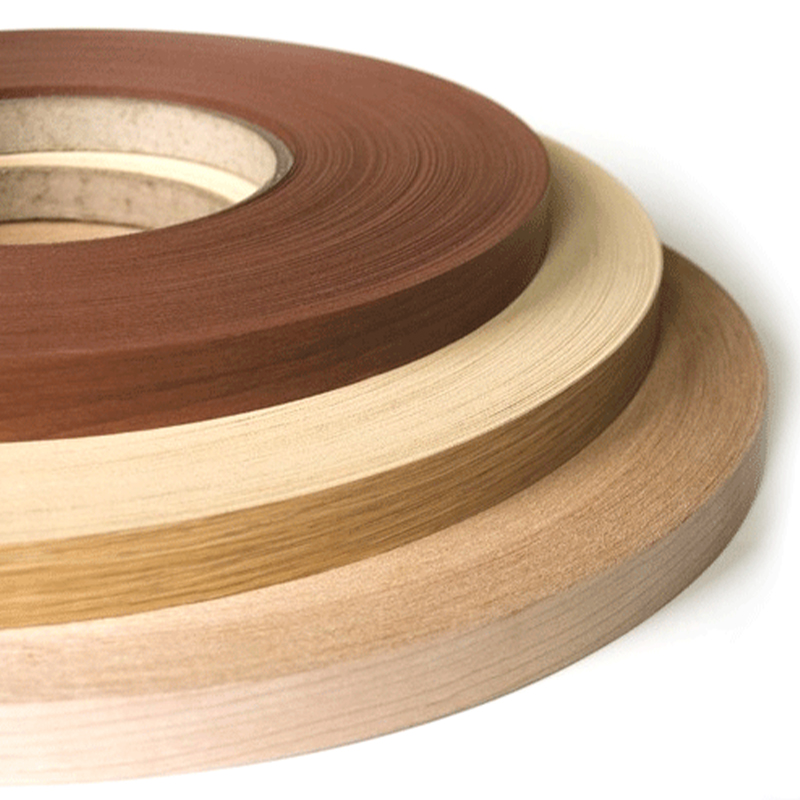
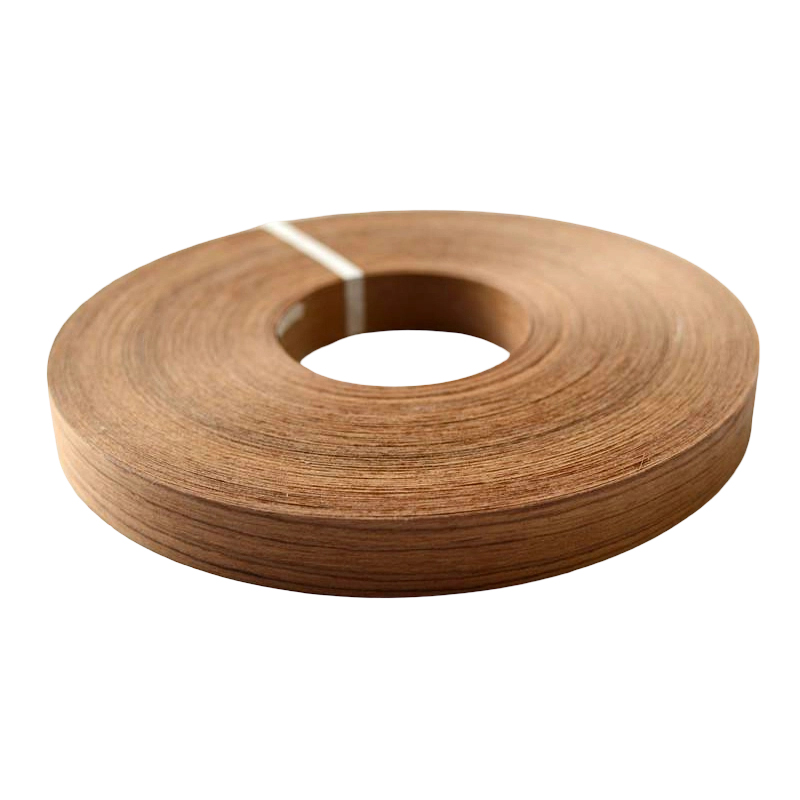



Shanghai Suntung Industry Co., Ltd. supplies Non-glued Veneer Edge Banding — real wood veneer supplied without a pre-applied adhesive layer — to furniture plants, door and panel manufacturers, joinery workshops and distributors that set their own bonding conditions. Edge banding has been our core business since 2005, and the veneer line sits alongside our PVC, ABS, 3D acrylic, melamine and PET metallic ranges, produced from a 21,500 m² base in Taizhou, Jiangsu and shipped to more than 90 countries.
Where the Non-glued Format Belongs
This format exists for plants that already control adhesive. Because no glue layer is applied in our factory, the bond is defined by your line: EVA hot melt in the glue pot, PUR where moisture and heat resistance matter, or contact adhesive for shaped work and site assembly. As a Non-glued Veneer Edge Banding manufacturer, we build the strip around the machine, the substrate and the finishing sequence rather than around a fixed adhesive chemistry.
- Cabinetry and case goods with genuine veneered faces, where the edge is trimmed, sanded, stained and lacquered together with the panel.
- Hotel, office and contract furniture runs that specify a real wood edge instead of a printed or extruded match.
- Wooden doors, wall panels, column casings and shaped components bonded with contact adhesive.
- High-end custom furniture and architectural joinery where species, cut and figure are part of the design intent.
- Batch production on edgebanders whose glue temperature, pressure and feed rate are already tuned to the board.
Where a line has no glue pot, or a distributor needs a shelf-ready roll, Pre-glued Veneer Edge Banding carries the same species and surface preparation with the adhesive applied in our plant. Both formats sit inside the wider Veneer Edge Banding range, so a project can move between them without changing its face material.
Species, Cut and Figure Continuity
We produce from natural wood veneer, not a printed woodgrain, so species and cut decide the result. The range covers Oak, Walnut, Maple, Ash, Cherry and Birch, with further species developed against a customer sample. Each order is sorted for tone and figure against the panel it will meet, because a tone that matches under one light source can separate from the panel under another.
- Cut and figure: flat-cut, quarter and rift character selected to follow the linearity or cathedral pattern of the face veneer.
- Colour sorting: strips graded against an approved panel or veneer sample, with the approved master kept as the production reference.
- Direction: grain runs continuously along the strip so the finished edge reads as an extension of the panel face.
- Natural variation: veneer is a wood product; the signed master sample governs acceptable variation rather than a photographic colour target.
Configurations We Quote
| Configuration element | What we supply | Application fit | Fixed at quotation |
|---|---|---|---|
| Species and grade | Oak, walnut, maple, ash, cherry, birch; further species against sample | Cabinet fronts, door skins, panels with visible edges | Species, cut and grade against your panel sample |
| Format | Continuous wound rolls for automatic lines; cut strips for batch, hand and shaped work | High-throughput edgebanders versus radius and one-off components | Roll length, winding direction, core size |
| Thickness | Sized so the edge can be trimmed, sanded and finished without breaking through the veneer | Post-finishing with stain, sealer and lacquer | Your sanding allowance and finishing sequence |
| Width | Cut to panel thickness plus trim margin | Standard cabinet panels through to thick door blanks | Panel thickness, trim margin, tolerance band |
| Backing construction | Backing balanced to the veneer for flatness, handling strength and flexibility | Thin veneer at high feed rates; curved and profiled edges | Backing type, flexibility, minimum edge radius |
| Surface preparation | Calibrated, sanded face ready for staining; defects controlled at inspection | Edges finished on the line or off-line | Surface state and packing moisture |
| Packing | Wound rolls with interleaving, cartons, pallets, labels | Container consolidation with other edge banding lines | Roll labelling, carton count, pallet pattern |
Adhesive and Line Settings
EVA hot melt is the workhorse for interior furniture. PUR is selected where the edge will see moisture, heat or exterior-adjacent service, and contact adhesive suits curved work and site-applied edges where no press is available. Glue temperature, open time, feed rate and roller pressure interact — a setting that bonds cleanly at one line speed can fail at another with the same adhesive.
Send the panel, not a colour code. Veneer edges are judged against the face they meet, under your finishing system. An offcut of the finished panel tells us more than any reference number.
Before shipment, finished strips are run through edge banding tests that check sealing behaviour, adhesion and processing stability, so an adhesive recommendation is tied to your substrate rather than to a default setting. Where a wood edge is not the design intent, Non-glued Melamine Edge Banding runs on the same adhesive systems for laminated and wrapped panels.
Workpiece and Finishing Conditions
A veneer edge is only as good as the board beneath it and the finish above it. These are the variables we work through with the project team before a first production run.
- Substrate: MDF, particleboard and plywood all accept a veneer edge; edge density, dust extraction and glue spread influence the bond as much as the strip.
- Edge preparation: square, clean, dust-free edges with a freshly cut face give the most consistent contact.
- Radius and profile: thin veneer follows small radii; tight curves call for a more flexible backing and a contact or PUR bond rather than a stiff EVA line.
- Moisture equilibrium: strip and panel should be conditioned to the finishing shop so the edge does not move after sanding.
- Finishing sequence: trim, scrape, sand, stain, seal, lacquer — the edge is finished with the panel, so a finishing trial on the actual strip decides the final match.
- Sanding margin: thin veneer leaves little room for error; thickness and sanding allowance are selected together.
Quality Assurance and Acceptance
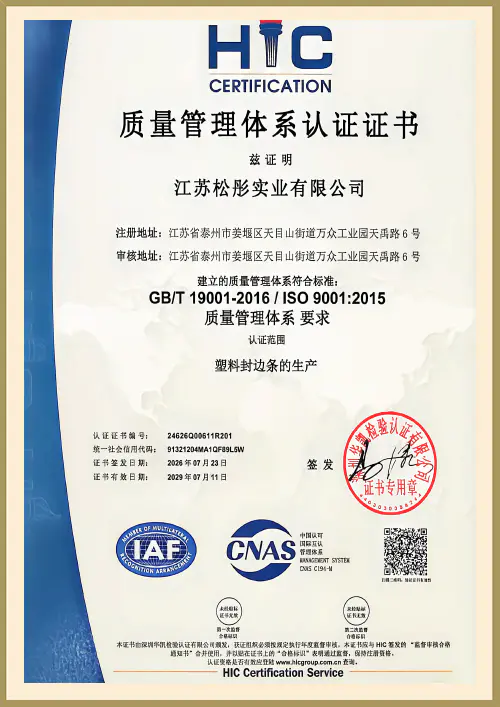
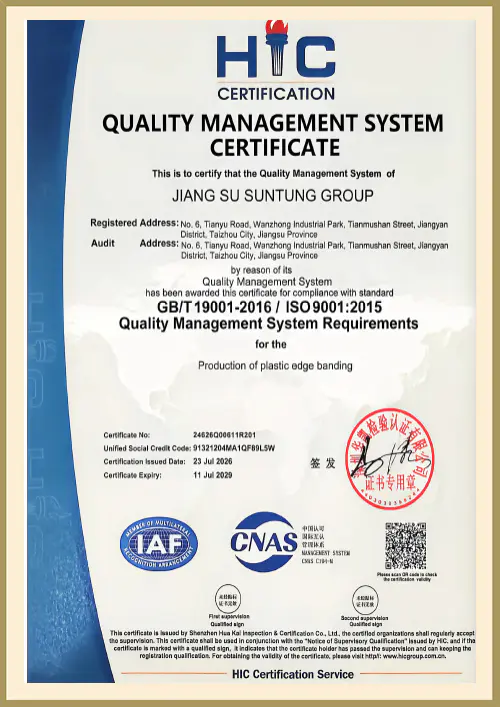
Our factory is certified to ISO 9001:2015 and works to a documented control sequence from incoming veneer to final packing. For veneer banding, the controls that matter most are tone, figure, thickness and the adhesion behaviour of the strip on your adhesive system.
- An approved master sample is signed off before the run and becomes the reference for tone, figure and surface.
- Incoming veneer is checked for species, thickness, moisture and defect level before conversion.
- Width, thickness and roll length are measured against the agreed specification.
- Finished strips are tested for sealing effect, adhesion and processing stability ahead of dispatch.
- Final inspection covers appearance, colour accuracy, dimensional tolerance, surface condition, labelling and packaging integrity.
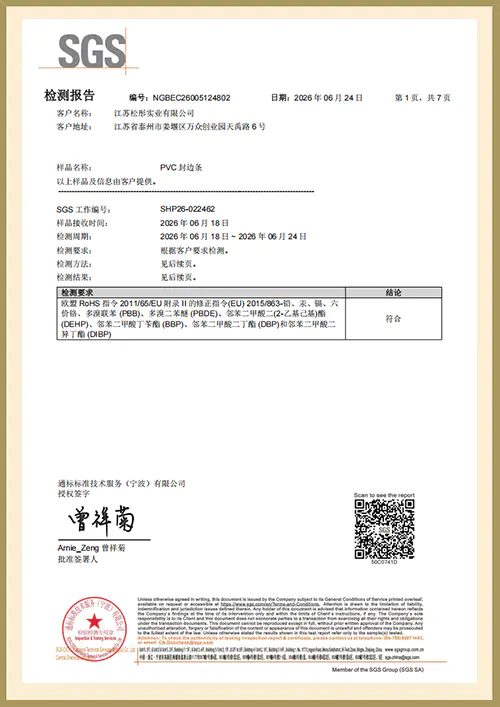
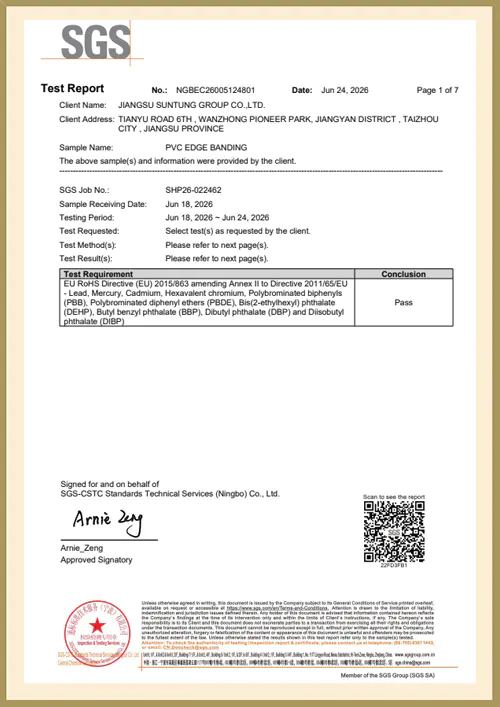
- SGS test reports and relevant compliance documents are issued on request with the shipment documents.
Capacity, Packing and Delivery
The Taizhou base runs 23 automatic lines with a monthly capacity of 25 million metres across the edge banding range, which is what lets a veneer programme be scheduled alongside PVC, ABS and acrylic volumes without displacing them. Shipments leave from Shanghai with an on-time delivery rate above 95%, and consolidated container plans can combine veneer with other edge banding, profile and adhesive lines from the same base.
Packing is agreed per order: winding direction and core, interleaving to protect the veneer face, carton quantities, pallet pattern and warehouse-ready labelling. Heavy or long rolls are supported in transit so the strip arrives flat and runs without re-winding.
Customization and Engineering Support
Our R&D and engineering team develops banding from drawings and samples: a new species, a specific width, a backing change for a curved component, or a tone matched to a panel already in production. Sampling runs ahead of the bulk order so your finishing department can test stain and lacquer response on the actual strip rather than on a colour chip.
Information We Use to Configure Your Solution
- Species, cut and grade, plus a panel or face-veneer offcut for tone matching.
- Substrate and edge geometry: board type, panel thickness, straight or shaped edge, minimum radius.
- Adhesive system and machine: EVA, PUR or contact; glue pot; line speed; pressure; roll core.
- Dimensions: thickness, width, roll length, winding direction and tolerance band.
- Finishing regime: stain and lacquer type, sanding allowance, whether the edge is finished on or off the line.
- Volume and schedule: first order, repeat quantities, delivery windows, container or LCL.
- Packing and documents: labelling, pallet pattern, certificates, destination requirements.
- Acceptance criteria: the master sample and the inspection points your goods-in team will check.
Handling and Storage on Site
- Keep rolls in their original packing, flat and supported, clear of floor moisture and direct heat.
- Condition the strip to shop temperature before threading the machine.
- Protect the veneer face during handling; damaged edges cannot be sanded back on thin material.
- Run first-off pieces to confirm adhesive setting and trimming before committing to full production.
Frequently Asked Questions
How does non-glued differ from pre-glued veneer edge banding?
Non-glued strip carries no adhesive layer, so the bond is created entirely by your EVA, PUR or contact adhesive at the machine. Pre-glued strip carries a factory-applied adhesive activated by heat on the edgebander. Choose non-glued when you want adhesive freedom and control over open time and heat resistance; choose pre-glued when the line has no glue pot.
Which adhesive should we run with a natural veneer edge?
PUR gives the strongest moisture and heat resistance for kitchens, bathrooms and contract furniture. EVA hot melt covers standard interior work at higher line speeds. Contact adhesive is the practical choice for curved, profiled and site-applied edges. The final setting is confirmed on a sample run against your board, edge geometry and finishing system.
Can the edge be stained and lacquered to match the panel?
Yes. The strip is applied as raw sanded veneer and then trimmed, sanded, stained, sealed and lacquered together with the panel, so the edge takes the same finish system and reads as continuous wood. Species and cut matching plus a finishing trial on the actual strip determine how close that match will be.
What species and formats are available?
Oak, Walnut, Maple, Ash, Cherry and Birch are standard, with further species developed against a supplied sample. We supply continuous wound rolls for automatic lines and cut strips for batch or shaped work, with thickness, width, backing and surface state set to the machine and finishing sequence.
What information do you need to prepare a quotation?
Species, cut and grade, a panel offcut for tone matching, substrate and edge geometry, adhesive type and machine data, dimensions and roll format, finishing regime, order volume and delivery schedule, packing and documentation requirements, and the acceptance criteria your goods-in team will apply.
Which quality documents come with an order?
Production runs under our ISO 9001:2015 system, and each shipment is inspected against the approved master sample for appearance, colour, dimensions, surface and packing. SGS test reports and relevant compliance documents are issued with the shipment documents when requested.


