
 eng
 English
 Español
 русский
 عربى

Adhesive PVC Screw Caps: A Furniture Manufacturer's Guide to Clean Finishes
Content
- 1 What Adhesive PVC Screw Caps Actually Do
- 2 Where They Show Up on a Finished Panel
- 3 Matching the Cap to the Panel Surface
- 4 Getting the Size Right
- 5 Glue-Fixed or Self-Adhesive?
- 6 Fitting Tips That Save Rework
- 7 Colour Matching and Brand Consistency
- 8 Ordering in Bulk: What to Confirm
- 9 A Small Part That Carries a Lot of the Finish
A screw head on a white cabinet door is a very small thing, until it becomes the first thing a customer notices. Adhesive PVC screw caps exist for that exact moment: the last twenty seconds of assembly, when a panel goes from "put together" to "finished". They are inexpensive, they weigh almost nothing, and yet they decide whether the inside of a wardrobe looks deliberate or improvised.
This guide is written from the production floor rather than the catalogue. We have spent years supplying edge banding, profiles and screw covers to furniture makers, and the questions we hear about caps are always the same: which size, which colour, will it stay on, and will it still match in the third container?
What Adhesive PVC Screw Caps Actually Do
A screw cap is a small moulded disc of PVC with a shallow dome, designed to sit over the head of a screw, cam bolt, connector or confirmat that would otherwise be visible on a finished panel. The adhesive version carries a pre-applied glue layer inside the cap, usually protected by a paper or film liner, so the cap locks onto the panel surface around the screw head instead of relying on friction.
That distinction matters. Push-fit caps loosen with humidity cycling and vibration in transit. A glued cap holds its position, keeps dust and moisture out of the fastener hole, and protects nearby edges from being chipped when furniture is moved against a wall. For panel furniture, flat-pack ranges and cabinet interiors, the adhesive type is usually the more forgiving choice.
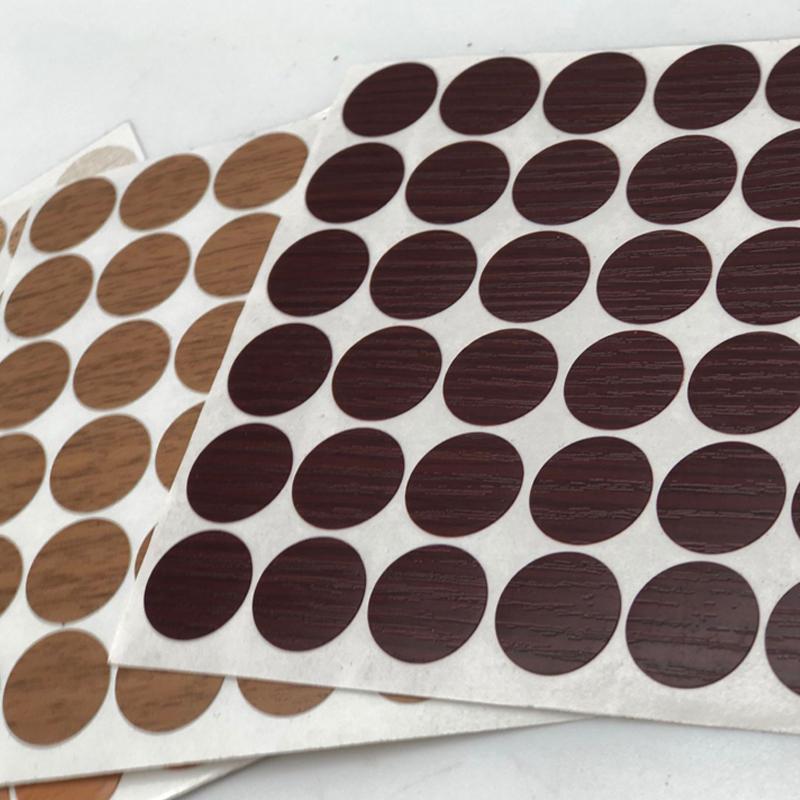 Adhesive PVC Screw Cover Caps for Furniture PanelsGlued PVC caps cover visible screw heads, hide fasteners and help keep dust and moisture out of panel furniture holes.View Product →
Where They Show Up on a Finished Panel
Walk through a typical板式 furniture line and the caps appear at predictable points. Knowing them helps you plan quantities per unit instead of guessing at the end of a production run.
- Inside wardrobe and cabinet carcasses, covering cam locks and connector bolts
- On visible side panels and end panels where fixing screws pass through
- On drawer boxes and shelf supports, mainly for a tidy interior look
- On office and contract furniture where panels are re-assembled on site
- On shop fixtures, reception desks and display units where the reverse side is still seen
The visible-panel cases are the ones worth specifying carefully. An interior cap only needs to be functional; a cap on a high-gloss door or a wood-grain end panel has to disappear.
Matching the Cap to the Panel Surface
Colour first, always
White, off-white, grey, black and beige cover most volume production, but the differences between them are larger than they look on a swatch card. A cap that reads as pure white against an ivory melamine board will stand out as a bright dot on every panel. Compare caps against an actual offcut under the lighting the furniture will live in, not against a monitor.
Then gloss and texture
Gloss level is where many projects lose the illusion. A matte cap on a high-gloss acrylic or UV panel reads as a dull spot; a glossy cap on a super-matte or soft-touch surface reads as a reflection that should not be there. If your range includes anti-fingerprint or deep-embossed finishes, ask for a cap sample alongside the edge banding sample so the two are approved together.
Getting the Size Right
Cap diameter has to clear the screw head with a small margin and still sit flat on the panel without overhanging an edge or a groove. The ranges below reflect what most furniture factories work with; treat them as a starting point and confirm against your supplier's datasheet and your own fastener drawing.
| Cap style | Usual head coverage | Fixing method | Best suited to |
|---|---|---|---|
| Standard adhesive cap | 13–16 mm | Pre-applied adhesive ring | Cabinet interiors and panel furniture |
| Low-profile adhesive cap | 12–14 mm | Thin adhesive layer | Shelves and drawer boxes where clearance is tight |
| Self-adhesive cap | 13–18 mm | Peel-and-stick backing | Quick assembly and on-site touch-ups |
| Custom colour cap | 13–20 mm | Adhesive or self-adhesive | Branded panels and visible surfaces |
Also check the cap height. A 1 mm dome is invisible on a shelf but can interfere with a drawer front; a deeper dome covers a proud screw head but casts a small shadow that shows up on matte finishes.
Glue-Fixed or Self-Adhesive?
Both belong to the same family and often get confused. The practical split looks like this: if the cap is applied in the factory and expected to stay for the life of the product, use a glued cap. If the cap is applied on site by an installer, or applied during a final check after packing, a self-adhesive version is faster and needs no pressure dwell or handling time.
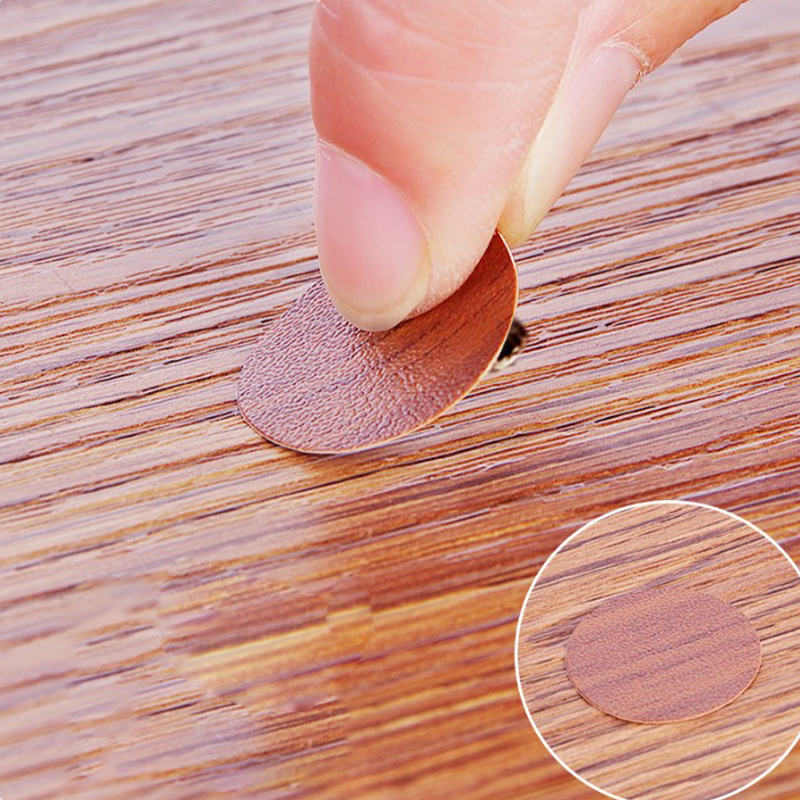 Self-Adhesive PVC Screw Cover CapsPressure-sensitive PVC caps offer fast on-site or after-pack installation for flat-pack furniture, cabinets and DIY assembly where speed matters.View Product →
Either way, the surface underneath decides how well the bond performs. Panels that are dusty, oily, or finished with a release agent will reject the adhesive, so the area around the screw hole should be wiped before the cap goes on.
Fitting Tips That Save Rework
- Clear the hole first. A screw sitting slightly proud will lift the cap and create a visible gap.
- Wipe the panel around the head with a dry cloth; dust is the most common cause of early fall-off.
- Align the cap by eye against the grain or the panel edge before pressing, not after.
- Press the centre of the dome with a thumb for a couple of seconds rather than tapping with a hammer.
- Do not slide the cap into position; sliding pushes adhesive to one side and reduces grip.
- Store unused caps sealed and away from heat, so the liner adhesive does not migrate in the box.
Colour Matching and Brand Consistency
The hardest problem is not the first order, it is the fifth. A customers' brand colour drifts slightly between board batches, and a cap that matched last spring can look off against the new delivery. A proper colour matching service takes the reference you already approve — a panel sample, a Pantone code, an edge banding chip — and develops the cap to sit with it rather than near it.
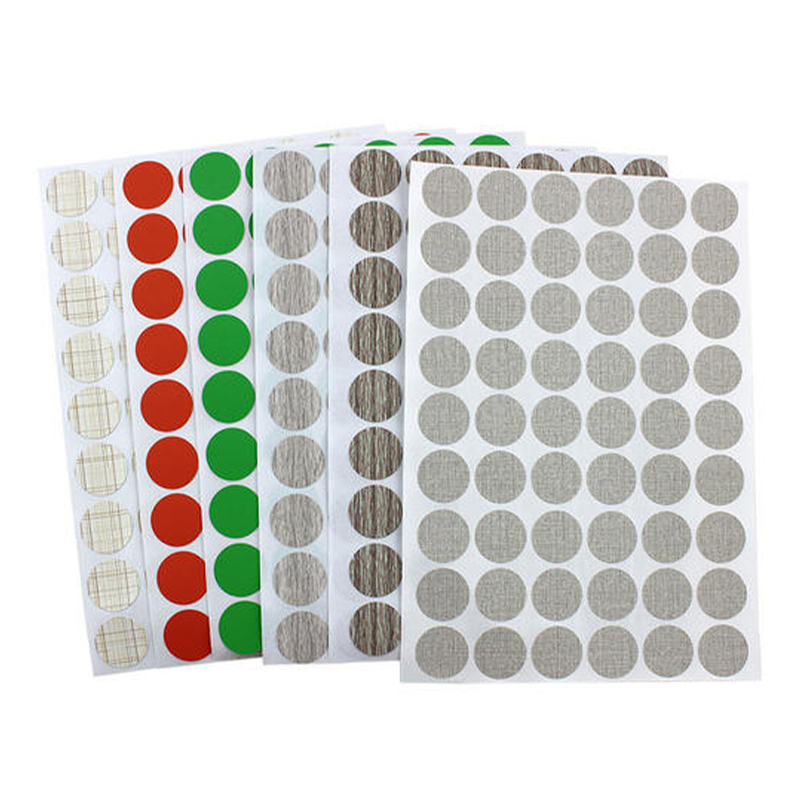 Custom Color PVC Screw Cover Caps for Brand MatchingCustom-matched PVC caps help maintain consistent furniture brand colour across panel batches, edge banding and repeated production runs.View Product →
For ranges that carry a strong visual identity, matching the cap to the same colour family as the edge banding is the simplest discipline. One approved sample book, one supplier, one reference number across both parts.
Ordering in Bulk: What to Confirm
Before a large run is released, it helps to lock down a few details that are easy to overlook in a short quotation:
- Cap diameter and height, measured, not assumed from the product name
- Colour reference with a physical approved sample, not a screen image
- Adhesive type and expected shelf life under normal storage
- Pack format — bulk bag, blister strip, or a kit that includes screws
- Whether the same colour is available across related parts such as profiles and edge banding
If you are planning a mixed container, talk to us early about the colour list; grouping caps with edge banding and profiles in one shipment usually saves both freight and approval time.
A Small Part That Carries a Lot of the Finish
Screw caps will never be the reason someone buys a cabinet. But they are part of the reason a cabinet feels considered. Getting the diameter right, matching the sheen honestly, and choosing an adhesive that survives the journey from factory to living room is a small investment with an unusually visible return. If you would like to compare caps against your current panel and edge banding samples, send us the offcuts — that conversation usually settles more than a specification sheet ever could.
Recommend Products
-
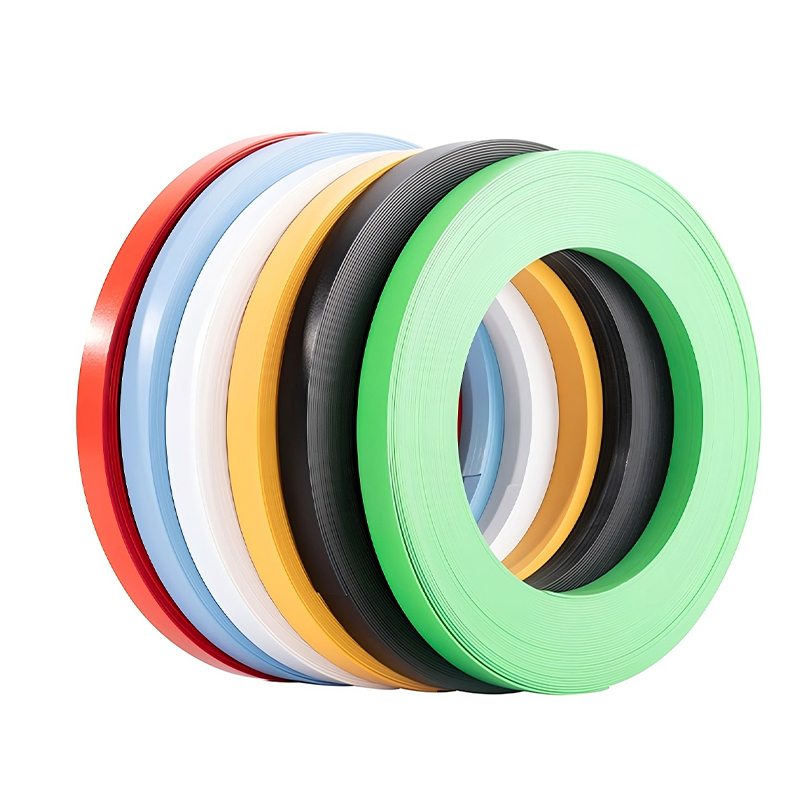
Applied Adhesive Solid Color PVC Edge Banding for Furniture Manufacturing
-
White Color Pre-glued EVA Adhesive PVC Edge Banding for Furniture Panels
-
Custom Pre-glued Wood Grain PVC Edge Banding for OEM Furniture Brands
-
Acrylic /UV/PET Panels High Gloss PVC Edge Banding
-
Custom High Glossy ABS Edge Banding for Modern Furniture Design
-
Custom Wood Grain ABS Edge Banding for OEM Furniture Brands
SUNTUNG
GROUP
Product List
Contact Info
-
 Tel.+86 150 0088 0641
-
 Whatsapp
-
 E-mailjoyce@suntunggroup.com
-
 Head Office AddressB-1218, Fengpu Av. 99th, Fengxian District, Shanghai, China
Get A Free Quote
Copyright © 2026 Shanghai Suntung Industry Co., Ltd. All Rights Reserved.
 Edge Banding Suppliers OEM/ODM Edge Banding Manufacturer