

 eng
 English
 Español
 русский
 عربى
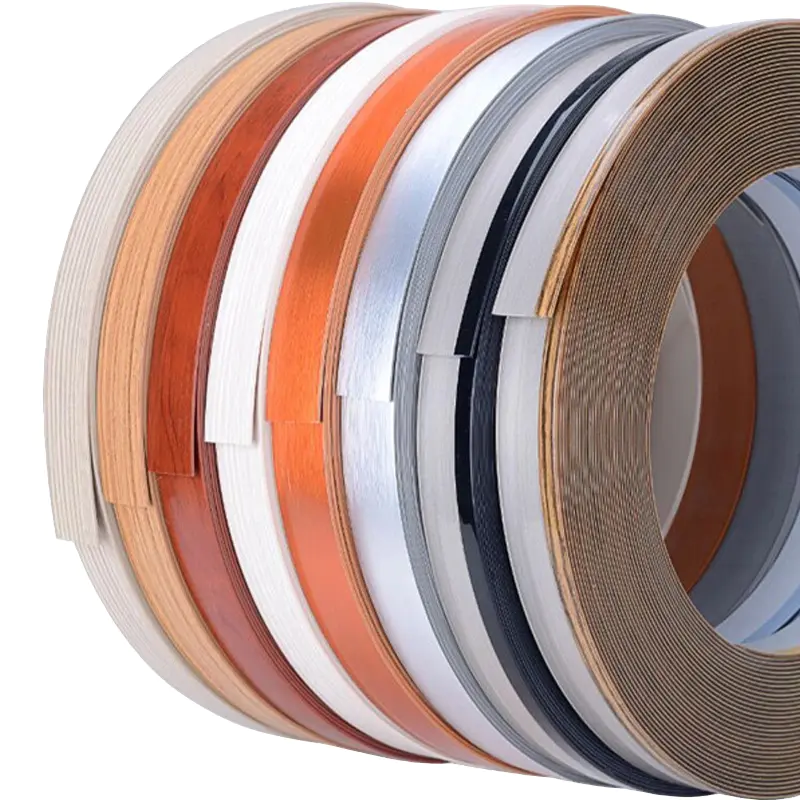
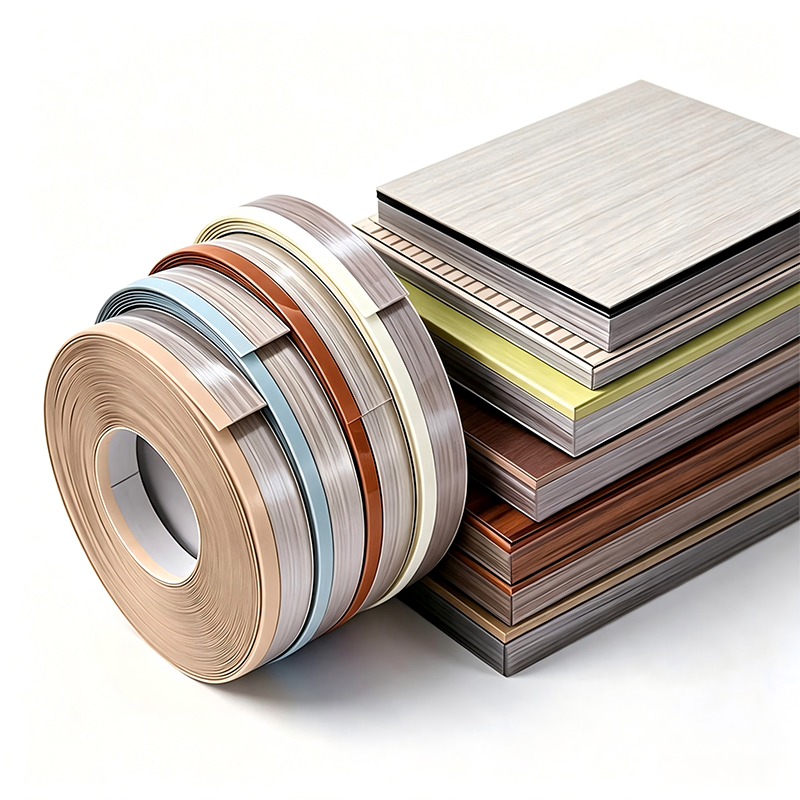
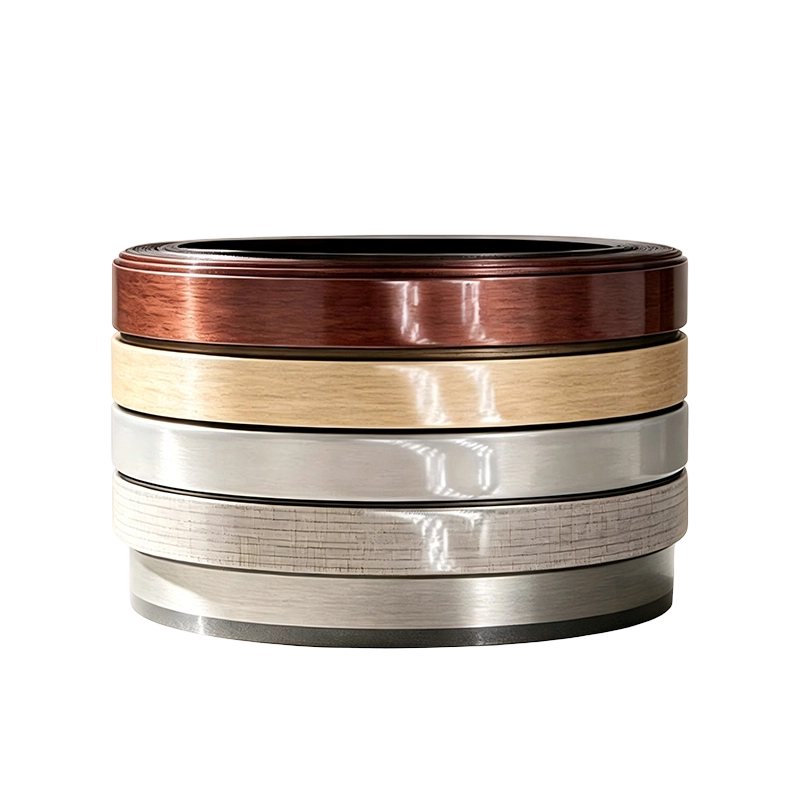




Shanghai Suntung Industry Co., Ltd. has been building edge banding since 2005 and produces Wooden Color 3D Acrylic Edge Banding at a 21,500 m² base in Taizhou, Jiangsu, on 23 automatic lines running at a combined 25 million meters a month. As a Wooden Color 3D Acrylic Edge Banding manufacturer, we supply furniture plants, contract fit-out teams and distributors who need a panel edge to carry the same visual weight as a premium wood decor face.
The construction is a transparent acrylic (PMMA) surface layer over a printed wood-grain design. The clear layer refracts and magnifies the grain underneath, so an oak, walnut or ash decor reads with depth and tonal movement instead of sitting flat on the edgeband — a difference that shows immediately on a wardrobe run or a hotel casegood at eye level.
Typical fit: kitchen and wardrobe fronts, hotel and executive office casegoods, retail fixtures and panel furniture specified with gloss or textured wood decors where the edge is inspected against the door face.
The 3D Effect and What It Changes on a Finished Panel
A conventional printed edgeband presents a single printed plane. In the acrylic construction the print sits beneath a clear layer that bends light at the surface, deepening grain lines and lifting contrast between early and late wood. Under directional light — under-cabinet strips, window light raking across a wardrobe — the edge reads closer to a lacquered or film-faced panel than to a taped edge.
- Optical depth: the transparent acrylic face magnifies the wood print beneath it, so figure and colour variation stay visible rather than flattening out.
- Surface performance: the acrylic layer is specified for UV resistance, scratch resistance and gloss retention, so the decor holds its appearance through daily use.
- Colour control: the printed decor is matched to your panel sample or a named board program, with a colour similarity target of 95% or better before bulk release.
- Trimming behaviour: edge quality is a joint outcome of material and machine setup — the acrylic face rewards sharp, correctly set cutters.
Range and Decorative Positioning
Wooden Color sits inside a three-part 3D acrylic family and alongside our printed PVC, ABS and veneer lines. The table below shows where each option earns its place on a project, so the decor decision is made against the panel face, the wear exposure and the production volume rather than on appearance alone.
| Product line | Surface and construction | Typical pairing | Where it is specified |
|---|---|---|---|
| Wooden Color 3D Acrylic | Clear PMMA layer over printed wood grain | Wood decor panels, PET film, melamine-faced board, veneered MDF | Eye-level fronts where the edge must read as real timber |
| Unicolor 3D Acrylic Edge Banding | Clear acrylic over a solid colour layer | Solid colour, super-matt and lacquered-look panels | Colour-block cabinetry, retail fixtures, painted-door programmes |
| Bicolor 3D Acrylic | Acrylic over a two-tone decor | Two-tone panels and contrast-edge designs | Design-led feature edges and statement fronts |
| Wood Grain PVC Edge Banding | Printed and embossed PVC | High-volume cabinetry and general furniture | Runs where throughput and print fidelity set the brief |
| Wood Grain ABS Edge Banding | Wood decor on ABS substrate | Contract, education and office furniture | Impact- and heat-exposed edges |
| Veneer and High Glossy PVC | Real wood veneer; gloss PVC | Veneered faces; broad gloss panel programmes | Sandable edges; volume gloss work |
Application Fit and Panel Matching
The decor works hardest on surfaces a user sees at close range and touches. In residential production it goes onto handleless kitchen fronts, wardrobe doors and tall cabinets in oak, walnut, smoked oak and ash. In hospitality and office work it appears on casegoods, reception desks and executive storage where an edge-to-face match is reviewed against a sample board before the deck is signed off.
- Panel types: melamine-faced chipboard, MDF with PET or PET-G film, veneered MDF and HPL-clad panels.
- Gloss direction: confirm whether the band must match the door face sheen or deliberately sit one step glossier.
- Grain direction: state whether the grain runs vertically on door edges or horizontally on drawer fronts, so coil orientation is set before printing.
- Wear exposure: high-traffic retail and contract edges are reviewed against scratch and cleaning exposure during decor selection.
Critical Specifications and the Inputs Behind Them
Every dimension, finish and adhesion parameter is fixed against a project input rather than a catalogue default, and confirmed on a sample before bulk production.
| Specification | What we control in production | What we need from your project |
|---|---|---|
| Decor and match point | Print recipe, ink laydown and tone checked against the approved master sample | Panel sample, board brand and decor code, or a physical swatch |
| Gloss level | Surface layer, calendering and finishing parameters | Target gloss and the door face finish it must sit against |
| Surface texture | Embossing depth, pattern clarity and flatness across the roll | Reference sample showing grain depth and direction |
| Thickness | Extrusion gauging and slitting tolerance | Panel thickness, edge geometry and bander tooling |
| Width | Cutting width and trim allowance | Finished edge target and overhang allowance for your trimming setup |
| Coil format | Winding, core, coil length and labelling | Bander feed direction, coil preference and pallet configuration |
| Adhesion | Automated primer coating and machine trial of bond strength | Glue type, glue pot temperature and line feed speed |
| Batch colour consistency | Tone and texture verification at matching and through production | Acceptable batch-to-batch tolerance for a multi-container programme |
Machining, Adhesion and Line Integration
3D acrylic bands run on standard hot-melt edge banders, and the acrylic face rewards a clean setup. We verify adhesion, sealing integrity and processing behaviour in machine trials that simulate production conditions before a bulk order is released.
- Cutter condition: sharp, correctly set trimming cutters; dull tooling shows first as a milky or chipped acrylic edge.
- Temperature and feed: glue pot temperature and feed rate are set to the adhesive and line speed rather than copied from a PVC programme.
- Pressure: even pressure-roller contact along the full edge, since lifting under a clear layer reads as a bright line.
- Extraction: trimming and scraping generate acrylic chips, so extraction at the trimming station keeps edges clean before packing.
- Shaped parts: radii and postformed edges are proven on a sample before tooling a curved run.
Manufacturing Control and Batch Repeatability
Mixing, extrusion, calendering, printing, primer application, slitting and packing run inside one plant, which keeps the variables that affect colour and surface within a single chain of control. Our workshop uses automated glue application and dedicated colour inspection so a repeat order returns to the same approved reference.
- Incoming inspection of substrate, inks and primer for colour, flexibility, finish and machinability.
- Colour, texture and gloss verified against the approved master sample at matching and throughout the run.
- Uniform primer layer applied automatically to support consistent sealing on the customer's line.
- Print and surface testing covering clarity, grain consistency, UV adhesion, scratch and wear resistance.
- Flexibility and trimming checks to control cracking and edge whitening through slitting and application.
- Pre-shipment final inspection of appearance, colour, dimensions, surface, labelling and packaging completeness.
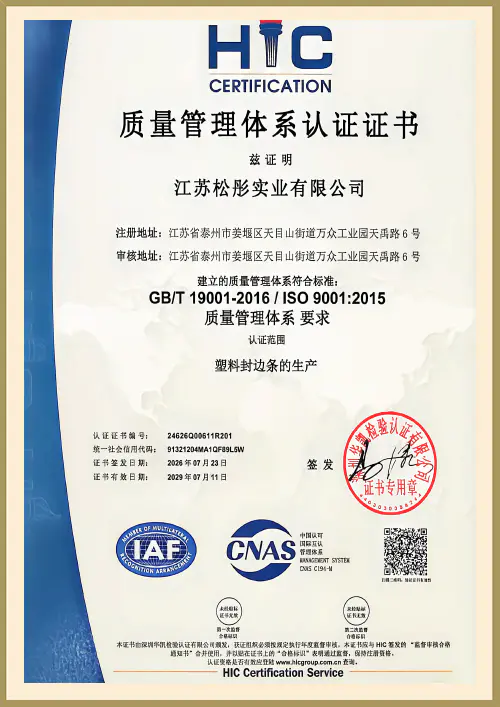
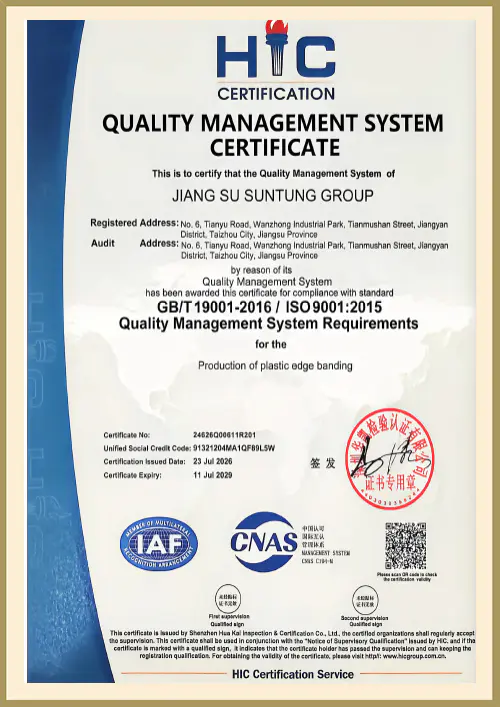
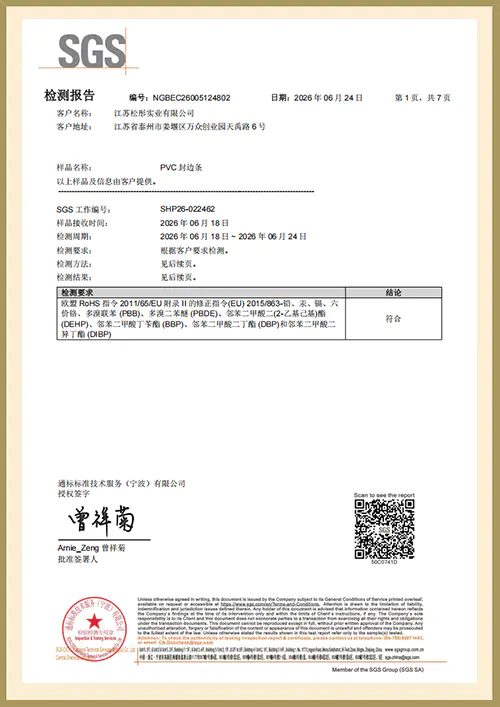
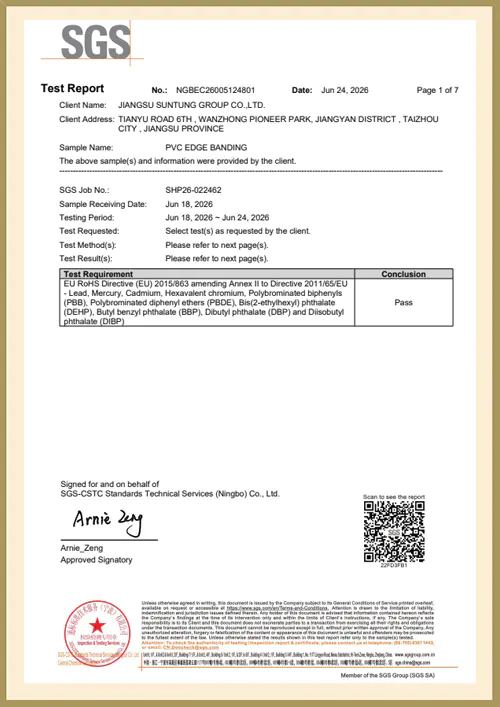
Production is certified to ISO 9001:2015, materials are RoHS compliant, and SGS test reports and compliance documents are issued with shipments on request.
Capacity, Customization and Delivery Scope
Twenty-three automatic lines and a monthly output of 25 million meters support programmes of up to 30 x 20GP containers a month, with mainstream colours and specifications held in stock for fast release. Development work runs from drawings and samples, covering colour, texture, size, surface and hardness as the project requires.
- OEM/ODM: custom decor development against a panel sample, artwork or board code, including exclusive programmes.
- Packaging: coil length, core, winding direction, carton and pallet configuration set per shipment, with labels matched to your warehouse or line-side scanning.
- Consolidation: edge banding supplied alongside PVC profiles, hot-melt adhesive and screw caps so a container is filled from one source.
- Logistics: shipments from the Port of Shanghai, with mainstream specifications ready for immediate allocation.
Information We Use to Configure Your Solution
These inputs let us return a decor match, a trial coil and a quoted configuration without a round of clarification.
- Panel decor reference — board brand and code, or a physical sample of the faced board.
- Panel thickness and finished edge geometry: square, radius or postformed.
- Edge bander make, glue type and running speed.
- Target gloss and texture, plus the door face finish the band must sit against.
- Coil width, length, core size and winding direction.
- Volume by decor and the delivery sequence across the programme.
- Packing, labelling and the compliance documents required at destination.
Frequently Asked Questions
How does the 3D acrylic face differ from printed wood-grain PVC?
Printed PVC carries the decor on a single printed and embossed surface. Wooden Color 3D Acrylic places the print beneath a clear PMMA layer, so grain figure gains optical depth and the surface holds a higher-clarity gloss with UV and scratch resistance built into the face. PVC remains the efficient choice for high-throughput programmes where print fidelity is sufficient.
Can you match a specific board decor or an approved panel sample?
Yes. Matching is carried out against a physical panel sample, a board brand and decor code, or a named programme such as EGGER, Kronospan or Finsa-toned references, with tone, texture and gloss checked to a similarity target of 95% or better. An approved master sample is signed off before bulk release.
What thickness and width do you produce?
Thickness and width are set per order against your panel thickness, edge geometry and trimming allowance rather than fixed to a single catalogue size. We confirm both on a drawing or physical sample before production, so the finished edge meets your bander setup.
Will it run on our existing edge bander?
The band is built for standard hot-melt edge banding lines. Glue pot temperature, feed rate and cutter condition are set to the acrylic face rather than to a PVC programme, and we prove the combination in a machine trial before bulk production.
What quality documentation accompanies an order?
Production is certified to ISO 9001:2015 and materials are RoHS compliant. SGS test reports, inspection records covering colour, dimensions and surface, and a packing list matched to your labelling requirements are issued with the shipment on request.
How is a multi-decor programme scheduled?
Volume is broken down by decor, dimension and delivery sequence, then consolidated into container loads from Shanghai. Mainstream colours and specifications are held in stock for fast release, while custom decors are quoted against the matched sample, quantity and requested delivery window.


